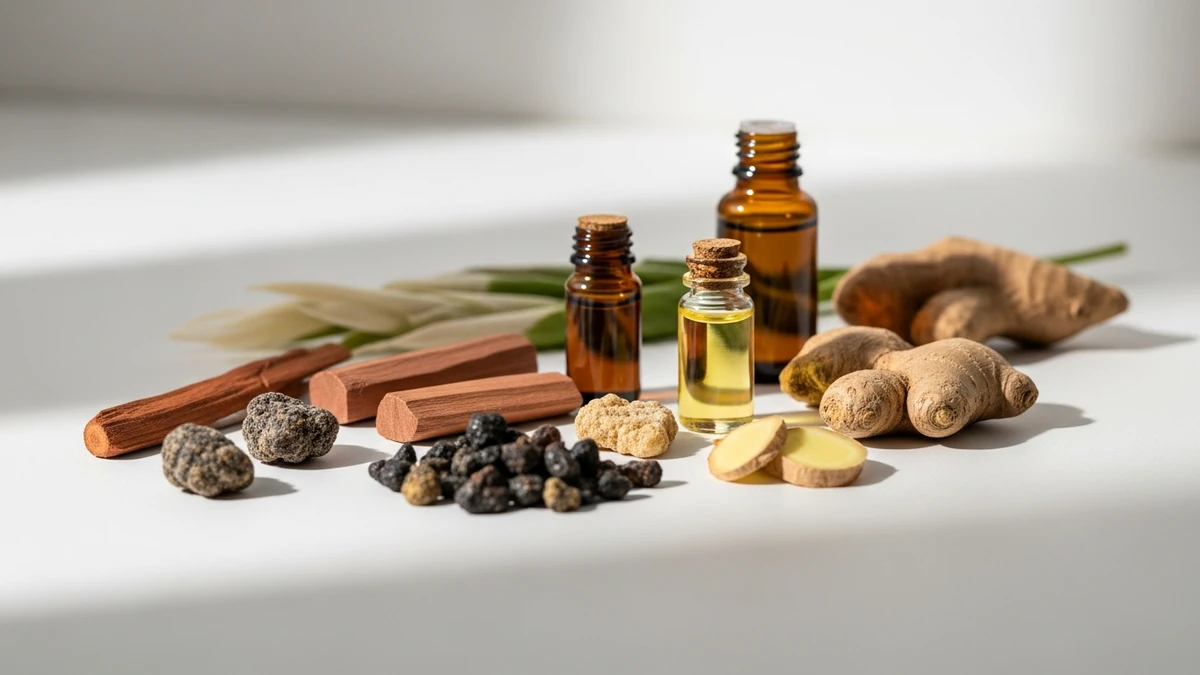
In the quest for emotional balance and a deep connection with nature, essential oils extracted from resins, woods, and roots offer an olfactory bridge to grounding. These woody, resinous, and earthy aromas are highly valued in aromatherapy for their unique properties that calm the mind, strengthen the spirit, and anchor an individual in the present moment, aiding in stress reduction, anxiety relief, and promoting genuine well-being.
Historically, these substances were employed in spiritual rituals and healing practices across diverse cultures. Today, modern science is beginning to unravel the mechanisms behind their therapeutic effects, solidifying their role as powerful tools for mental and emotional health. Join us as we delve into this universe of grounding aromas and discover how to integrate the ancestral wisdom of these essences into your daily routine.
Properties and Composition
Essential oils derived from resins, woods, and roots are natural treasures, extracted from parts of plants that serve as their structure and foundation. This origin grants them a molecular richness that translates into robust therapeutic properties, particularly concerning grounding and emotional balance.
Key Chemical Components
The aromatic and therapeutic complexity of these essential oils lies in their rich composition of bioactive molecules. Predominantly, we find:
- Sesquiterpenes: Large molecules known for their low volatility and, consequently, longer-lasting effects. They are found in abundance in Vetiver essential oil, Sandalwood essential oil, and Cedarwood essential oil. Sesquiterpenes are associated with calming, anti-inflammatory, and grounding properties. For example, vetiverol (in Vetiver) and santalol (in Sandalwood) are extensively studied for their ability to induce relaxation and reduce sympathetic nervous system activity.
- Diterpenes: Although less common in steam-distilled essential oils than in pure resins, certain diterpenes and their derivatives may be present, contributing to denser, more lasting notes. Incensole acetate, found in Frankincense essential oil, is an example of a diterpene ester that has been associated with anxiolytic and antidepressant effects.
- Esters: While more prominent in floral and herbaceous oils, specific esters like bornyl acetate (found in smaller proportions in some woods like Cedarwood) contribute to stress reduction and a mild sedative effect.
- Phenylpropanoids: In smaller quantities but present in some roots, they can have antiseptic and warming properties.
These components work in synergy, creating a unique chemical profile for each oil, which manifests in its distinct therapeutic benefits.
Proven Therapeutic Properties
The therapeutic properties of these essential oils are diverse, yet they share a common goal of promoting balance and calmness:
- Anxiolytic and Sedative: Many sesquiterpenes and esters act on the central nervous system, helping to reduce anxiety, nervousness, and promote calm. Vetiver essential oil, for example, is known for its neurotonic and relaxing action, assisting in cases of insomnia and hyperactivity. Sandalwood essential oil is traditionally used for meditation and inducing a state of profound tranquility.
- Anti-inflammatory and Analgesic: Components like sesquiterpenes can offer relief in inflammatory conditions, aiding in the reduction of muscle and joint pain. Frankincense essential oil is particularly valued for its anti-inflammatory properties, applicable both to the body and for soothing mental and emotional "inflammations."
- Immunostimulant: Some resins, such as Frankincense essential oil and Myrrh, are recognized for strengthening the immune system, contributing to resistance against infections and promoting overall health.
- Antiseptic and Healing: Woods like Cedarwood and resins like Myrrh possess antiseptic properties that aid in skin protection and the healing of minor wounds.
Benefits and Applications
Essential oils from resins, woods, and roots are true pillars of aromatherapy when the goal is to restore balance and promote grounding. Their benefits extend to both physical health and mental and emotional well-being, offering a refuge from the stresses of daily life.
Benefits for Physical Health
While their use is often more focused on emotional aspects, these essential oils also offer valuable physical support:
- Muscle Tension Relief: The anti-inflammatory and relaxing properties of oils like Vetiver and Frankincense can help alleviate muscle aches and tension, making them excellent for massages after a stressful day.
- Skin Health: Essential oils such as Frankincense and Sandalwood are revered for their rejuvenating and regenerative skin qualities. They can help smooth the appearance of fine lines, promote healing, and soothe irritations. Cedarwood is also useful for controlling oiliness and improving the appearance of blemishes.
- Respiratory Support: Frankincense essential oil, in particular, can assist in opening airways and promoting deeper, more conscious breathing, which indirectly contributes to calmness and grounding.
Benefits for Mental and Emotional Health
It is in the mental and emotional sphere that these essential oils truly shine, offering powerful support for well-being:
- Stress and Anxiety Reduction: Woody, resinous, and earthy aromas have a profoundly calming and stabilizing effect. Sandalwood, Vetiver, and Frankincense essential oils are widely used to diminish feelings of overwhelm, quiet an agitated mind, and induce a state of serenity. They help shift attention away from excessive worries.
- Grounding and Centering: When we feel scattered, "up in the air," or overly concerned with the future, these oils help us connect with the present. Vetiver is often called the "oil of grounding" for its ability to root us, promoting a sense of security and stability, essential for emotional balance.
- Improved Focus and Concentration: While relaxing, these oils do not cause drowsiness in appropriate doses. On the contrary, by calming the mind, they allow for greater mental clarity and focus, being useful during study, work, or meditation. Cedarwood essential oil is particularly notable for helping to stabilize the mind and improve concentration.
- Support During Transitions or Grief: Woody and resinous aromas can offer a sense of comfort and emotional support, aiding in the processing of difficult emotions and the search for inner strength during times of change or loss.
- Spiritual Connection and Introspection: Many of these oils, especially Frankincense and Sandalwood, are traditionally used to deepen meditation practices and facilitate spiritual connection, paving the way for introspection and self-awareness.
Methods of Use
The versatility of essential oils from resins, woods, and roots allows for various application methods, each enhancing their grounding and emotional balance benefits. It is crucial, however, to always dilute these oils for topical use and follow safety precautions.
Aromatic Diffusion
Considered one of the most effective and safe ways to enjoy the benefits of these oils, aromatic diffusion releases therapeutic molecules into the air, creating an inviting and relaxing atmosphere. Ideal for:
- Work environments: To promote focus and reduce stress (e.g., Cedarwood).
- Moments of relaxation and meditation: To deepen practice and promote grounding (e.g., Sandalwood, Frankincense, Vetiver).
- Before sleep: To calm the mind and prepare the body for restorative rest (e.g., Vetiver, Cedarwood).
How to use: Add 3 to 5 drops of your chosen essential oil (or a blend) to an ultrasonic diffuser with water. Diffuse for 15 to 30 minutes, or intermittently, as desired. Ensure the area is well-ventilated and avoid continuous diffusion for long periods, especially if children, the elderly, or pets are present.
Topical Application (Massage and Baths)
Topical application allows essential oil components to be absorbed by the skin and enter the bloodstream, offering localized and systemic benefits. This method is excellent for promoting grounding and physical and emotional relaxation.
- Massage: Dilute essential oils in an ideal carrier oil (such as jojoba oil or sweet almond oil) at a 1-3% ratio (1 to 3 drops of essential oil per 5ml of carrier oil). Massage onto temples, wrists, neck, spine, or feet. A foot massage with Vetiver is especially effective for grounding.
- Aromatic Baths: Add 5 to 10 drops of the chosen essential oil to one tablespoon of carrier oil or neutral liquid soap before adding to bathwater. The warm water helps disperse the oils, and their aromatic vapors provide a relaxing and rejuvenating experience for body and mind. It's important to dilute thoroughly before adding to water to avoid skin irritation.
Alert: Always perform a patch test on a small skin area to check for sensitivity before applying to larger areas.
Direct Inhalation
For quick relief and a grounding boost during moments of acute stress or anxiety, direct inhalation is a powerful and immediate technique.
- Directly from the bottle: Open the essential oil bottle (e.g., Frankincense, Vetiver) and gently inhale for a few seconds. Repeat as needed.
- On a tissue or cotton ball: Place 1 to 2 drops of the essential oil on a tissue or cotton ball and inhale. Keep it nearby for sporadic inhalations throughout the day.
- Steam inhalation: Add 1 to 2 drops to a bowl of hot (not boiling) water, cover your head with a towel, and inhale the steam for a few minutes. Be careful not to burn yourself and keep your eyes closed.
Safety Warnings and Precautions
Essential oils are highly concentrated and potent extracts. While natural, their use requires caution and knowledge to ensure safety and maximize benefits, especially those from resins, woods, and roots, which can have a denser chemical profile.
- Mandatory Dilution: Always dilute essential oils in a carrier oil (such as jojoba oil, sweet almond oil, or fractionated coconut oil) before topical application. Recommended concentrations range from 0.5% to 3%, depending on the oil and application area. Never apply pure essential oils directly to the skin, as this can cause irritation, sensitization, or burns.
- Patch Test: Before using a new essential oil topically, apply a small diluted amount to the inner forearm. Wait 24 hours to check for any allergic reaction or sensitivity.
- Pregnancy and Lactation: Some essential oils, like Myrrh and Cedarwood, should be avoided or used with extreme caution during pregnancy and lactation. Sandalwood and Frankincense essential oils are generally considered safer, but always consult a doctor or qualified aromatherapist before using any essential oil during this period.
- Children: Children's skin is more sensitive, and their systems are more delicate. Use very low dilutions (0.25% to 1%) and prefer milder oils. Vetiver and Sandalwood are often used with children for calm, but always under professional guidance and supervision. Avoid direct application to the faces of infants and young children. Diffusion should be intermittent and in well-ventilated areas.
- Sensitive Skin: Individuals with sensitive skin should exercise extra caution, opting for lower dilutions and performing rigorous patch tests.
- Pets: Pets, especially cats, are very sensitive to essential oils. Avoid diffusing oils near them without adequate ventilation and never apply directly to them. Some oils are toxic to animals. Consult a veterinarian specializing in aromatherapy or research thoroughly before using essential oils in environments with pets.
- Ingestion: The ingestion of essential oils is not recommended for the general public and should only be done under the supervision of a highly qualified healthcare professional with specific knowledge of internal aromatherapy.
- Medication Interactions: If you are taking medication, consult your doctor or pharmacist before using essential oils, as interactions may occur.
This information is for educational purposes only and is not intended to diagnose, treat, cure, or prevent any disease. Always consult a qualified healthcare professional for any medical concerns.
Combinations and Synergies
The art of aromatherapy deepens with the creation of synergies, where combining different essential oils can enhance their therapeutic effects and create even richer, more complex aromatic profiles. When working with resins, woods, and roots, which provide the foundation for grounding and emotional balance, we can add other oils to complement and elevate the experience.
Complementary Essential Oils
To optimize grounding and emotional balance, resins, woods, and roots can be combined with:
- Citrus (Sweet Orange, Bergamot, Lemon): Add a touch of lightness, joy, and upliftment, counterbalancing the density of earthy aromas. The combination of Frankincense with Bergamot, for example, creates a synergy that calms the mind while uplifting the spirit, excellent for stress reduction.
- Florals (Lavender, Geranium, Ylang Ylang): Soften and harmonize blends, adding a relaxing and emotionally comforting component. Vetiver with Lavender is a powerful duo for sleep and for calming anxiety.
- Herbaceous (Basil, Rosemary): Can bring mental clarity and stimulation, useful for synergies focused on focus and concentration, while maintaining grounding. Cedarwood with Basil can be an excellent combination for studying.
- Other Earthy/Spicy (Patchouli, Myrrh, Ginger): To further intensify the sense of grounding and warmth. Myrrh with Frankincense is a classic combination for meditation and rituals.
When creating synergies, start with small amounts and experiment until you find the blend that best resonates with your needs and olfactory preferences.
Ideal Carrier Oils
The choice of carrier oil is as important as that of essential oils, especially for topical application. For oils from resins, woods, and roots, which aim to deepen grounding and balance, oils with good absorption and nourishing properties are most suitable:
- Jojoba Oil: Actually a liquid wax, it is very similar to human skin sebum. It is excellent for all skin types, non-comedogenic, and has a long shelf life, making it ideal for facial use and relaxing massages.
- Sweet Almond Oil: Light, easily absorbed, and rich in Vitamin E, it is a great carrier oil for body massages and for sensitive skin.
- Fractionated Coconut Oil (MCT): Odorless, colorless, light, and non-greasy, it is quickly absorbed and does not stain. It's a popular choice for roll-on dilutions and for those seeking a less oily feel on the skin.
- Sesame Oil: Traditionally used in Ayurvedic medicine, it is a denser, warming oil, ideal for massages aimed at deep grounding and muscle relaxation. It may have a more pronounced aroma, which should be considered.
Always choose high-quality carrier oils, preferably organic and cold-pressed, to ensure the purity and integrity of your synergy.
Final Considerations
Essential oils from resins, woods, and roots are invaluable gifts from nature, offering a profound olfactory path to grounding and emotional balance. By integrating woody, resinous, and earthy aromas into your wellness routine, you invite stability, calmness, and a deeper connection with your inner self and the natural world.
Whether through aromatic diffusion to create an atmosphere of serenity, topical application in massages to relieve tension and promote grounding, or direct inhalation for rapid stress and anxiety relief, these essences have the power to transform your daily experience. Always remember the importance of conscious use, proper dilution, and adherence to safety precautions to fully enjoy the benefits of these powerful aromatherapy allies.
Explore with curiosity and allow the roots, woods, and resins to guide you on a journey of rediscovering inner peace and mental and emotional health.