
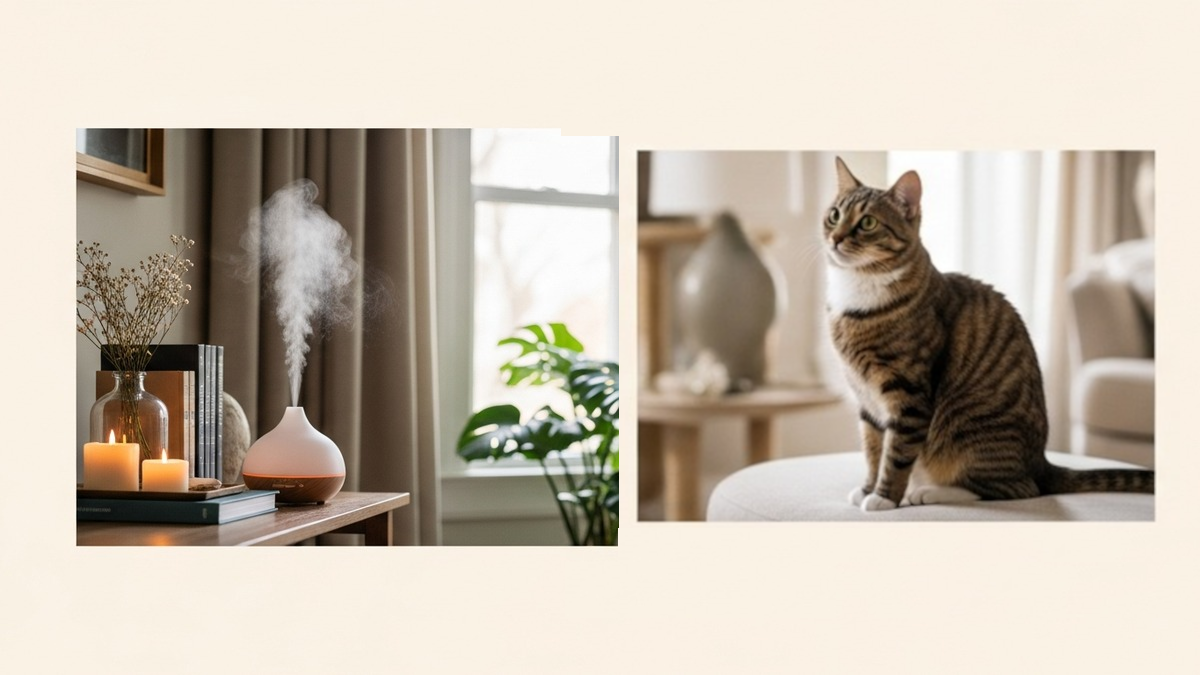
The increasing popularity of essential oils in daily life has led many pet parents to question their applicability in the home, especially in the presence of their beloved companions. However, what can be a powerful ally for human health and well-being can pose a significant risk to our feline friends. The unique physiology of cats makes them particularly vulnerable to the chemical compounds present in these oils, demanding a thorough understanding and extreme caution.
This article aims to clarify why the interaction between essential oils and cats requires special attention. We will cover the crucial metabolic differences that endanger felines, the symptoms of essential oil poisoning to watch for, and the essential preventive measures to ensure optimal feline health and safety in your home. Our goal is to provide safe, evidence-based information so you can make informed decisions about aromatherapy for pets in your household.
Properties and Composition
Essential oils are highly concentrated plant extracts, capturing their aromatic essence and therapeutic properties. They are complex, composed of hundreds of organic molecules that work in synergy. However, it is precisely this complexity that makes them a challenge when discussing feline health and safety.
Key Chemical Components
The composition of essential oils is vast, including diverse classes of molecules like terpenes, alcohols, esters, aldehydes, ethers, oxides, and, critically for cats, phenols and ketones. Components such as terpinen-4-ol (found in tea tree essential oil), limonene (citrus), and eugenol (clove) are common. The core issue lies in feline metabolism, which is unique. Unlike humans and dogs, cats have a crucial enzyme deficiency: the lack or low activity of the Phase II enzyme glucuronidase in their liver. This enzyme is vital for metabolizing and eliminating many substances, including phenols and other essential oil metabolites. Without this efficient detoxification capacity, these substances accumulate in the cat's system, becoming toxic even in small amounts.
Proven Therapeutic Properties (for Humans)
For humans, the therapeutic properties of essential oils are well-documented, including anti-inflammatory, antimicrobial, analgesic, sedative, stimulating, and relaxing actions. Many are used in aromatherapy for stress relief, improved sleep, respiratory support, and even to bolster the immune system. However, it's crucial to reiterate that these benefits do not translate to cats due to the inherent risks of their toxicity. Any attempt to apply these benefits directly to felines without proper research and veterinary guidance can have severe consequences.
Benefits and Applications (Human Context)
While this article's focus is on extreme caution with cats, it's important to understand the general benefits of essential oils to contextualize their use and risks. For humans, aromatherapy is a valuable tool, but its application in homes with pets requires strict adaptations to ensure the safety of all family members.
Physical Health Benefits (for Humans)
For humans, certain essential oils are known for their properties that support physical health. For example, eucalyptus and peppermint are often used for respiratory congestion, while lavender can aid in healing minor cuts and burns. Ginger and mint may alleviate nausea, and many essential oils possess antibacterial and antiviral activity. However, it is imperative to remember that these applications are for human use, and inhalation or topical exposure to these same essential oils can be extremely dangerous for cats, leading to severe respiratory problems and liver toxicity.
Mental and Emotional Health Benefits (for Humans)
In the realm of mental and emotional health, aromatherapy offers a wide range of benefits for humans. Oils like lavender, bergamot, and Roman chamomile are widely used for their anxiolytic and relaxing properties, promoting stress reduction, mood improvement, and sleep induction. Rosemary and lemon can energize and enhance focus. For cats, which are creatures sensitive to their environment, exposure to strong, unfamiliar odors, especially from essential oils, can be stressful and even traumatic, in addition to posing physiological risks. It is crucial to avoid indiscriminate diffusion in an attempt to calm a cat, as the risks far outweigh any supposed benefits.
Methods of Use (and Risks for Cats)
The methods of using essential oils vary, but each presents distinct risks for cats. The way an essential oil is introduced into the environment or applied can directly influence the intensity of a pet's passive exposure.
Aromatic Diffusion
For humans, aromatic diffusion is one of the most popular ways to use essential oils, dispersing micro-particles into the air for inhalation. However, when cats are in the home, this practice should be avoided or carried out with extreme caution. The particles can settle on the cat's fur, and when grooming, the cat will ingest the oil. Furthermore, prolonged inhalation, even if passive, can overwhelm the cat's liver. If diffusion is absolutely necessary for the pet parent, an ultrasonic diffuser should be used (never a heat or candle diffuser) in a very well-ventilated area. The cat must have a clear escape route and a safe zone where no diffusion is occurring. Usage should be short-duration (maximum 15-20 minutes) and in a separate room of the house, far from the cat. NEVER diffuse essential oils near birds or other small animals.
Topical Application (Massage and Baths)
Topical application of essential oils is common for humans, usually diluted in carrier oils for therapeutic massages or added to bath products. For cats, topical application is an ABSOLUTE NO. Cats' skin is thinner and more sensitive, rapidly absorbing substances. Even more dangerous is the feline grooming habit: the cat will lick the applied area, ingesting the essential oil and putting their liver at immediate risk of toxicity. Baths with essential oils are equally dangerous, as the oil can be absorbed through the skin and ingested during drying. Never apply essential oils directly to your cat's skin or fur.
Direct Inhalation
For humans, direct inhalation of essential oils (e.g., from a bottle or on a tissue) is a quick way to achieve therapeutic effects. For cats, direct inhalation is extremely dangerous and must be avoided at all costs. Cats' respiratory systems are very sensitive, and inhaling concentrated particles can cause lung irritation, respiratory distress, and, in severe cases, pulmonary edema. Keep essential oil bottles tightly closed and out of reach of cats to prevent any accidental exposure.
Safety Warnings and Precautions
The safety of cats in environments with essential oils is a paramount concern. Understanding the dangers is the first step to ensuring their animal welfare.
The primary reason for extreme caution is feline metabolism. As mentioned, the deficiency of glucuronidase in the cat's liver prevents the effective breakdown and elimination of compounds like phenols and ketones, leading to accumulation and toxicity. This means even small amounts can be dangerous.
Essential Oils to Absolutely Avoid Around Cats: * Tea Tree (Melaleuca alternifolia): Highly toxic, rich in terpenes and phenols. * Citrus (Lemon, Orange, Bergamot, Grapefruit): Contain d-limonene, dangerous for cats. * Peppermint and Spearmint: Rich in ketones and phenols. * Cinnamon: High content of cinnamaldehyde and eugenol. * Clove: Rich in eugenol, a phenol. * Wintergreen and Birch: Contain methyl salicylate, similar to aspirin, highly toxic. * Eucalyptus: Contains 1,8-cineole. * Thyme and Oregano: Rich in phenols.
Symptoms of Essential Oil Poisoning in Cats: Observe attentively your cat for any of these symptoms of essential oil poisoning after exposure to essential oils: * Lethargy, weakness, depression * Vomiting, diarrhea * Excessive salivation (drooling) * Respiratory distress (coughing, labored breathing) * Ataxia (lack of coordination, stumbling gait) * Muscle tremors, seizures * Skin irritation, redness or swelling (if topical contact occurred) * Watery or reddened eyes
If you suspect essential oil poisoning, seek emergency veterinary care immediately. Bring the essential oil bottle that your cat may have been exposed to to aid in diagnosis.
Warnings for Human Use: Beyond pets, some precautions are necessary for humans. Pregnant or lactating women, children, and individuals with sensitive skin should always consult a healthcare professional before using essential oils. Proper dilution in carrier oils is crucial to avoid topical irritations.
It is crucial to emphasize that the information contained in this article is for educational and informational purposes only. It does not substitute professional advice, diagnosis, or treatment from a qualified veterinarian. If you have any concerns about your pet's health or before starting any new treatment, always consult a veterinary professional.
Blending and Synergies (Human-Focused, Cat-Safe Context)
In the context of aromatherapy, combining essential oils (synergies) can enhance their therapeutic effects for humans. However, in homes with cats, the approach must always be one of risk minimization. The discussion about blends, therefore, focuses on safe practices for the pet parent, keeping cats away from any exposure.
Complementary Essential Oils (for Human Use, with Caution Around Cats)
For human use at home, especially if you share your space with cats, the ideal approach is to prioritize essential oils that, if used with extreme caution and in separate environments, are considered lower risk or can be avoided entirely for maximum safety. Lavender is a popular example, but even this must be used with extreme reservations and kept far from cats. Milder oils, such as Copaiba (which has a lower phenol content), still require the utmost prudence and should never be applied or diffused directly near cats. The concept of 'cat-safe' essential oils is often misunderstood; true safety comes from zero exposure. When considering any essential oil for your personal use in a multi-pet household, prioritize your cat's safety by preventing all contact and inhalation.