
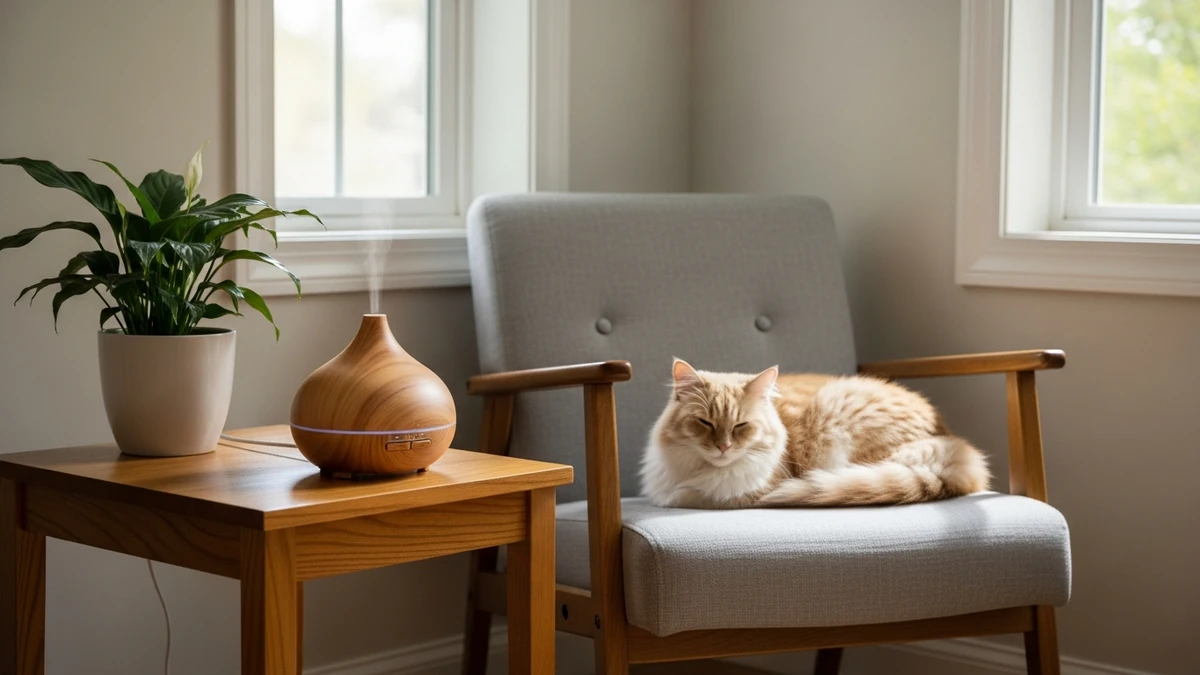
The rising popularity of aromatherapy has brought essential oil diffusers into many homes, promising well-being, relaxation, and a more pleasant atmosphere. However, what's beneficial for humans isn't always safe for our pets. The complex nature of essential oils and the unique physiology of pets like cats and dogs demand a cautious and informed approach, especially when dispersing these substances into the air. This article aims to clarify the risks for pets associated with using essential oil diffusers, addressing the crucial importance of proper ventilation and establishing prudent usage limits. Our goal is to empower pet owners to make informed decisions, ensuring that the desire for a fragranced home doesn't compromise the health and safety of pets who share our living space. Understanding essential oil exposure is key to preventing adverse effects. ## Properties and Composition Essential oils are highly concentrated plant extracts containing volatile compounds that give them their aroma and therapeutic properties. They are produced through steam distillation, cold pressing, or solvent extraction from various plant parts, such as flowers, leaves, bark, roots, and resins. Their complexity lies in the myriad of chemical components, each with potential effects on the body. ### Key Chemical Components The composition of an essential oil is complex and can include hundreds of different organic molecules. Among the most common chemical groups are terpenes (monoterpenes, sesquiterpenes, diterpenes), which often contribute to the characteristic aroma and possess anti-inflammatory or antiseptic properties. Esters, like linalyl acetate in lavender, are known for their relaxing effects. Aldehydes, like citral in citrus oils, can be antimicrobial but also irritating. Ketones, like thujone in some less common oils, can be neurotoxic. Phenols (e.g., eugenol in clove) are potent antimicrobials but also the most irritating and hepatotoxic, especially for pets. Alcohols, such as linalool and geraniol, also have various properties. The variation in the concentration of these components defines the unique profile of each oil, but also its potential risk to pet health. ### Proven Therapeutic Properties For humans, aromatherapy offers a range of therapeutic benefits supported by scientific studies. Inhaling essential oils can influence the limbic system, a part of the brain associated with emotions, memory, and smell. This can lead to reduced stress and anxiety, improved sleep quality, relief from headaches and muscle aches, and even support for the respiratory system. Oils like lavender are renowned for their calming properties, while lemon is known for being invigorating. However, it's crucial to understand that the physiological and metabolic response of pets to these components is drastically different from that of humans. The absence of certain liver enzymes in cats, for example, makes them unable to efficiently metabolize many compounds found in essential oils, leading to toxic accumulation in the liver and other organs. For pet safety, what is therapeutic for one can be dangerous for another. ## Benefits and Applications While this article focuses on risks for pets, it's important to contextualize the potential benefits of aromatherapy for humans and, by extension, how a calmer environment for the owner can indirectly benefit the animal, provided practices are safe and responsible. ### Physical Health Benefits For humans, aromatherapy can support various physical conditions. Inhaling certain essential oils can help relieve nasal congestion, muscle and joint pain (when applied topically and diluted), and even nausea. The antimicrobial and anti-inflammatory properties of some oils contribute to overall well-being. However, it's crucial to reiterate that these benefits are specific to humans, and direct or indirect application via diffusion around pets can be counterproductive and dangerous. Many oils considered beneficial for human respiratory health, such as eucalyptus and peppermint, are extremely toxic to pets, potentially causing severe respiratory irritation and other symptoms of poisoning. ### Mental and Emotional Health Benefits The influence of essential oils on mood and mind is one of the pillars of aromatherapy. Oils like lavender, sandalwood, and bergamot are widely used to reduce stress, anxiety, improve concentration, and promote restful sleep. A tranquil environment and a less stressed owner can create a more positive atmosphere for pets. However, this influence must be achieved through the safe and conscious use of diffusers, ensuring that human benefits do not translate into risks for pets. Constant or high-concentration inhalation by pets can, instead of calming them, provoke stress, respiratory irritation, and other signs of discomfort. ## Methods of Use The way essential oils are used determines the intensity of exposure and, consequently, the level of risk for pets. ### Aromatic Diffusion Aromatic diffusion is the most common way to use essential oils at home, but also the one that poses the greatest risks for pets if proper precautions are not taken. Ultrasonic diffusers disperse a fine mist of water and oil particles into the air, while nebulizing diffusers disperse pure oil. In both cases, particles can be inhaled by pets, irritating their respiratory tracts, lungs, and eyes. Additionally, particles can settle on the animal's fur, and when they groom themselves, they can ingest the oil, which is particularly dangerous for cats due to their enzymatic deficiency. For pet safety, aromatic diffusion must follow strict usage limits: * Proper ventilation: Use the diffuser in a well-ventilated area and always with an open window or a slightly ajar door. * Short periods: Do not leave the diffuser on for more than 15-30 minutes per session, with long intervals between sessions. * Exit route: The pet must always have the freedom to leave the room where the diffuser is operating. Never confine an animal in a room with a running diffuser. * Away from pets: Position the diffuser out of the pets' direct reach and in an area where they are not directly exposed to the mist. * Oil selection: Opt for essential oils safe for pets and in very low concentrations, always with maximum caution. Many popular oils are toxic to pets. Absolutely avoid citrus oils, tea tree oil, peppermint, eucalyptus, cinnamon, pine, and wintergreen. * Observation: Closely observe your pet's behavior. Signs such as sneezing, coughing, difficulty breathing, watery eyes, vomiting, lethargy, or behavioral changes indicate that the diffuser should be turned off immediately, and if symptoms persist, seek veterinary attention. ### Topical Application (Massage and Baths) Topical application of essential oils directly to the skin is a common practice for humans, always with dilution in ideal carrier oils. For pets, this form of use is extremely risky and should not be done without specialized veterinary guidance. The skin of pets is thinner and more sensitive than human skin, absorbing oils faster and more unpredictably. Furthermore, the animal may lick the area where the oil was applied, ingesting it and increasing the risks for pets of poisoning. Cats, in particular, are very sensitive and compulsive groomers, which puts them at high risk of ingestion. In rare cases and under strict veterinary supervision, an extremely low dilution (0.1% or less) of oils considered very safe might be used on dogs, but this is an exception, not the rule. ### Direct Inhalation For humans, direct inhalation, such as smelling oil directly from the bottle or on a cotton ball, is a quick way to reap benefits. For pets, this form of use is categorically discouraged. The concentration of essential oils is too high for the sensitive respiratory system of pets, potentially causing severe irritation, especially in cats and birds. If there is a need to offer aromatic support to an animal under veterinary guidance, inhalation must always be passive and in an extremely open environment, ensuring the animal can move away at any time. Never force essential oil exposure on an animal. ## Safety Warnings and Precautions Pet safety must be the number one priority when considering the use of aromatherapy at home. The list of essential oils toxic to pets is extensive and includes many of the most popular oils for humans. Highly Toxic Essential Oils for Pets (avoid diffusion and contact completely): * Tea Tree Oil (Melaleuca): Especially dangerous for cats and dogs, can cause lethargy, vomiting, tremors, and even coma. * Citrus Oils (Lemon, Orange, Grapefruit, Bergamot): Contain d-limonene, difficult for cats to metabolize, and can cause liver problems and skin irritation. * Peppermint: Contains menthol, which can be toxic and cause gastrointestinal irritation and respiratory problems. * Eucalyptus: Contains 1,8-cineole, irritating to the respiratory tract and toxic if ingested. * Cinnamon: Contains cinnamaldehyde, highly irritating to the skin and mucous membranes. * Pine and Fir: Contain phenols and terpenes that can be toxic and irritating. * Wintergreen: Contains methyl salicylate, which is chemically similar to aspirin and can cause bleeding and gastrointestinal ulcers. * Clove: Contains eugenol, highly toxic to cats and hepatotoxic. * Phenol-rich oils: (e.g., oregano, thyme) are hepatotoxic and irritating. Additional Precautions: * Proper ventilation: Always keep the environment well-ventilated. This dilutes the concentration of essential oils in the air and allows the pet to breathe fresh air. * Usage limits: Keep diffusion sessions short (maximum 15-30 minutes) and infrequent. Turn off the diffuser if you leave the room or the house. * Diffuser placement: Place the diffuser in a location inaccessible to the pet, preventing them from knocking it over, biting it, or being directly exposed to the mist. * Always provide an escape route: The animal must always have the option to leave the room where the diffuser is operating and go to an area with fresh air. * Cleaning: Regularly clean the diffuser to prevent essential oil residue buildup. * Behavior observation: Pay attention to any change in your animal's behavior. Sneezing, coughing, difficulty breathing, itching, eye irritation, lethargy, vomiting, diarrhea, or excessive drooling are signs that the pet may be reacting negatively. * Pregnancy and Lactation (human): Pregnant or breastfeeding women should consult a doctor before using essential oils, as some oils may be contraindicated. * Children and Sensitive Skin (human): Always dilute oils for topical use on children and people with sensitive skin. Perform a patch test on a small skin area. * Caution with birds: Birds have an extremely sensitive respiratory system and should not be exposed to diffused essential oils. Remember that this information does not replace consultation with a qualified veterinarian for specific guidance on your pet's health and well-being. Always consult a healthcare professional before starting any new treatment or wellness protocol. ## Combinations and Synergies When discussing combinations and synergies in the context of diffusers and pets, it's crucial to shift the focus from "which oils to combine to optimize an effect" to "which oils are less risky and how to use them with extreme caution." The main idea is to minimize essential oil exposure and ensure pet safety. ### Complementary Essential Oils In homes with pets, the list of essential oils that can be considered "complementary" for diffusion (with all the caveats of proper ventilation and usage limits) is very restricted. For humans, combining oils can enhance effects. For pets, the best "combination" is to avoid most oils. If there is a very specific need and under veterinary guidance, some oils like lavender (true Lavandula angustifolia) and Roman chamomile (Chamaemelum nobile) are occasionally mentioned as potentially less risky for dogs in extremely low dilutions and well-ventilated environments, always with the animal having complete freedom to move away. However, even these oils are not completely risk-free, especially for cats, which are metabolically more sensitive. Dilution for diffusion is inherently limited, as the goal is to disperse molecules into the air. Therefore, the general rule is: if you have pets, use essential oils with the utmost sparingly and consideration, and preferably, avoid diffusion. Opt for alternative methods to freshen the air, such as air purifiers or safe dried herb sachets. ### Ideal Carrier Oils For aromatic diffusion, ideal carrier oils are not relevant, as essential oils are dispersed directly into the air (or in water, in the case of ultrasonic diffusers). However, if, in rare circumstances and under strict veterinary guidance, a topical application of essential oil were considered for a pet, the choice of carrier oil would be crucial to ensure safety and proper dilution. Pure, cold-pressed, good-quality vegetable oils are ideal. Examples include: * Fractionated coconut oil (MCT): Light, non-greasy, and well-absorbed. * Sweet almond oil: Rich in vitamin E, emollient, and gentle. * Jojoba oil: Similar to natural skin sebum, excellent for all skin types. * Grapeseed oil: Light and non-comedogenic. The dilution for pets would be drastically lower than for humans, generally ranging from 0.1% to 0.5% (i.e., 1-3 drops of essential oil per 30ml of carrier oil), and always applied to an area where the animal cannot lick. However, it is essential to reiterate that topical application to pets should be avoided unless specifically recommended and supervised by a veterinarian experienced in veterinary aromatherapy. Accidental ingestion, even of diluted oils, can present risks for pets. ## Final Considerations Aromatherapy is a powerful tool for human well-being, but its application in environments shared with pets requires a very high level of discernment and precaution. The beauty and complexity of essential oils lie in their chemical compounds, which, for our pets, can be both irritating and frankly toxic, especially when diffused into the air. The health and safety of pets depend on our ability to make conscious and informed choices. We reiterate that the key to a harmonious and safe home is understanding the risks for pets, ensuring proper ventilation, and respecting usage limits when using essential oil diffusers. Avoid toxic essential oils and, when you do use them, do so for short periods, in ventilated areas, and always offering your pet the freedom to move away. Careful observation of your animal's behavior is your best monitoring tool. In case of any doubt or sign of discomfort from your pet, do not hesitate to seek a veterinarian. Pet health is an ongoing commitment. By prioritizing safety and adopting a responsible approach, we can enjoy the benefits of aromatherapy without compromising the well-being of our beloved four-legged companions. A safe environment for them is a happier environment for everyone.
Essential Oil Diffusers and Pets: Risks, Ventilation, and Safe Usage Limits
ADVERTISEMENT