Aromatherapy, the ancient art of using essential oils to promote physical and emotional well-being, extends beyond personal use and integrates beautifully into the home environment. Beyond simply infusing the air with pleasant fragrances, essential oils offer a powerful, natural alternative for caring for our clothes, closets, and fabrics, imparting a fresh aroma and often providing beneficial properties that go far beyond mere scent.
In this article, we'll explore how to safely and effectively incorporate aromatherapy for clothes, closets, and fabrics, ensuring your home smells wonderful and feels healthier. We'll cover the properties of essential oils, the benefits of their application on textiles and surfaces, the best methods of use, and, crucially, the safety warnings and necessary precautions for responsible practice, promoting natural home cleaning with intelligence and care.
Properties and Composition
Essential oils are highly concentrated plant extracts, rich in volatile compounds that give them their aroma and therapeutic properties. Their chemical complexity forms the basis for the wide range of benefits they offer, from antimicrobial action to relaxing or invigorating effects.
Key Chemical Components
Composition varies by plant but includes classes such as: * Terpenes: Citrus and woody notes (limonene, pinene), with antibacterial and purifying properties. * Esters: Soft, floral aromas (linalyl acetate), often calming. * Aldehydes: Fresh fragrances, some with repellent potential (citronellal). * Phenols: Potent compounds with antiseptic properties (eugenol), requiring caution. * Ketones: Present in oils like rosemary, can be stimulating, but require attention in high doses. The synergy between these components defines the therapeutic profile of each essential oil.
Proven Therapeutic Properties
Essential oils for fabrics offer more than just scent: * Antibacterial and Antifungal: Oils like Tea Tree, Eucalyptus, and Thyme combat bacteria and fungi, helping to eliminate odors and maintain hygiene. * Antiseptic: Contribute to air and surface purification. Lemon and Sweet Orange are excellent. * Repellent: Citronella, Lemongrass, and Geranium can deter insects, useful for closets and stored clothes. * Relaxing and Calming: Lavender, Roman Chamomile, and Sandalwood promote tranquility and wellness at home. * Stimulating and Refreshing: Peppermint and Rosemary invigorate the environment.
Benefits and Applications
Applying essential oils to clothes, closets, and fabrics enhances air quality, protects items, and promotes harmony.
Benefits for Physical Health
Using safe essential oils for home on fabrics provides: * Reduction of Allergens and Microorganisms: Antimicrobial oils purify air and fabrics (dust mites, bacteria, fungi), preventing allergies, especially in bedding. * Odor Neutralization: Oils like Lemon and Litsea Cubeba neutralize unpleasant odors, providing freshness. Ideal for eliminating odors in closets and shoes. * Improved Indoor Air Quality: Diffusion and application release components that purify the air, preventing mold and musty smells.
Benefits for Mental and Emotional Health
Natural home fragrance can: * Promote Relaxation and Sleep: Linens scented with Lavender or Roman Chamomile induce relaxation and peaceful sleep. * Increase Focus and Concentration: Sprays with Peppermint or Rosemary in a home office keep the mind alert. * Reduce Stress and Anxiety: Calming aromas create a spa-like atmosphere at home. * Elevate Mood: Citrus oils like Sweet Orange and Bergamot energize the environment.
Methods of Use
Using essential oils on clothes, closets, and fabrics requires specific methods for effectiveness and safety.
Aromatic Sprays for Fabrics and Rooms
A versatile way to apply essential oils to fabrics. * How to make: In a dark glass spray bottle (100ml), add grain alcohol (or vodka) and 20-30 drops of your chosen essential oils. Shake well. For a water-based solution, use distilled water and a solubilizer (Polysorbate 20) before adding oils. * Application: Spray on curtains, upholstery (test first), bedding, and inside closets to freshen closets and drawers. Allow to dry. * Tip: Lemon, Tea Tree, and Lavender for purifying and refreshing.
Aromatic Sachets and Cotton Balls
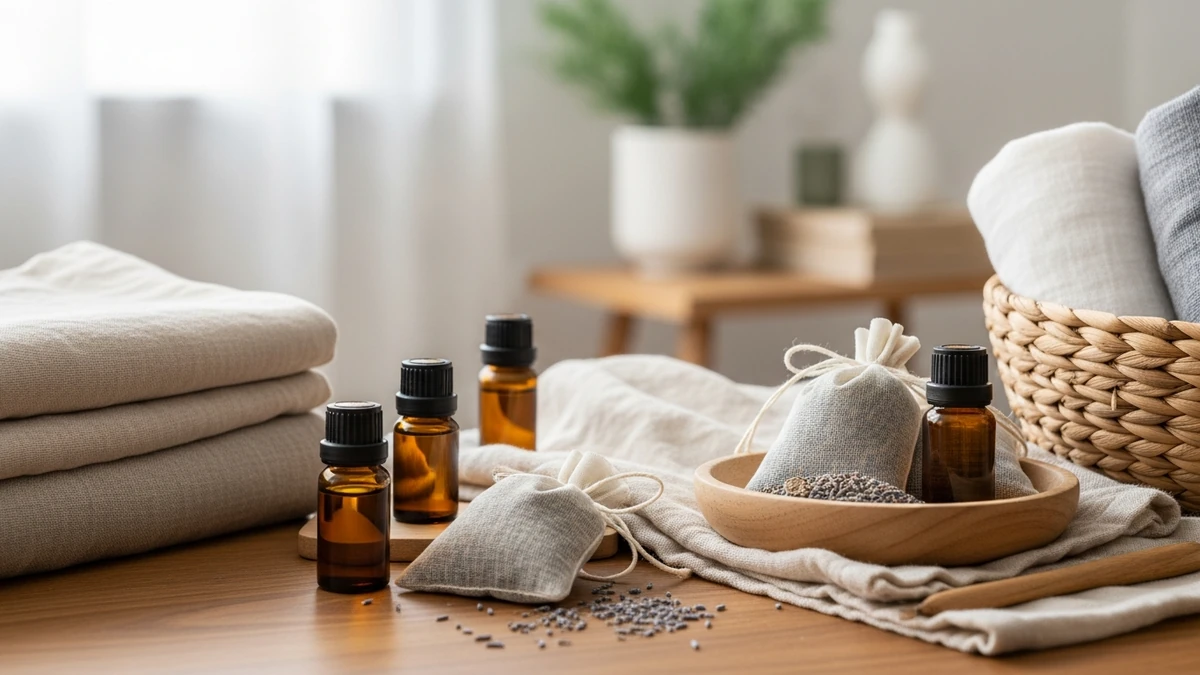
Ideal for keeping drawers, closets, and luggage with a pleasant scent for clothes. * Sachets: Use porous fabric bags filled with rice, coarse salt, or dried flowers. Drip 5-10 drops of essential oil onto the contents. * Cotton Balls/Pom-poms: Drip 3-5 drops and place in drawers or closets. Recharge every 3-7 days. * Suggested Oils: Cedarwood (to repel moths), Lavender (freshness), Rosemary (invigorating).
In Laundry Washing
Integrating essential oils into your laundry with essential oils brings freshness. * In Fabric Softener: Add 5-10 drops to the fabric softener compartment. Choose mild oils like Lavender or Sweet Orange. * In the Dryer: Drip 3-5 drops onto wool dryer balls and place them with your clothes. Helps reduce static and add scent. * Caution: Avoid applying oils directly to the wash water with soap to prevent staining. Do not use pure citrus oils on white clothes exposed to direct sunlight.
Safety Warnings and Precautions
Using essential oils requires responsibility to avoid adverse reactions and ensure safety.
- Dilution is Key: Never apply pure oils to fabrics that will come into direct contact with skin. Dilute in alcohol or water/solubilizer. High concentration can cause stains or irritation.
- Sensitive Skin and Allergies: Residues on fabrics can come into contact with skin. Individuals with sensitive skin should test in an inconspicuous area.
- Pregnancy and Lactation: Avoid certain oils during pregnancy and lactation. Consult a professional. Oils like Peppermint, Rosemary, and Clary Sage should be avoided. Use mild oils such as Lavender and Sweet Orange in minimal doses.
- Children: Use very low concentrations and mild oils. Avoid Eucalyptus and Peppermint near young children. Keep oils out of reach of children.
- Pets: Many oils are toxic to pets, especially cats. Avoid citrus oils, Eucalyptus, Tea Tree, Peppermint near animals. Ensure good ventilation and prevent direct contact of pets with scented fabrics.
- Phototoxicity: Citrus oils can be phototoxic on skin. For fabric sprays, ensure the fabric is dry and the oil is well-diluted to prevent staining.
- Storage: Store oils in dark bottles, away from light and heat. Keep out of reach of children and pets.
Essential oils are not medicines and do not replace medical treatments. If you have any doubts about your health or the use of essential oils, always seek guidance from a qualified healthcare professional and a certified aromatherapist.
Combinations and Synergies
Combining oils can enhance effects and create complex aromas for fabrics and closets.
Complementary Essential Oils
Choose oils that harmonize for effective blends.
- For Freshness and Purification:
- Lemon, Litsea Cubeba, and Tea Tree: Potent for eliminating odors and purifying.
- Eucalyptus Radiata and Peppermint: Invigorating for spaces that need a "wake-up call."
- For Relaxation and Well-being:
- Lavender and Roman Chamomile: Classic relaxing blend for sheets and pajamas.
- Sandalwood and Vetiver: Earthy aromas for grounding and calm.
- For Insect Repellent and Protection:
- Cedarwood, Citronella, and Geranium: Natural barrier against moths and insects in wardrobes.
- Lemongrass and Rosemary: Repellents with a fresh herbal scent.
- For Mood Uplift:
- Sweet Orange, Bergamot, and Grapefruit: Citrus oils that bring energy and optimism.
- Ylang Ylang and Geranium: Floral notes that promote emotional balance.
Ideal Carriers and Solubilizers for Fabrics
For fabrics, the goal is to prevent staining and ensure proper dispersion.
- Grain Alcohol: An ideal carrier for aromatic fabric sprays. It disperses oils and evaporates without leaving residue. Vodka is an alternative.
- Solubilizers: Essential for water-based sprays (e.g., Polysorbate 20), ensuring proper mixing and preventing oil separation that could lead to stains.
- Unscented Fabric Softener Base: For adding to laundry, use unscented, neutral fabric softener bases.
- Porous Materials: For sachets or cotton balls, materials like rice, salt, wood, or felt act as a "carrier," absorbing and slowly releasing the oil.
Final Considerations
Aromatherapy for clothes, closets, and fabrics offers a natural approach to home maintenance. By integrating essential oils, you can enjoy purifying and balancing aromas and benefits.
Remember the importance of education and conscious use. Oil quality, correct dilution, and precautions are pillars for safe practice. Experiment and transform your space into a sanctuary of natural home fragrance, exuding freshness, comfort, and harmony. Your home becomes a reflection of the care and well-being at home you seek.