
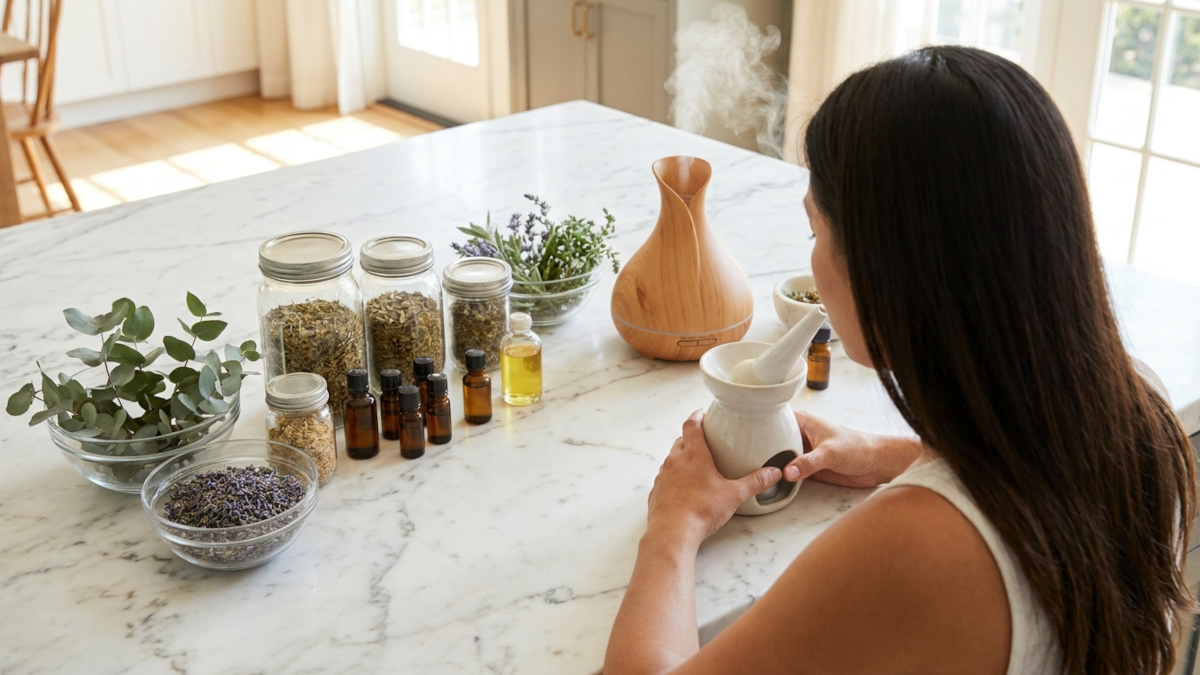
Aromatherapy, an ancient practice utilizing essential oils extracted from plants, has gained prominence as a valuable tool for promoting well-being and health. In the context of respiratory comfort, this natural approach offers significant support for the airways, helping maintain clear breathing and facilitating recovery from common daily discomforts.
With the growing search for complementary methods that integrate body and mind, understanding how essential oils work and their safe usage methods becomes crucial. This article aims to demystify aromatherapy applied to respiratory comfort, presenting the properties of specific oils, their practical applications, and the necessary safety precautions for conscious and effective use, contributing to a healthier routine and improved quality of life.
Properties and Composition
Essential oils are complex mixtures of volatile chemical compounds, responsible for the aromas and therapeutic properties of plants. When applied to respiratory health, these substances act in various ways, from relieving nasal congestion to providing immune support. Choosing the correct oil and understanding its composition are crucial for maximizing benefits.
Key Chemical Components
For respiratory comfort, certain chemical components stand out. 1,8-cineole, abundant in oils like Eucalyptus Radiata and Rosemary, is known for its expectorant and decongestant properties. Menthol, found in Peppermint, provides a sensation of coolness and relief from nasal congestion. Alpha-pinene, found in conifer oils, has anti-inflammatory and expectorant actions. Other components like limonene (citrus oils) and terpinen-4-ol (Tea Tree) contribute antiviral and antibacterial actions, important for combating infectious agents.
Proven Therapeutic Properties
Scientific research has validated many of the therapeutic properties attributed to essential oils for the respiratory system. Their actions can include:
- Expectorants: Help thin and eliminate mucus, facilitating clear breathing. Oils like Eucalyptus Radiata are excellent.
- Decongestants: Reduce swelling and inflammation of mucous membranes, relieving nasal congestion. Peppermint is widely used.
- Anti-inflammatory: Decrease inflammation in the airways, useful in cases of bronchitis or allergic rhinitis. Copaiba is an example.
- Antiviral and Antibacterial: Can help combat microorganisms that cause colds and flu. Tea Tree is a potent oil.
- Antispasmodic: Relax the smooth muscles of the airways, which can alleviate cough and shortness of breath.
Benefits and Applications
Integrating aromatherapy into daily routines for respiratory comfort offers a range of benefits for both body and mind. The strategic use of essential oils can transform the experience of dealing with respiratory discomforts, promoting a sense of relief and overall well-being.
Benefits for Physical Health
Physically, essential oils work synergistically to optimize respiratory function. They can:
- Relieve Nasal and Sinus Congestion: Oils like Eucalyptus Radiata and Peppermint are effective for clearing airways, facilitating air passage and promoting clear breathing. Useful in cases of sinusitis, allergic rhinitis, colds and flu.
- Decrease Cough Frequency and Intensity: Oils with expectorant properties help thin mucus, while antispasmodic ones can soothe the throat and bronchi, reducing irritation and coughing.
- Offer Immune Support: Some essential oils, such as Tea Tree, possess antiviral and antibacterial properties that can strengthen the body's defenses against pathogens affecting the respiratory system, aiding in the prevention and recovery from infections.
- Reduce Airway Inflammation: Anti-inflammatory properties found in oils like Copaiba can alleviate swelling and irritation in mucous membranes, bringing comfort in inflammatory conditions.
Benefits for Mental and Emotional Health
The act of breathing is intrinsically linked to emotional state. Respiratory difficulties can generate anxiety and stress. Aromatherapy offers a path to alleviate this interconnection:
- Stress and Anxiety Reduction: Oils like Lavender and Bergamot, diffused during times of respiratory discomfort, can calm the nervous system, reducing anxiety and stress associated with difficulty breathing. Clear and calm breathing contributes to a sense of peace.
- Improved Sleep Quality: Nasal congestion and nighttime coughing can disturb sleep. Using appropriate essential oils before bed can promote clear breathing and relaxation, resulting in more restorative sleep and greater well-being.
- Sense of Comfort and Well-being: The simple act of inhaling pleasant and therapeutically beneficial aromas can lift the mood and promote an overall sense of well-being, helping to cope with the fatigue and malaise that frequently accompany respiratory issues.
Methods of Use
The effectiveness of aromatherapy in supporting respiratory comfort depends on choosing the correct application method, adapted to individual needs and the essential oil used. It is crucial to always respect dilution guidelines and safety precautions.
Aromatic Diffusion
Diffusion is one of the most popular and safest ways to use essential oils for respiratory comfort. An ultrasonic essential oil diffuser disperses micro-particles of oil into the air, allowing for continuous and gentle inhalation of therapeutic compounds.
- How to use: Add 3 to 7 drops of the chosen essential oil to the diffuser's water reservoir.
- Duration: Diffuse for 15 to 30 minutes, two to three times a day, or as needed. Avoid prolonged continuous diffusion.
- Environments: Ideal for bedrooms, offices, and living rooms.
- Recommended oils: Eucalyptus Radiata, Peppermint (use with caution), Tea Tree, Lemon, Lavender. For children, opt for gentler oils like Eucalyptus Radiata or Mandarin, and reduce the number of drops.
Topical Application (Massage and Baths)
Topical application allows essential oils to be absorbed through the skin, acting locally on the airways. It is crucial to always dilute in a carrier oil.
-
Massage:
- Dilution: For adults, 1% to 3% (2-6 drops of EO per 10ml of carrier oil). For children, pregnant individuals, and the elderly, use lower dilutions (0.5% to 1%).
- Application areas: Gently massage onto the chest, back (lung area), throat, and soles of the feet.
- Ideal carrier oils: Sweet almond oil, fractionated coconut oil, jojoba oil, or grapeseed oil.
- Essential oils for massage: Eucalyptus Radiata, Lavender, Copaiba, Tea Tree.
- Warnings: Perform a patch test for sensitivity. For pregnant or lactating individuals and children, consult a qualified professional before topical use.
-
Baths and Foot Soaks:
- How to use: Add 5 to 10 drops of the essential oil to a tablespoon of carrier oil or unscented castile soap and mix into warm bathwater or a foot soak. Pre-dilution is essential.
- Benefits: The steam from the water aids inhalation, while skin absorption promotes relaxation and relief.
- Recommended oils: Lavender, Eucalyptus Radiata (use with caution).
Direct Inhalation
Direct inhalation is a quick and effective method to deliver essential oils directly to the airways, providing immediate relief for nasal congestion and other discomforts.
- Steam Inhalation (with hot water bowl):
- How to use: In a bowl of hot (not boiling) water, add 1 to 2 drops of the essential oil (e.g., Eucalyptus Radiata or Tea Tree). Cover your head with a towel and inhale the steam for 5 to 10 minutes, keeping your eyes closed.
- Caution: Maintain a safe distance to avoid burns. Not recommended for young children, severe asthmatics, or individuals with epilepsy without professional supervision.
- Dry Inhalation (on cotton or personal inhaler):
- How to use: Place 1 drop of the essential oil on a cotton ball, tissue, or the wick of a personal inhaler. Bring to your nose and inhale deeply a few times.
- Benefits: Convenient for on-the-go use, offering quick relief.
- Recommended oils: Peppermint (only 1 drop and with caution due to its intensity), Eucalyptus Radiata, Lemon.
Safety Warnings and Precautions
Safe use of aromatherapy is paramount to avoid adverse reactions and ensure maximum benefit. Below are important precautions and warnings:
- Proper Dilution: Never apply undiluted essential oils directly to the skin. Always dilute them in carrier oils.
- Patch Test: Before applying a new oil to your skin, perform a patch test on a small area and observe for 24 hours.
- Pregnancy and Lactation: Many essential oils are contraindicated or require caution. Consult a doctor or specialized aromatherapist.
- Babies and Children: Use gentle oils (e.g., Lavender, Mandarin, Eucalyptus Radiata) in extremely low dilutions. Avoid Peppermint and Eucalyptus Globulus in children under 6 years old, especially near the face and chest, due to the risk of respiratory spasms.
- Pets: Some essential oils are toxic to animals. Keep diffusers in well-ventilated areas and away from pets.
- Pre-existing Health Conditions: Individuals with asthma, epilepsy, hypertension, or other conditions should consult a healthcare professional before using essential oils.
- Internal Use: Ingestion of essential oils is not recommended for the general public unless under the strict supervision of a qualified professional.
- Photosensitivity: Citrus oils (Lemon, Bergamot) can cause sun sensitivity when applied to the skin. Avoid direct sun exposure for 12 to 24 hours.
- Shelf Life and Storage: Store essential oils in dark glass bottles, away from light, heat, and humidity.
Disclaimer: The information contained in this article is for educational purposes only and does not replace professional medical advice, diagnosis, or treatment. Always consult a qualified healthcare professional for any questions related to your health condition or before starting any new treatment.
Blends and Synergies
The beauty of aromatherapy lies in the possibility of combining different essential oils to create synergies, where the combined action of the oils is more potent than the sum of their individual parts. For respiratory comfort, certain blends can optimize the benefits.
Complementary Essential Oils
When creating a synergy for respiratory comfort, consider oils that complement each other's actions:
- Expectorant and Decongestant: Eucalyptus Radiata (gentle expectorant, mild antiviral) + Tea Tree (antibacterial, antiviral) + Lemon (purifying).
- Anti-inflammatory and Calming: Copaiba (anti-inflammatory) + Lavender (calming, antispasmodic) + Bergamot (stress reduction). Ideal for soothing inflammation and irritated coughs.
- For Children (with extreme caution and dilution): Eucalyptus Radiata (gentle expectorant) + Lavender (calming) + Mandarin (relaxing, gentle).
Ideal Carrier Oils
Carrier oils are essential for diluting essential oils before topical application, ensuring safety and optimizing absorption. They are vehicles that "carry" the essential oils into the skin.
- Sweet Almond Oil: Lightweight, easily absorbed. Suitable for most skin types.
- Fractionated Coconut Oil (MCT): Odorless, colorless, non-greasy, and has a long shelf life. An excellent option for dilutions.
- Jojoba Oil: Mimics the skin's natural sebum. Excellent moisturizer and well-tolerated.
- Grapeseed Oil: Lightweight with good absorption, ideal for massages. Possesses antioxidant properties.
The choice of carrier oil can influence the texture of the application and the speed of absorption. For respiratory comfort, any of the mentioned vegetable oils will be effective.
Final Considerations
Aromatherapy offers a natural and complementary path to support respiratory comfort, providing relief for nasal congestion, coughs, and other discomforts that affect clear breathing and overall well-being. By using essential oils with purpose and knowledge, these powerful resources can be integrated into daily routines, promoting a better quality of life.
It is crucial, however, to approach aromatherapy with responsibility and respect. Knowledge of oil properties, correct usage methods, proper dilutions, and safety precautions are pillars for a beneficial and risk-free experience. Consulting a qualified aromatherapy professional can enrich the journey, offering personalized and safe guidance, especially in cases of pre-existing health conditions, pregnancy, lactation, or for use with children and the elderly.
By embracing aromatherapy for respiratory comfort, you not only seek physical relief but also nurture your emotional and mental well-being, reinforcing the connection between body, mind, and nature. Breathe deeply, with awareness and safety, and let therapeutic aromas guide you toward clear and full breathing.