Aromatherapy is an ancient practice that utilizes essential oils extracted from plants to promote physical, mental, and emotional well-being. With the growing popularity of these powerful extracts, there's a need to understand not only their properties but also the most appropriate and safest ways to use them. The choice of application method is as crucial as selecting the oil itself, as it directly influences absorption, therapeutic action, and user safety.
This detailed guide aims to demystify the primary ways to use essential oils: aromatic diffusion, topical application, and direct inhalation. Understanding the practical differences between these methods is fundamental for any aromatherapy enthusiast or professional, ensuring benefits are maximized and safety precautions are rigorously followed. Let's explore how each technique interacts with the body and mind, and how to make informed choices for your specific needs.
Properties and Composition
To understand the effectiveness of each application method, it's essential to know the properties and chemical composition of essential oils. Each oil is a complex blend of hundreds of chemical compounds that work in synergy, defining its aroma, characteristics, and, crucially, its preferred pathways of action in the body.
Key Chemical Components
Essential oils are composed of a vast array of organic molecules, including monoterpenes, sesquiterpenes, alcohols, esters, phenols, aldehydes, and ketones, among others. The predominance of certain chemical groups gives an oil its unique therapeutic properties. For instance, oils rich in monoterpene alcohols (like lavender's linalool) are often relaxing and anti-inflammatory, while those with phenols (like clove's eugenol) are potent antiseptics. An oil's volatility – its ability to evaporate into the air – is also determined by its composition and is a key factor for diffusion and inhalation.
Proven Therapeutic Properties
The therapeutic properties of essential oils are extensively studied and include analgesic, anti-inflammatory, antibacterial, antiviral, antifungal, expectorant, anxiolytic, sedative, and stimulating actions, among others. An oil with expectorant properties (such as Eucalyptus globulus) will be particularly effective when inhaled to decongest the respiratory tract. Conversely, an oil with analgesic properties (like peppermint) can be applied topically to relieve muscle aches. The choice of usage method should always align with the desired therapeutic property and expected effect.
Benefits and Applications
Essential oils offer a wide range of benefits, encompassing both physical health and mental and emotional well-being. How they are used will largely determine which of these benefits will be most prominent and accessible.
Benefits for Physical Health
For physical health, essential oils can be used to alleviate muscle and joint pain, improve circulation, combat infections, promote skin healing, support the respiratory system in cases of congestion and cough, and aid digestion. For localized pain, topical application with a carrier oil is generally the most recommended, allowing the compounds to act directly on the affected area. In cases of respiratory issues, inalation or diffusion are excellent, as the molecules reach the airways directly, promoting decongestion and expectoration. Choosing the correct method enhances the oil's action in the body.
Benefits for Mental and Emotional Well-being
In the realm of mental and emotional well-being, essential oils are widely used to reduce stress, anxiety, insomnia, improve mood, and promote focus and concentration. Here, inhalation and diffusion methods are particularly effective. When inhaled, essential oil molecules quickly travel to the brain's limbic system, which is responsible for emotions, memory, and smell. This allows for an almost immediate response in mood and emotions. Oils like lavender for relaxation, lemon for mood elevation, and peppermint for focus are clear examples of how inalation can be used to impact psychological well-being.
Methods of Use
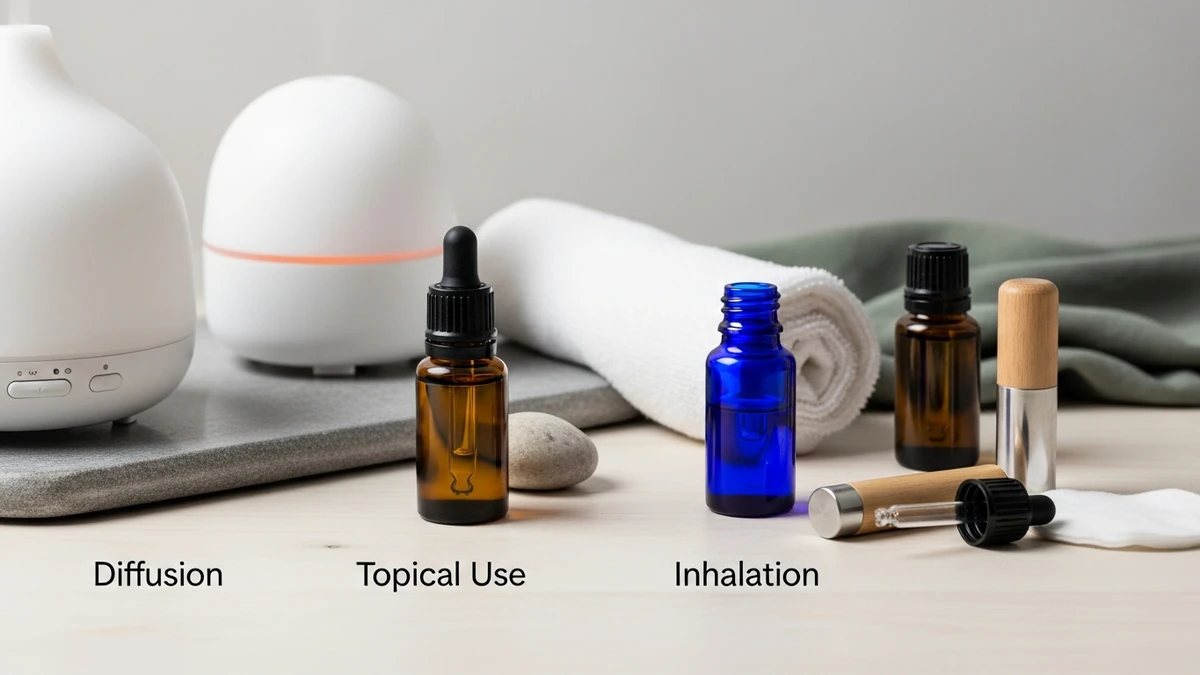
Understanding the specifics of each usage method is central to safe and effective aromatherapy. The three main approaches – aromatic diffusion, topical application, and direct inhalation – have distinct mechanisms of action and are indicated for different purposes.
Aromatic Diffusion
Aromatic diffusion is the method of dispersing essential oils into the air, allowing their molecules to be inhaled and fill the environment with their aromas and therapeutic properties. It is ideal for creating a specific ambiance (relaxing, energizing, purifying), improving mood, supporting the respiratory system, and purifying the air. There are several types of diffusers:
- Ultrasonic diffusers: Use high-frequency vibrations to create a fine mist of water and oil, which is then dispersed into the air. They are popular, quiet, and also act as humidifiers. Ideal for creating a relaxing atmosphere or for respiratory support.
- Nebulizing diffusers: Do not use water, dispersing pure oil into very fine micro-particles. They are more potent and deliver a higher concentration of oil into the air, making them excellent for therapists and for situations requiring more intense action, such as during airborne infections.
- Heat diffusers: Gently heat the oil to evaporate it. While effective, excessive heat can alter the chemical composition of some oils. They are generally simpler and more economical.
- Reed diffusers: Utilize porous reeds that absorb the oil and slowly evaporate it. They are low intensity and ideal for small spaces or as decorative items.
Considerations for diffusion: Keep diffusion periods intermittent (e.g., 30 minutes on, 30 minutes off) to prevent olfactory saturation and overexposure, especially for young children, the elderly, pregnant individuals, and pets. Ensure good ventilation in the room and choose appropriate oils for diffusion, avoiding very strong or irritating oils.
Topical Application (Massage and Baths)
Topical application involves applying diluted essential oils directly to the skin. It's an effective way to achieve localized action and also allows compounds to be absorbed into the bloodstream, offering systemic benefits. Dilution is crucial here to prevent skin irritation and sensitization, and is always done with carrier oils.
- Massage: Mix the diluted essential oil into a carrier oil (such as fractionated coconut oil, jojoba, or sweet almond oil) and massage into the desired area. Excellent for muscle aches, joint pain, tension, skin issues, and promoting relaxation. Massage increases circulation and facilitates absorption.
- Compresses: Add a few drops of diluted essential oil to warm or cool water, soak a clean cloth, and apply to the affected area. Useful for aches, swelling, inflammation, or fever.
- Baths: Add essential oils to bath salts, neutral shower gel, or directly to bathwater, always diluted in a dispersing agent (like honey, milk, or a carrier oil) to prevent them from floating on the surface and making pure contact with the skin. Promotes relaxation, pain relief, or respiratory support, depending on the chosen oils. Avoid excessively hot baths for pregnant individuals and children.
- Creams and lotions: Essential oils can be added to neutral base creams and lotions for skin care or localized therapeutic applications.
Considerations for topical application: Always perform a skin sensitivity test (patch test) on a small area of the skin 24 hours before use. Be aware of the phototoxicity of some oils (citrus oils like lemon, bergamot) which can cause severe burns under sun exposure. Maintain proper dilution, especially for children, the elderly, pregnant or lactating individuals, and people with sensitive skin (generally 0.5% to 2%). Avoid applying to mucous membranes, eyes, and sensitive areas.
Direct Inhalation
Direct inhalation is the quickest way for essential oils to act on the respiratory system and the limbic system, which controls emotions. It is ideal for relieving acute respiratory problems, promoting focus, reducing anxiety, or managing nausea.
- Directly from the bottle: Simply open the bottle and gently inhale the aroma for a few seconds. This is a quick and discreet method, excellent for emergency use or a rapid mood or focus boost.
- Personal inhaler (stick): Reusable plastic inhalers with a cotton wick where essential oil drops are added. Compact and convenient to carry and use anywhere.
- Hot water bowl: Add 1-2 drops of the essential oil to a bowl of hot water, cover your head with a towel, and inhale the vapor for a few minutes. Be cautious of very hot steam and avoid for asthmatics or young children due to the risk of burns or respiratory crisis. This method is very effective for nasal congestion and respiratory issues.
- Cotton ball or tissue: Place 1-2 drops on a cotton ball or tissue and inhale as needed.
Considerations for direct inhalation: Use in moderation. Avoid inhaling very strong or pungent oils directly for long periods. For children, inhalation should be gentler and of shorter duration. Patients with asthma or other respiratory conditions should exercise caution and consult a professional before using essential oils via inhalation. Inhalation is a potent method of use and should be done with high-quality, pure essential oils.
Safety Warnings and Precautions
Safety is the utmost priority when using essential oils. While natural, they are extremely concentrated and potent substances, requiring respect and knowledge to avoid adverse reactions.
- Dilution is key: Never apply undiluted essential oils directly to the skin, with the exception of rare, specific situations and under professional guidance. Always dilute in a carrier oil before topical application.
- Patch test: Before using a new essential oil topically, apply a small, diluted amount to the inside of your forearm and observe for 24 hours to check for any signs of irritation or allergy.
- Phototoxicity: Some essential oils, especially citrus ones (bergamot, lemon, orange, grapefruit), can cause severe burns if skin is exposed to the sun or tanning beds after application. Avoid sun exposure for at least 12-18 hours after topical use of these oils.
- Internal use: Ingesting essential oils is not recommended without the guidance and supervision of a qualified health professional experienced in clinical aromatherapy. Many oils are toxic if ingested and can cause internal damage.
- Children, pregnancy, and lactation: These populations are more sensitive. Dilution should be lower, and certain oils should be avoided entirely. Always consult an aromatherapy professional or doctor before using essential oils in these cases. Avoid oils with camphor, menthol, or 1,8-cineole (Eucalyptus globulus, rosemary) in young children and pregnant individuals.
- Pre-existing medical conditions: Individuals with epilepsy, high blood pressure, asthma, kidney or liver problems, or other chronic conditions should seek medical advice before using essential oils.
- Pets: Some essential oils are toxic to pets, especially cats, due to their inability to metabolize certain components. Avoid prolonged diffusion in environments with pets and never apply directly to them without veterinary guidance.
The information contained in this article is for educational and informational purposes only. It is not a substitute for professional medical advice, diagnosis, or treatment. Always consult a qualified healthcare professional before starting any new wellness regimen or if you have questions about a medical condition. Essential oils are not medicines and should not be used to diagnose, treat, cure, or prevent diseases.
Combinations and Synergies
Aromatherapy is also the art of combining essential oils to create synergies, where the combined action of the oils is greater than the sum of their individual parts. Understanding how to blend oils and choose the right carrier oil is fundamental to optimizing benefits.
Complementary Essential Oils
When combining essential oils, we aim to complement their therapeutic properties or create a more complex and pleasant aroma. For example, lavender (relaxing) can be blended with Roman chamomile (calming) to intensify the relaxing effect. Peppermint (energizing and focusing) can be synergized with lemon (revitalizing and mood-lifting) for a blend that promotes concentration and energy. It's important to consider the safety of each oil individually and in combination, ensuring that dilutions are appropriate for all oils in the blend.
Ideal Carrier Oils
Carrier oils are vegetable oils used to dilute essential oils and aid their absorption into the skin, while also offering their own therapeutic properties. The choice of carrier oil depends on skin type, intended use, and desired absorption:
- Fractionated coconut oil (MCT): Light, odorless, non-greasy, and fast-absorbing. Excellent for oily skin and massages, as it doesn't clog pores. A very versatile universal carrier.
- Jojoba oil: Technically a liquid wax, it is very similar to human skin's natural sebum, making it ideal for all skin types, including oily and acne-prone skin. Moderate absorption.
- Sweet almond oil: Rich in vitamins E and A, it's an excellent emollient. Ideal for dry and sensitive skin, massages, and moisturization. It has slower absorption, which makes it great for glide in massages.
- Grapeseed oil: Light and fast-absorbing, it's rich in antioxidants. Good for oily and combination skin.
- Rosehip oil: Known for its regenerative and healing properties. Excellent for mature skin, spots, and scars, but should be used in smaller proportions due to its cost and characteristic aroma.
Final Considerations
The journey through aromatherapy is an invitation to self-care and the conscious use of natural resources. Mastering the nuances of diffusion, topical application, and direct inhalation is more than just learning techniques; it's a fundamental step to ensure safety and efficacy in using essential oils. Each method offers a unique gateway to the benefits these concentrated extracts can provide, whether to alleviate physical discomfort, calm the mind, or uplift the spirit.
Always remember that essential oil quality is paramount. Invest in pure essential oils from reliable sources, and familiarize yourself with their specific properties and precautions. Proper dilution, skin sensitivity testing, and respecting guidelines for sensitive groups are the foundation of a safe and responsible practice. By choosing the most appropriate method of use for each situation, you will not only be maximizing the therapeutic potential of the oils but also cultivating a harmonious and informed relationship with aromatherapy. Be a conscious user and fully enjoy the power of nature.