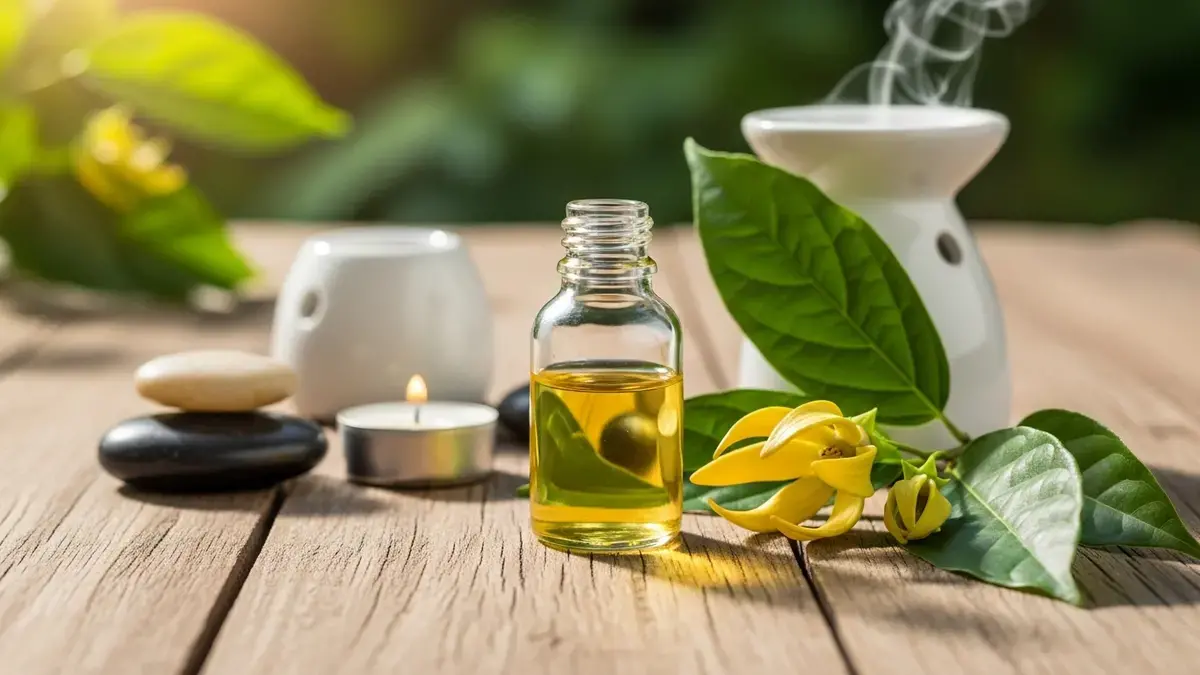
When we think of aromas that evoke exoticism, sensuality, and deep relaxation, Ylang Ylang essential oil is undoubtedly a protagonist in modern aromatherapy. Known as the "flower of flowers," this essence is not merely a pleasant perfume; it is a complex and powerful therapeutic tool.
Sourced from the tropical rainforests of Southeast Asia, specifically the Comoros Islands and Madagascar, Ylang Ylang (Cananga odorata) carries a rich history in beauty and wellness traditions. At Blog da Aromaterapia (AromasTherapia), we value the science behind the scent. Therefore, it is crucial to understand that this oil goes far beyond its fame as a natural aphrodisiac.
In this comprehensive article, we will explore the chemistry, clinical benefits, and—most importantly—the safety guidelines to incorporate this incredible oil into your routine responsibly.
Properties and Chemical Composition
To understand the efficacy of Ylang Ylang essential oil, we must look at its chromatography. Unlike other oils distilled in a single run, Ylang Ylang often undergoes fractional distillation, resulting in different "grades" (Extra, I, II, III, and "Complete"). For aromatherapy, the "Complete" grade is often preferred for its full spectrum of therapeutic compounds.
The chemical profile is dominated by esters and sesquiterpenes, which provide its calming and antispasmodic properties. Key components include:
- Linalool: A monoterpene alcohol known for its anxiolytic (anxiety-reducing) and sedative properties.
- Germacrene-D: A sesquiterpene that contributes to antimicrobial and anti-inflammatory activity.
- Benzyl Acetate: The ester responsible for the characteristic sweet floral aroma, associated with euphoric and relaxing effects.
- Farnesene: A compound that assists in skin regeneration and soothing irritation.
- Methyl Benzoate: Contributes to the intense olfactory profile and nervous system relaxation.
It is the natural synergy between these components that makes Ylang Ylang so effective in regulating physiological systems unbalanced by stress.
Benefits and Therapeutic Applications
The use of Ylang Ylang essential oil spans both physical and emotional health. Its action on the limbic system—the brain's emotional center—is rapid and effective.
Benefits for Physical Health and Beauty
- Sebum Regulation: It is one of the few oils capable of balancing oil production, making it excellent for both excessively oily and dry skin types.
- Hair Health: Traditionally used in hair tonics, it strengthens strands, stimulates growth, and adds shine, serving as a key ingredient in natural hair care treatments.
- Cardiovascular Support: Studies suggest that inhalation may help reduce systolic blood pressure and heart rate, promoting a physical state of calm (useful for managing hypertension support).
- Muscle Tension Relief: Helps soothe menstrual cramps and muscle tension when applied in diluted massage blends.
Benefits for Mental and Emotional Health
- Anxiety and Stress Reduction: Acts as a mild sedative, helping to lower cortisol levels and assisting in cases of shock, panic, and rapid breathing.
- Aphrodisiac Properties: Perhaps its most famous use, it helps reduce inhibitions and stress, creating an environment conducive to intimacy and connection.
- Sleep Support: Due to its strong relaxing power, it is indicated for those struggling to "switch off" their minds before bed.
- Mood Elevator: Promotes feelings of joy and mild euphoria, being useful for managing feelings of sadness or apathy.
Recommended Ways to Use
The versatility of Ylang Ylang essential oil allows for various applications. However, moderation is key, as its aroma is extremely intense and persistent.
Aromatic Diffusion
Add 3 to 5 drops to an ultrasonic diffuser. Due to the intensity of the scent, it is highly recommended to blend it with citrus oils (like Bergamot or Sweet Orange) to "lift" the aroma and prevent it from becoming overpowering.
Topical Application and Massage
For relaxing massages or body oils, dilution is mandatory. A concentration of 1% to 2% is generally safe and sufficient for healthy adults.
- For the Face: 1 drop of Ylang Ylang in 2 teaspoons (10ml) of carrier oil (such as Jojoba Oil).
- For the Body: 4 to 6 drops in 1 ounce (30ml) of carrier oil.
Direct Inhalation
Place 1 drop on a tissue or use a personal inhaler stick. Breathe deeply for a few minutes to help manage acute anxiety or nervous tension.
Safety Alerts and Precautions
While a natural resource, the use of essential oils requires responsibility and technical knowledge. Below are the crucial alerts for the safe use of Ylang Ylang essential oil.
❌ Contraindications and Risks
Hypotension (Low Blood Pressure): Individuals with diagnosed low blood pressure should use this oil with caution, as it has a hypotensive effect and may cause dizziness or weakness if used in excess.
Headaches and Nausea: The scent of Ylang Ylang is heady and sweet. Excessive use or high concentrations in diffusion can trigger headaches and nausea in sensitive individuals.
Skin Sensitization: In high concentrations, it represents a moderate risk for contact dermatitis or irritation in sensitive skin (often due to isoeugenol content). Do not use on damaged or inflamed skin.
Pregnancy and Nursing: As a general precaution, avoid use during the first trimester of pregnancy. During breastfeeding, always consult a qualified aromatherapist or healthcare provider before use.
⚠️ Pet Safety Warning - Notice to Pet Owners
Special Caution for Cats: Felines lack a specific liver enzyme (glucuronyl transferase), making them unable to properly metabolize certain compounds found in essential oils. While Ylang Ylang is not the most toxic oil on the list, diffusion in enclosed spaces with cats should be avoided or done with extreme caution (ensure the room is well-ventilated and the animal has a clear exit route). Never apply the oil topically to your cat.
For dogs, usage is generally considered safer, but always observe for signs of respiratory distress or behavioral changes.
⚠️ General Precautions
- Always perform a patch test on the inner elbow 24 hours before topical use.
- Keep away from eyes and mucous membranes. In case of contact, flush with a carrier oil (like olive or coconut oil), not water.
- Never ingest essential oils without the explicit guidance and supervision of a clinical aromatherapist or medical doctor. Improper ingestion can cause mucosal damage and toxicity.
FDA Compliance & Medical Disclaimer: The information contained in this article regarding health benefits is for educational purposes only. These statements have not been evaluated by the Food and Drug Administration. This product is not intended to diagnose, treat, cure, or prevent any disease. Do not discontinue conventional medical treatments without professional guidance.
Blends and Synergies
To enhance effects and create sublime aromas, Ylang Ylang blends perfectly with other oils. Knowing how to blend is an art in aromatherapy.
Best Complementary Oils:
- For Relaxation: Lavender, Vetiver, and Roman Chamomile.
- For Energy and Mood ("Joy" Synergy): Bergamot, Grapefruit, and Sweet Orange.
- For Sensuality and Perfumery: Sandalwood, Patchouli, Rose, and Jasmine.
Ideal Carrier Oils:
Because it is a rich floral oil, it pairs well with light vegetable bases like Jojoba Oil (for the face) or nourishing bases like Sweet Almond Oil or Fractionated Coconut Oil (for body massage).
Final Thoughts
Ylang Ylang essential oil is a gift from nature for those seeking balance between body and mind. Its ability to calm a racing heart while simultaneously awakening the senses makes it indispensable in any aromatherapy kit.
However, its power demands respect. Conscious use, adhering to proper dilutions and contraindications, ensures you enjoy only the best this exotic flower has to offer. Remember: in aromatherapy, "less is more."
References
“The aroma of Ylang-Ylang is described as intensely sweet, floral, balsamic, and slightly spicy.”
Source: [Tisserand, R. & Young, R., Essential Oil Safety, 2nd Edition, 2014]
Source: [Petersen, D., Aromatherapy Materia Medica, American College of Healthcare Sciences]