
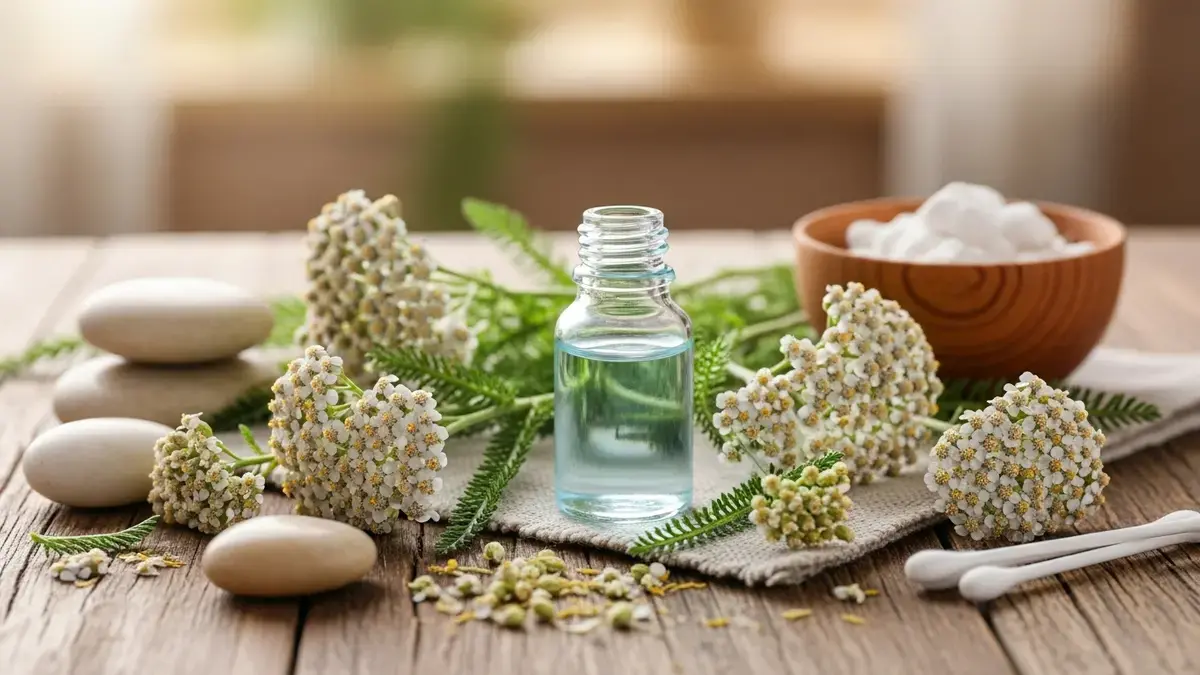
In the vast world of aromatherapy, some oils stand out not just for their aroma, but for their fascinating color and history. Yarrow essential oil is one of these treasures, renowned for its stunning deep blue hue and its powerful restorative properties.
Extracted from the Achillea millefolium plant, an herb found in fields across Europe and Asia, its name is linked to the Greek hero Achilles, who legend says used the plant for wound care for his soldiers. This ancient tradition hints at its power, which is now understood by modern science, especially for skincare and emotional balance.
Let's dive into the characteristics that make Yarrow essential oil such a unique and valuable addition to your wellness practice, with a constant focus on safety and conscious use.
Properties and Composition
The most striking feature of Yarrow oil is its blue color, which is due to a component called chamazulene. This compound is formed during the steam distillation of the plant's flowers and leaves and is widely researched for its powerful soothing action on the skin.
Beyond chamazulene, its chemical profile is rich and complex, including molecules like sabinene, beta-caryophyllene, and camphor. It is this synergy of components that gives Yarrow essential oil its acclaimed properties, making it a powerful ally for the skin.
Benefits and Applications
Yarrow oil is revered for its ability to soothe and restore. Its benefits are extensive but must always be considered within the context of safe and appropriate use.
Physical Well-being and Skin Care
- Skin Care: It is one of the best oils for soothing the appearance of red, irritated, or sensitive skin. It helps tone and promote a healthy, balanced look, making it useful for reactive skin types.
- Soothes Muscles and Joints: Its properties make it an excellent ingredient in massage oils to provide comfort to tired muscles and joints after a long day or physical activity.
- Supports the Female Cycle: Traditionally, Yarrow is known for helping to bring comfort and a sense of balance during the menstrual cycle.
Mental and Emotional Well-being
- Calming Aroma: Its herbaceous and slightly sweet scent helps to quiet the mind during moments of stress and agitation, promoting a feeling of tranquility.
- Grounding Atmosphere: In subtle aromatherapy, it's considered an oil that helps create a grounding environment, ideal for meditation or quiet contemplation.
How to Use Yarrow Oil
To enjoy the benefits of Yarrow essential oil, using it correctly is crucial, and dilution is always the priority.
- Topical Application: This is the most common method. Dilute 1-3 drops of essential oil for every 10ml (about 2 teaspoons) of carrier oil (like jojoba, almond, or grapeseed) and apply to the desired area, massaging gently.
- Aromatic Diffusion: Use 3-5 drops in your room diffuser to create a calm and purified atmosphere. It's perfect for meditation or for unwinding before bed.
- Direct Inhalation: Place 1 drop on a tissue and inhale deeply a few times for quick aromatic comfort during tense moments.
Safety Alerts and Precautions
Disclaimer: The information in this post is for educational purposes only. It is not intended to diagnose, treat, cure, or prevent any disease. Always consult a qualified healthcare professional before using essential oils.
Specific Contraindications and Warnings
- ❌ Contraindications: The use of Yarrow essential oil is strictly contraindicated during pregnancy, as it can stimulate menstrual flow and is considered an abortifacient. It should also be avoided while breastfeeding and on young children.
- ❌ Neurotoxicity: Contains camphor, a molecule that can have neurotoxic effects in high doses or with prolonged use. Individuals with a history of epilepsy or seizures should avoid it.
- ❌ Drug Interactions: Yarrow may slow blood clotting. Avoid using it if you are taking anticoagulant (e.g., Warfarin) or antiplatelet (e.g., Aspirin) medications. Discontinue use at least two weeks before any scheduled surgery. It may also interact with other medications, so consult your doctor.
General Usage Precautions
- ⚠️ Risk of Irritation: While not considered a skin irritant for most, it can cause sensitization in some people, especially those with allergies to the Asteraceae family (like daisies, chrysanthemums, and ragweed). Always perform a patch test by applying a small amount of diluted oil to your forearm.
- ⚠️ Warning for Pet Owners (Especially Cats): Be extremely cautious when using essential oils around pets. Cats, in particular, lack the liver enzymes needed to metabolize many components in oils, and exposure (topical or diffused) to Yarrow essential oil can be toxic to them.
- ⚠️ External Use Only: This oil is for external use only. Never ingest it without the guidance of a qualified healthcare professional.
- ⚠️ Avoid Sensitive Areas: Keep the oil away from eyes, inner ears, and other mucous membranes.
Combinations and Synergies
Yarrow essential oil blends beautifully with other oils, enhancing their properties and creating complex, pleasant aromas.
- For Skin: Lavender, Roman Chamomile, Helichrysum, and Geranium.
- For Relaxation: Cedarwood, Frankincense, Marjoram, and Bergamot.
- Ideal Carrier Oils: Jojoba oil, Rosehip Seed oil (for skin regeneration), and Calendula-infused oil (for sensitive skin).
Final Thoughts
Yarrow essential oil is undoubtedly a gem of the natural world, offering profound support for both skin and mind. Its vibrant blue color is a beautiful reminder of its unique energy and its ability to soothe and restore balance.
By honoring its potency with deep respect for its safety precautions, you can safely and effectively integrate this gift from the earth into your wellness journey. Remember: in aromatherapy, conscious use is the key to unlocking the full spectrum of benefits.