
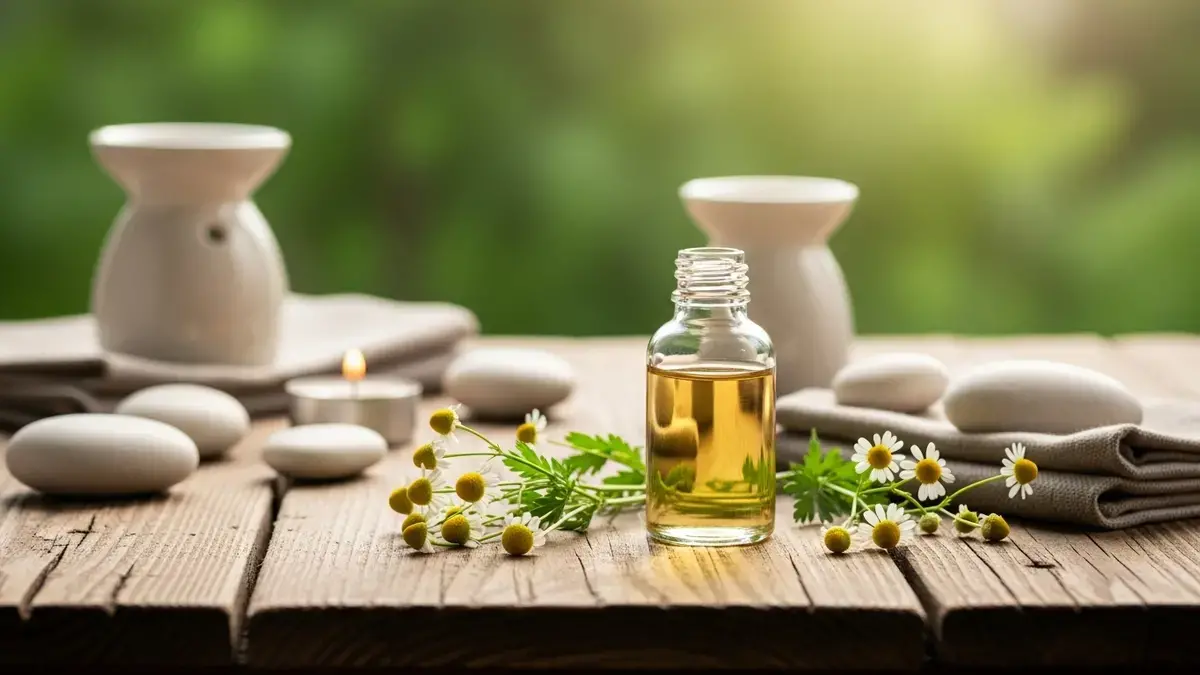
In the vast universe of aromatherapy, few plants cause as much confusion as chamomile. When we talk about wild chamomile essential oil, we are not referring to the well-known Roman or German Chamomile. Instead, we introduce a botanically distinct species, Ormenis multicaulis, also commonly called Moroccan Chamomile.
With a fresh, herbaceous, and slightly camphoraceous aroma, this oil diverges from the sweet, fruity profile of its "cousins." Wild chamomile is a treasure with its own identity, offering benefits that are both surprising and delightful. In this guide, we will unravel the unique characteristics and power of this fascinating essential oil.
Properties and Composition
The biggest difference in wild chamomile essential oil lies in its chemical composition. While the other chamomiles are rich in esters or sesquiterpenes, the Moroccan wild variety is primarily composed of monoterpene alcohols, like santolina alcohol, and monoterpenes such as alpha-pinene.
Depending on the harvest, it may also contain small amounts of camphor and 1,8-cineole. This unique chemistry gives it distinct wellness properties, such as supporting clear breathing and promoting a calming effect that leans more toward mental clarity than deep sedation. The oil is extracted by steam distillation of its flowers and aerial parts.
Benefits and Applications
Forget the notion that all chamomile is just for sleep. Wild chamomile is versatile and has an invigorating effect on the body and mind, making it an excellent ally for the respiratory system and mental focus.
For Respiratory Support and Physical Comfort
- Respiratory Support: Thanks to its components, it's an excellent oil to use in diffusers during seasonal challenges, helping to promote feelings of clear airways and easier breathing.
- Soothes Muscles: Its comforting properties make it useful in massages to ease sore muscles, tension, and discomfort after physical activity.
- Skin Care: It helps to balance oily skin and soothe minor irritations, making it a good addition to skincare products for combination or oily skin types.
For Mental Clarity and Emotional Balance
- Reduces Mental Fog: Its fresh, clean aroma helps to clear the mind, refresh a tired brain, and improve focus and concentration.
- Eases Nervous Tension: While not sedative like Roman chamomile, it calms the nervous system in a different way, easing feelings of tension, irritability, and mental stress.
- Energetic Renewal: It's a fantastic oil to diffuse when you need to "reset" the energy of a room, promoting a sense of cleanliness and renewal.
How to Use
To harness the unique benefits of wild chamomile essential oil, you can incorporate it into your routine in simple and effective ways.
- Aromatic Diffusion: Add 4 to 6 drops to your diffuser to purify the air, support respiration, or foster a focused environment for study or work.
- Topical Application: Dilute 2 to 3 drops in 10ml (2 tsp) of a carrier oil (a 2% dilution). Massage onto the chest and back for respiratory comfort, or onto sore muscles for relaxation.
- Steam Inhalation: Add 1 to 2 drops to a bowl of hot water, cover your head with a towel, and inhale the steam for a few minutes to help soothe a stuffy head.
Safety Alerts and Precautions
Due to its specific chemical composition, wild chamomile essential oil requires extra attention to its contraindications. Safety is non-negotiable in aromatherapy.
- ❌ Potential Neurotoxicity: The presence of camphor, even in low concentrations, makes this oil potentially neurotoxic. It is therefore contraindicated for pregnant or breastfeeding women, babies, and young children (under 10 years old).
- ❌ Contraindications: In addition to the groups mentioned above, it should be avoided by individuals with epilepsy, a history of seizures, or high blood pressure due to the camphor content.
- ⚠️ Pet Safety Warning - An Alert for Pet Owners (Especially Cats): Be extremely cautious when using essential oils around animals. Cats lack the necessary liver enzymes to metabolize many essential oil components (like camphor), which can lead to severe toxicity. Never apply essential oils to cats and avoid using diffusers in enclosed spaces they frequent.
- ⚠️ General Precautions: Always perform a patch test before the first topical application. Never ingest essential oils without the guidance of a qualified professional. Keep out of reach of children and pets, and avoid contact with eyes and mucous membranes.
FDA Disclaimer: These statements have not been evaluated by the Food and Drug Administration. This product is not intended to diagnose, treat, cure, or prevent any disease.
Combinations and Synergies
The unique aroma of wild chamomile blends very well with a variety of other oils, creating powerful synergies.
Complementary Essential Oils
For respiratory support, combine with Eucalyptus, Ravintsara, or Pine. For mental clarity, blends with Lemon and Rosemary are excellent. For muscle relaxation, pair with Lavender or Marjoram.
Ideal Carrier Oils
Grapeseed oil, due to its lightness, is a great option for body massages. For facial skin, prefer jojoba oil or passion fruit seed oil, which help balance oiliness.
Final Thoughts
Wild chamomile essential oil is proof that in aromatherapy, the botanical name is everything. Far from being just another "calming chamomile," it reveals itself as a powerful oil for respiration, a tonic for the tired mind, and an energetic purifier.
By learning to differentiate it and, most importantly, to respect its significant contraindications, you add a versatile and surprising tool to your collection. Use it with awareness and enjoy its unique benefits.