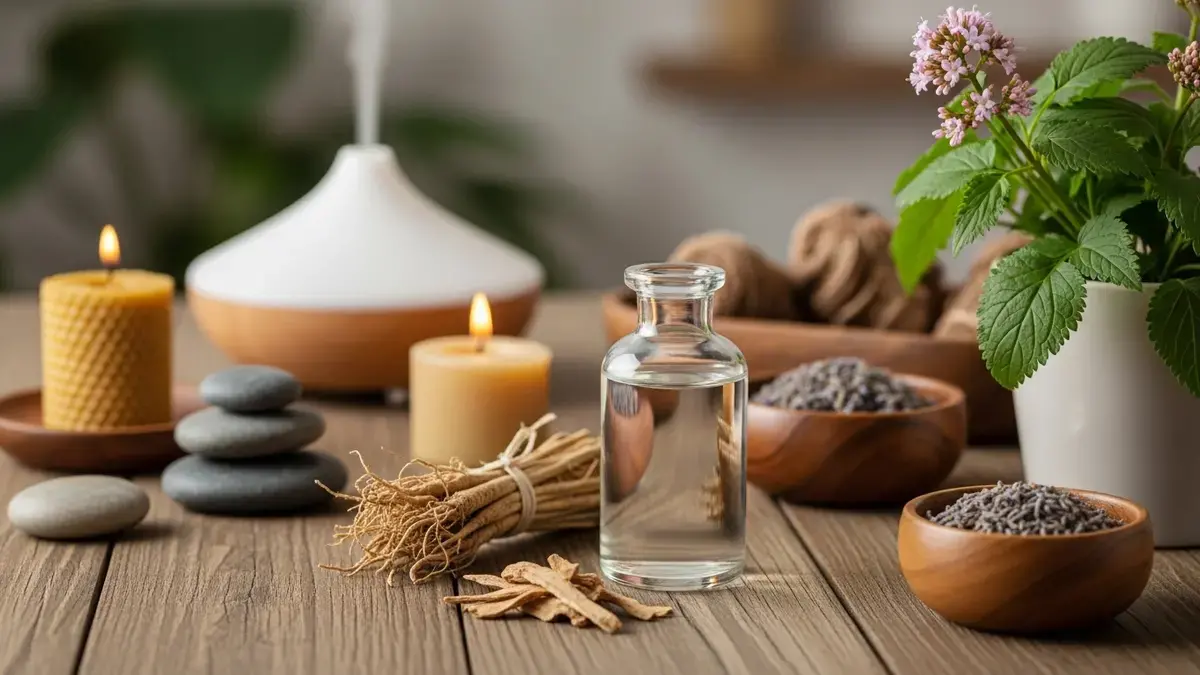
If you've ever researched natural solutions for occasional sleeplessness or anxiety, you've likely come across the name "valerian." Used for centuries, Valeriana officinalis is a perennial plant whose root is famous for its calming properties. What many don't know is that beyond teas and extracts, there is valerian essential oil.
This oil, extracted from the plant's roots, concentrates a remarkable power, but it also carries a very distinct aroma—intense, earthy, and musky, which isn't always an immediate favorite. However, its therapeutic benefits often (greatly) compensate for its aromatic complexity.
In this complete guide from the Aromatherapy Blog, we will explore deeply what valerian essential oil is, how it works in our bodies, and, most importantly, how to use it with maximum effectiveness and safety.
Properties and Composition of Valerian Oil
The essential oil is obtained through steam distillation of the plant's roots and rhizomes. The process is delicate and the yield is low, which makes it a relatively precious oil.
Unlike many essential oils, its magic doesn't come from a single component but from a complex synergy. Its main chemical constituents include esters, like bornyl acetate and bornyl isovalerianate, and sesquiterpenes.
The action of valerian essential oil is believed to be linked to its ability to modulate the GABAergic system in the brain. GABA (gamma-aminobutyric acid) is a neurotransmitter that acts as the nervous system's natural "brake." Valerian appears to help increase GABA availability, promoting relaxation and dampening excessive neural activity. Think of it as a "volume knob" for an overactive mind.
Its most recognized therapeutic properties include:
- Potent sedative
- Anxiolytic (calming)
- Muscle relaxant
- Antispasmodic
- Hypotensive
Benefits and Therapeutic Applications
Valerian essential oil is a specialist when it comes to calming the mind and body. Its use is almost entirely focused on psycho-emotional well-being. It's important to note that in the United States, we must be careful not to make medical claims; we use it to "support" the body's natural processes.
Mental and Emotional Wellness
- Supports Restful Sleep: This is, without a doubt, its most famous use. Valerian may help reduce the time it takes to fall asleep (sleep latency) and improve overall sleep quality, promoting deeper, more restorative rest, especially for sleeplessness linked to nervous tension.
- Manages Feelings of Stress and Anxiety: For moments of agitation, nervousness, or chronic stress, valerian oil can be used to help quiet ruminating thoughts and bring a sense of grounded calm.
- Eases Agitation: In acute moments of overwhelm, inhaling the oil can help soothe the body's "fight or flight" response, aiding in a return to centeredness.
Physical Support (Derived from Relaxation)
- Soothes Muscle Tension: As a muscle relaxant and antispasmodic, it can be useful in massage (well-diluted) to relieve muscle tension, especially that caused by stress.
- Supports Healthy Blood Pressure: By calming the central nervous system, it may have a secondary hypotensive effect, helping to support healthy blood pressure levels already within a normal range, especially when stress-related.
Safe Ways to Use Valerian Essential Oil
Due to its potency, valerian essential oil should be used in low doses. The aroma is very strong, so "less is more" is the golden rule here.
- Aromatic Diffusion: This is the most common and safest method. Use 2-3 drops in your ultrasonic diffuser about 30 minutes before bed. The aroma will fill the room and prepare the environment for sleep.
- Personal Inhaler: For moments of anxiousness, place 1-2 drops on the cotton wick of a personal inhaler. Inhale deeply a few times as needed.
- Topical Application (Diluted): Dilution is mandatory.
- Adults (General Use/Relaxation): 1% to 2% dilution. (About 2 to 4 drops of essential oil per 10ml, or 2 teaspoons, of carrier oil like Jojoba or Sweet Almond).
- Application: Massage onto the soles of the feet before bed (a great absorption point) or onto the solar plexus and wrists.
- Relaxing Bath: Dilute 3-5 drops of valerian oil in a tablespoon of carrier oil or unscented liquid soap before adding it to warm bathwater.
Safety Warnings and Precautions (Mandatory)
This section is crucial. Valerian essential oil is powerful, and its misuse carries risks. This information does not replace professional medical advice.
❌ Drug Interactions and Contraindications
- CNS Depressants: Valerian is a Central Nervous System (CNS) depressant. NEVER use it concurrently with other depressants, such as alcohol, sedative medications (e.g., benzodiazepines like Diazepam, Alprazolam), barbiturates, or prescription sleep aids. The combination can cause excessive and dangerous sedation.
- Surgery: Discontinue all forms of valerian at least two weeks before a scheduled surgery. It can interact with anesthesia and other medications used during the procedure.
- Pregnancy and Lactation: Strictly contraindicated during pregnancy and breastfeeding.
- Children: Should not be used on or around young children (under 12) without guidance from a qualified healthcare professional.
- Driving and Operating Machinery: Do not use valerian essential oil before driving, operating heavy machinery, or performing any activity that requires maximum alertness.
⚠️ General Precautions
- Skin Irritation: Although not typically a strong irritant, always perform a patch test before a new topical application. Apply a small, diluted amount to your inner forearm and wait 24 hours.
- Photosensitivity: Valerian essential oil is not photosensitive.
- Paradoxical Effect: In a small percentage of people, valerian can cause the opposite effect: agitation, excitement, or anxiety. If this occurs, discontinue use.
- Ingestion: NEVER ingest essential oils. Internal use is not a recognized safe practice in general aromatherapy and can be dangerous, potentially causing harm to the liver and mucous membranes.
- Eyes and Mucous Membranes: Keep the oil away from eyes, the inside of ears, and other sensitive areas.
⚠️ Pet Safety Warning (Especially Cats)
Be extremely cautious when diffusing essential oils in homes with pets. Cats, in particular, lack the liver enzymes needed to metabolize many components found in essential oils.
Diffusion of oils, especially sedative ones, can be toxic to them. Never apply essential oils topically to cats and always ensure they have a clear escape route to a non-diffused, well-ventilated room.
Medical & FDA Disclaimer
Medical & FDA Disclaimer: The information on this blog is for educational purposes only. These statements have not been evaluated by the Food and Drug Administration (FDA). This product is not intended to diagnose, treat, cure, or prevent any disease. Always consult your physician or a qualified healthcare provider before starting any new treatment with essential oils, especially if you have a pre-existing medical condition or are taking medication.
Combinations and Synergies
Given its strong aroma, valerian essential oil blends beautifully with other oils that can soften its scent and enhance its effects.
- Ideal Carrier Oils: Jojoba oil, Sweet Almond oil, or Grapeseed oil are light and absorb well.
- Sleep Synergies: Lavender, Roman Chamomile, Marjoram.
- Anxiety-Soothing Synergies: Bergamot (FCF), Sandalwood, Vetiver, Patchouli.
Suggested Blend: "Deep Sleep" Diffuser Blend
- 2 drops Valerian Essential Oil
- 3 drops Lavender Essential Oil
- 1 drop Roman Chamomile Essential Oil
Final Thoughts
Valerian essential oil is undoubtedly one of the most potent natural sedatives that aromatherapy offers. It is an incredible tool for those struggling with occasional sleeplessness and feelings of anxiety, offering a natural way to calm the nervous system.
However, its potency demands respect. Understanding its contraindications and drug interactions isn't optional—it's a matter of safety.
By using it mindfully, in low doses, and prioritizing inhalation, you can enjoy the profound benefits of this earthy gift from nature. Treat it with the care that such a powerful oil deserves.