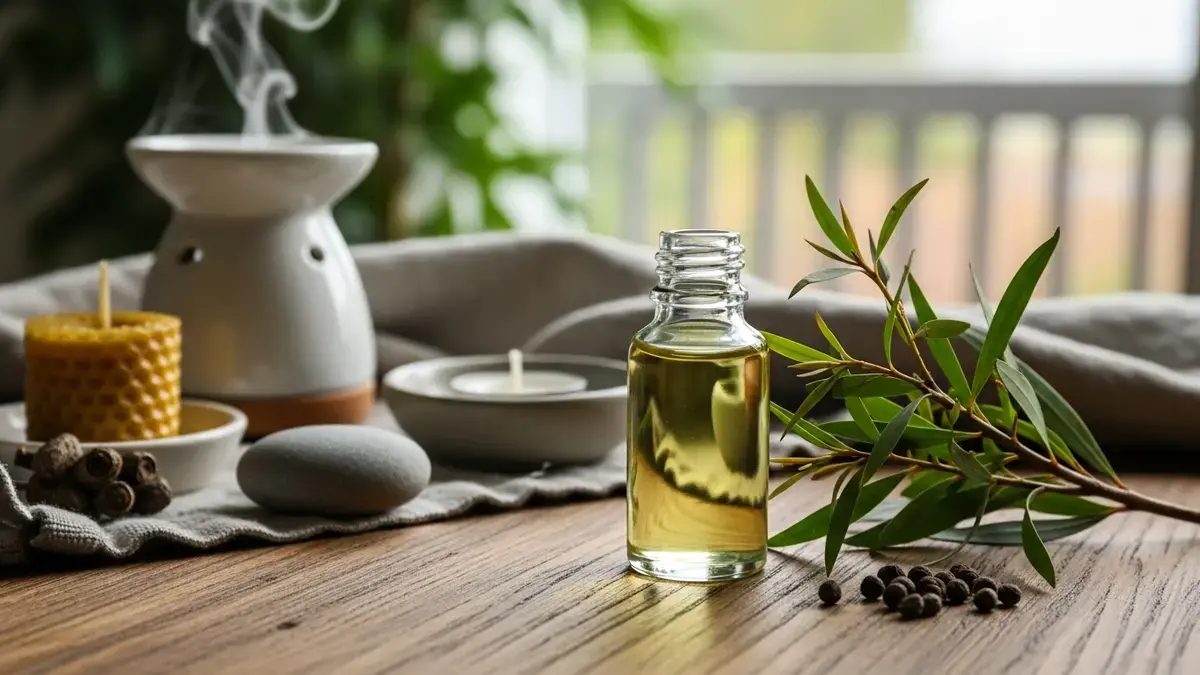
If there's one essential oil that deserves the title of a "natural first-aid kit in a bottle," it's Tea Tree essential oil. Extracted from the Australian plant Melaleuca alternifolia, this oil is one of the most researched and versatile in the world of aromatherapy, celebrated for its unparalleled purifying properties.
Used for centuries by the Aboriginal people of Australia, who would crush its leaves and apply them to the skin, Tea Tree oil has gained worldwide recognition for its effectiveness and broad spectrum of action. In this complete guide from the Aromatherapy Blog, we will uncover why this oil is so indispensable, exploring its components, benefits, and, most importantly, the correct and safe way to use it in your daily life.
Properties and Composition
The power of Tea Tree essential oil lies in its complex chemical composition, obtained through the steam distillation of its leaves and twigs. Its main active component is Terpinen-4-ol, a terpene alcohol that, according to studies, is largely responsible for its powerful action against a wide range of microorganisms.
"The efficacy of Tea Tree is directly linked to the concentration of Terpinen-4-ol (ideally above 30%) and a low concentration of 1,8-cineole (below 15%), which can be irritating to the skin." Source: [ISO Standard 4730]. This unique composition gives the oil proven properties for cosmetic and aromatic use:
- Potent Cleanser: Effectively cleanses and purifies the skin and household surfaces.
- Clarifying: Excellent for helping to care for nails and skin, keeping them looking clear and healthy.
- Soothing: Helps to calm the appearance of red, irritated skin.
- Rejuvenating: Supports the skin's natural renewal process for minor cuts, scrapes, and blemishes.
- Refreshing Aroma: When inhaled, its aroma helps promote feelings of clear breathing.
Benefits and Applications
The versatility of Tea Tree essential oil makes it a go-to for various wellness and beauty concerns.
Benefits for Physical Well-being and Skin Care:
- Blemish-Prone and Oily Skin: It's one of the most famous natural choices for acne-prone skin. Its properties help to cleanse pores, control oiliness, and soothe the appearance of pimples without over-drying the skin.
- Nail and Foot Care: Very effective for improving the appearance of unsightly fingernails and toenails. Its continuous use helps restore the healthy look of nails and skin on the feet.
- Healthy Scalp: Helps to reduce the appearance of flakiness and scalp oiliness, promoting a clean environment for strong hair growth.
- Minor Skin Irritations and Bug Bites: When applied diluted, it helps cleanse minor cuts and scrapes and soothes the itchiness and irritation of insect bites.
- Oral Care: Can be used as a mouth rinse (never swallow!) to freshen breath and promote a clean-feeling mouth.
Benefits for Mental and Emotional Well-being:
- Mental Renewal and Cleansing: Its camphoraceous, medicinal aroma promotes a feeling of cleanliness, helping to clear mental fog and fatigue.
- Promotes a Sense of Resilience: It's an oil that provides a feeling of strength, ideal for when we feel vulnerable or susceptible to negative external energies.
How to Use It
To safely enjoy the benefits of Tea Tree essential oil, follow these recommendations:
- Topical Application: This is the most common method. It is recommended to dilute 1 to 3 drops of essential oil for every tablespoon of carrier oil (like coconut, jojoba, or almond). For blemishes, it can be applied as a spot treatment with a cotton swab, already diluted.
- Hair Care: Add 2 to 3 drops to your daily shampoo to care for your scalp.
- Aromatic Diffusion: Use 5 to 10 drops in your room diffuser to purify the air and support a clear breathing environment, especially during cold seasons.
- Facial Steam: Add 2 drops to a bowl of hot water, cover your head with a towel, and inhale the steam for a few minutes to help open up and refresh the airways.
Safety and Precautions
This section contains crucial safety information for the responsible use of essential oils. The content is not a substitute for advice from a doctor or qualified health professional and is intended for educational purposes.
❌ Skin Irritation (Moderate Risk):
Tea Tree essential oil can cause irritation or sensitization in sensitive skin, especially if the oil is oxidized (old). It is always recommended to dilute it in a carrier oil before applying it to the skin. Avoid using oils that have changed color or smell.
❌ Contraindications:
While considered safe for most people, use on babies and very young children should be avoided or done only with professional guidance. During pregnancy and lactation, consult your doctor before use.
⚠️ Risk to Pets - Alert for Pet Owners (Especially Cats):
Tea Tree oil is highly toxic to cats and can be dangerous for dogs if ingested or applied in high concentrations. Cats cannot metabolize its components, which can lead to serious neurological and liver problems. Avoid diffusing in enclosed spaces with cats and never apply the oil to their skin.
⚠️ General Use Precautions:
Always perform a patch test before the first use by applying a small, diluted amount to your inner elbow. Never ingest Tea Tree essential oil. Keep it away from eyes, inner ears, and sensitive areas.
Combinations and Synergies
Tea Tree essential oil blends well with other oils, enhancing its effects.
- For Skin: Lavender, Copaiba, and Frankincense.
- For Air Purification: Lemon, Eucalyptus, and Rosemary.
- For a Feeling of Wellness: Clove and Oregano (use with extreme caution and high dilution).
- Ideal Carrier Oils: Jojoba oil for the face as it is non-comedogenic, and Fractionated Coconut Oil for the body and nails.
Final Thoughts
Tea Tree essential oil is a powerful and natural tool to always have on hand. Its ability to purify and protect makes it one of the most useful and reliable oils in aromatherapy practice.
By using it consciously, respecting dosages and safety precautions, you can confidently incorporate this gift from nature into your wellness routine. Always remember to purchase high-quality, pure oils to ensure their effectiveness and safety.