
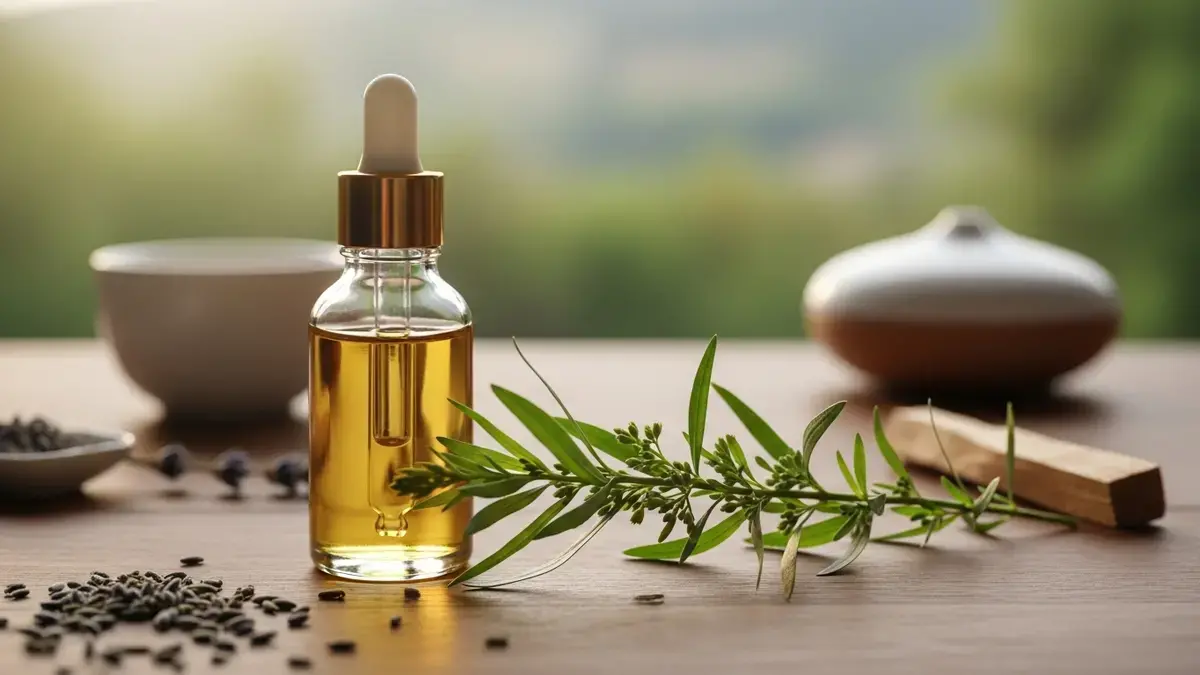
Welcome back to the Aromatherapy Blog! Today, we're uncovering the secrets of an essential oil that, while famous in the culinary world, is a therapeutic giant in aromatherapy: Tarragon essential oil. With its unique aroma that blends notes of anise, spice, and a green touch, it's much more than just a seasoning.
Extracted from the Artemisia dracunculus plant, Tarragon is revered for its ability to calm spasms like few other oils can. If you suffer from persistent hiccups, cramps, or muscle tension, get ready to meet one of your greatest allies. But be warned: its power demands knowledge and respect.
Properties and Composition
To understand Tarragon essential oil, we need to talk about its chemical star: methyl chavicol (or estragole). This component, a phenyl methyl ether, can make up to 85% of the oil and is the primary reason for its potent antispasmodic action. It's this molecule that gives the oil both its incredible benefits and its important safety precautions.
Obtained through steam distillation of the leaves and flowering tops, Tarragon oil has remarkable therapeutic properties, being a top-tier neuromuscular antispasmodic, as well as an excellent digestive aid, carminative (helps expel gas), anti-inflammatory, and antiviral agent.
Benefits and Applications
Tarragon is a specialist oil. Its main field of action is spasms and digestive disorders, but its influence also extends to the mental and emotional realm, helping to "digest" what holds us back.
The Ultimate Ally for the Digestive and Muscular Systems
- Immediate Relief from Spasms: It is the gold standard for hiccups, diaphragm spasms, and cramps. A quick inhalation or local massage can bring surprising relief.
- Digestive Comfort: Excellent for soothing intestinal cramps, nervous stomach aches, gas, and bloating. It's great support for those whose digestion is sensitive to stress.
- Female Health: Its antispasmodic properties make it one of the best oils for easing intense menstrual cramps by relaxing uterine contractions.
- Aches and Pains: It helps to relax tight muscles, stiff necks, and muscle soreness caused by exertion or nervous tension.
Support for the Mind and Emotions
- Emotional "Digestion": Just as it acts on the digestive system, Tarragon helps to "process" poorly digested emotions and situations, releasing energetic and mental blocks.
- Focus and Clarity: Its penetrating aroma can help dissipate mental fatigue and promote a state of alertness and concentration, making it useful during intense periods of study or work.
How to Use
The power of Tarragon essential oil is best manifested through topical use, but always with great caution and proper dilution. Aromatic use is secondary but can also be beneficial.
- Topical Application (Primary Method): This is the most effective way to use it. Dilute 2 to 3 drops in 10ml (2 tsp) of carrier oil (a 1% to 1.5% dilution) and massage the affected area (abdomen for cramps, muscles for pain, solar plexus for nervous tension).
- Direct Inhalation: For hiccups or sudden spasms, place 1 drop on a tissue and inhale deeply a few times. Avoid prolonged use.
- Aromatic Diffusion: Use sparingly. Add 2 to 3 drops to your diffuser for short periods (15-20 minutes) to aid concentration. This is not an oil to be diffused for hours on end.
Safety Warnings and Precautions
Attention: This section is mandatory reading. Tarragon is an extremely effective oil, but its improper use can pose risks. Safety is non-negotiable in aromatherapy.
❌ Key Contraindications and Risks
- Short-Term Use Only: Due to the high concentration of methyl chavicol (estragole), Tarragon essential oil should only be used for short periods (a maximum of 7-10 consecutive days). Prolonged use is discouraged.
- Potential Skin Irritant: This oil can cause skin irritation if used undiluted or in high concentrations. Dilution in a carrier oil is mandatory.
- Pregnancy and Breastfeeding: Use is strictly prohibited during pregnancy and while breastfeeding.
- Children: Contraindicated for young children (under 10 years old).
- Drug Interactions: Should be avoided by individuals using anticoagulant (blood-thinning) medications, as it may enhance their effect.
⚠️ Essential Alert for Pet Owners (Especially Cats)
Our pets, especially cats, have different and more sensitive metabolic systems. The high concentration of certain compounds in essential oils can be toxic to them. Avoid using diffusers in enclosed spaces with pets and never apply oils directly to their fur or skin.
⚠️ General Use Precautions
- Always perform a patch test on the skin (apply diluted to a small area) before first use.
- Never ingest essential oils without the guidance of a qualified clinical aromatherapist.
- Keep out of reach of children and pets.
- Avoid contact with eyes and mucous membranes.
Disclaimer: The information contained in this post is for educational purposes and does not substitute for professional medical advice. Always consult a healthcare provider to address medical conditions.
Combinations and Synergies
Tarragon works wonderfully well in synergies, especially when combined with other oils that complement its action.
Oils that Complement Tarragon
- For Digestion: Peppermint, Ginger, and Sweet Basil.
- For Muscle Pain: Wintergreen, Roman Chamomile, and Eucalyptus Citriodora.
- For Menstrual Cramps: Clary Sage, Sweet Marjoram, and Lavender.
Blend Suggestion: "Digestive Comfort" Synergy (Massage Oil)
In 30ml (1 oz) of sweet almond oil, add 4 drops of Tarragon essential oil, 4 drops of Peppermint, and 3 drops of Sweet Basil. Massage the abdomen in a clockwise direction whenever you feel discomfort.
Ideal Carrier Oils
Fast-absorbing oils like Jojoba, Grapeseed, or Fractionated Coconut Oil are excellent for enhancing Tarragon's action.
Final Thoughts
Tarragon essential oil is proof that nature offers us extremely specialized and potent tools. It is the "king of antispasmodics" and an invaluable resource for anyone seeking quick and effective relief from cramps and tension.
However, its power comes with the responsibility of conscious use. Always remember the golden rules: short-term use, low doses, and always diluted. By respecting its characteristics, you will have one of the most efficient oils in aromatherapy at your fingertips.
“Tarragon is the antispasmodic oil par excellence, acting on all levels of the nervous system.” Source: Baudoux, Dominique, The Great Manual of Aromatherapy, 2018.