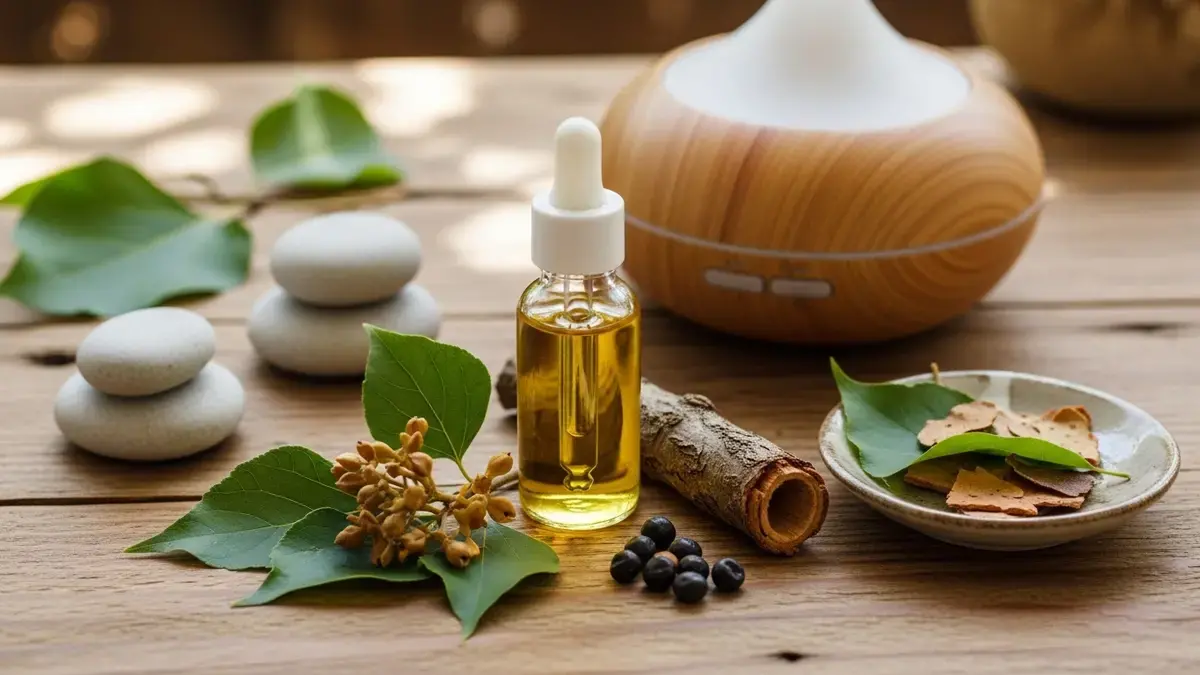
Those who explore the world of aromatherapy often encounter essential oils with exotic names and fascinating histories. One of these is sassafras essential oil (Sassafras albidum), a tree native to North America. Its sweet, spicy aroma, reminiscent of root beer—for which it was the original flavoring—certainly sounds appealing.
Historically, sassafras was used by indigenous peoples for various wellness purposes. However, modern aromatherapy, which focuses on safety and evidence-based practices, has taken a very clear stance: sassafras essential oil is not considered safe for therapeutic use, whether topically, by inhalation, or internally.
This article is not a "how-to" guide, but rather an important safety alert. Let's understand why this oil, despite its pleasant scent, is banned in many countries and why you must avoid it at all costs.
The Great Risk: The Chemical Composition of Sassafras
The central issue with sassafras essential oil isn't its supposed properties, but its main chemical component: safrole. The root bark of the sassafras tree, from which the oil is steam-distilled, can contain over 80% safrole.
Safrole is a molecule that, after extensive scientific research, has been classified as hepatotoxic (toxic to the liver) and carcinogenic (potentially cancer-causing) in animal studies. Global regulatory agencies, like the FDA (Food and Drug Administration) in the United States, prohibit the use of safrole as a food additive or in cosmetics.
Beyond its toxicity, safrole is a rigidly controlled substance internationally because it is a precursor chemical in the illicit manufacture of MDMA (Ecstasy). For this reason, the production and sale of true sassafras essential oil are illegal or strictly regulated in most of the world.
Why Is Sassafras Essential Oil Banned in Aromatherapy?
Serious aromatherapy is based on the principle of primum non nocere—first, do no harm. The risk profile of sassafras essential oil dramatically outweighs any hypothetical benefits.
- Cancer Risk: The IARC (International Agency for Research on Cancer) classifies safrole as a Group 2B carcinogen, indicating it is "possibly carcinogenic to humans."
- Liver Toxicity: The liver struggles to metabolize safrole, which can lead to significant liver damage with continued exposure.
- Legal Issues: Due to its association with synthetic drug production, possessing or trading safrole-rich sassafras oil is a legal violation in many places.
Any product sold today as "sassafras essential oil" is likely one of two things: it's a synthetic product (a "fragrance oil"), a "safrole-free" (chemically processed) oil, or worse, an illegal and dangerous product. No qualified aromatherapist would ever recommend its use.
Forms of Use (Historical and Currently Prohibited)
While we can find historical references to sassafras being used for rheumatic aches or as a "blood tonic," it is vital to understand that these practices are obsolete and were discontinued in light of modern scientific knowledge about its toxicity.
In current practice, there are no "safe uses" for safrole-rich sassafras essential oil.
- Aromatic Diffusion: Not recommended. Inhaling toxic volatile compounds can irritate the respiratory system and allow safrole to enter the bloodstream.
- Topical Application: Absolutely contraindicated due to the risks of carcinogenicity and systemic toxicity.
- Ingestion: Extremely dangerous, potentially leading to acute liver damage, nausea, vomiting, and, in high doses, fatality.
Safety Alerts and Precautions (Mandatory Warning)
This section serves as a definitive warning against the use of sassafras essential oil (Sassafras albidum). The risks associated with this product are severe and well-documented.
❌ Extreme Toxicity and Cancer Risk
The main component, safrole, is classified as hepatotoxic (harmful to the liver) and potentially carcinogenic (cancer-causing). Its use is banned in food and cosmetics by most global regulatory agencies.
❌ Neurotoxicity
There is evidence that safrole may have neurotoxic effects, affecting the central nervous system.
❌ Absolute Contraindications
This oil is contraindicated for everyone, without exception. This includes, but is not limited to: - Pregnant and nursing women (risk of fetal toxicity and to the baby). - Children and infants. - The elderly. - Individuals with any liver, kidney, or neurological conditions. - People undergoing cancer treatment.
❌ Legal Prohibition
Do not buy this oil. Its sale is controlled or illegal in most countries, as safrole is a precursor chemical for the production of illicit drugs (MDMA).
⚠️ A Warning for Pet Owners (Especially Cats)
While this specific oil should not be used by anyone, this warning is valid for aromatherapy in general: keep all essential oils out of reach of pets. Cats, in particular, are extremely vulnerable. They lack the necessary liver enzymes (like glucuronidase) to metabolize many essential oil compounds, such as phenols and terpenes. Diffusion or topical application (even accidental) can lead to severe poisoning, liver failure, or death.
⚠️ Medical Disclaimer
The information on this post is strictly educational and for safety purposes. It does not replace medical advice or that of a qualified clinical aromatherapist. The Aromastherapia Blog (aromastherapia.com) strongly advises against the use of sassafras essential oil. Do not use essential oils for therapeutic purposes without proper professional guidance. Never ingest essential oils.
Safe Alternatives to the Sassafras Aroma (Blends and Synergies)
If you are looking for the sweet, warm, and spicy aromatic profile of sassafras, there are fortunately many safe and wonderful alternatives in aromatherapy. You can create synergies that evoke a similar feeling.
Consider blending (always diluted in a carrier oil):
- Star Anise (Illicium verum): Brings the sweet, licorice-like spicy note.
- Ginger (Zingiber officinale): Offers a spicy, earthy warmth.
- Cinnamon (Bark or Leaf): The bark (Cinnamomum zeylanicum) is sweeter, the leaf (Cinnamomum verum) is "hotter." Use with extreme caution and high dilution (it is dermocaustic).
- Ho Wood (Cinnamomum camphora ct. linalool): While different, it offers a sweet, woody note that can serve as a smooth base.
As carrier oils (vegetable base) to dilute these safe alternatives, try Sweet Almond Oil or Grapeseed Oil, which are light and have little interference with the aroma.
Final Thoughts: The Importance of Safe Aromatherapy
The case of sassafras essential oil is a fundamental lesson in aromatherapy: natural does not mean harmless. The power of plants is real, for both good and bad. The role of an aromatherapy enthusiast or professional is to prioritize safety, study oil chemistry, and respect contraindications.
Instead of seeking out banned and dangerous oils, the "Aromastherapia Blog" encourages you to explore the vast palette of safe and effective essential oils available. True aromatherapy is a practice of conscious well-being, and that begins with choosing safe products.