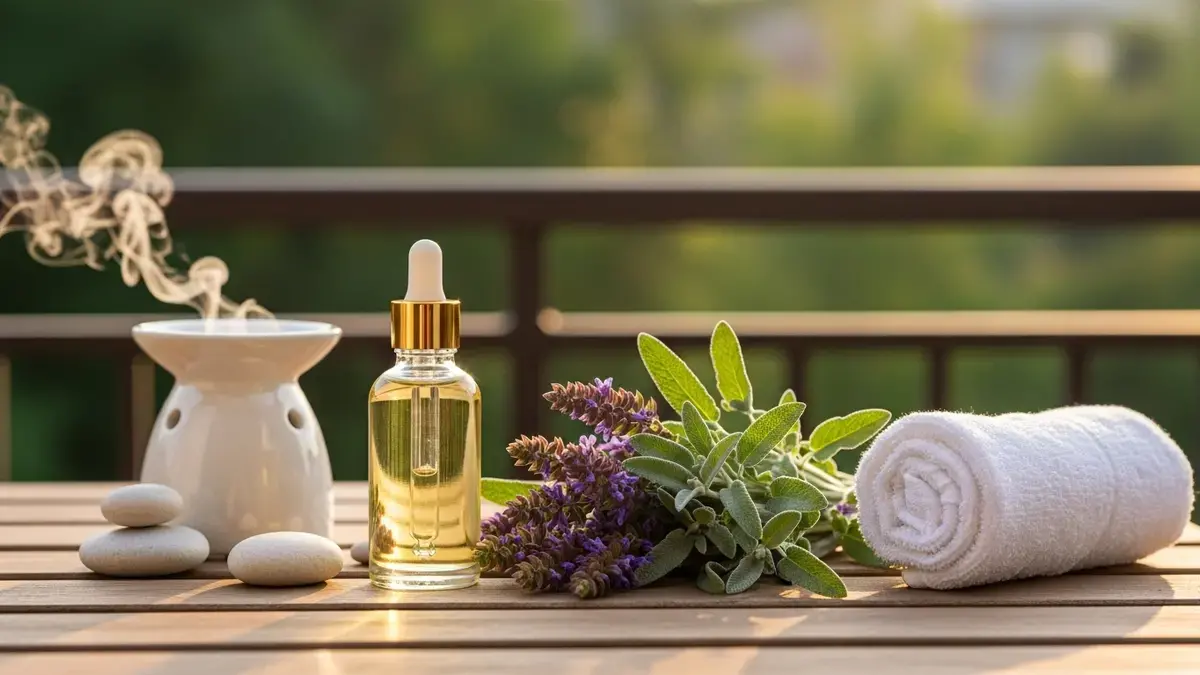
When we talk about sage, many images come to mind: the spice in the kitchen, the velvety leaves in the garden, or even purification rituals. The name Salvia comes from the Latin "salvare," meaning "to save" or "to heal," showing the deep respect ancient cultures had for this plant. However, when we bring this plant into the concentrated world of aromatherapy, especially Sage (Salvia Officinalis) essential oil, we are dealing with a giant that demands absolute respect.
This is not an essential oil for beginners. Its aroma is potent, camphoraceous, herbaceous, and penetrating. But its chemical composition is what truly defines its identity: it is powerful, effective, and, if used incorrectly, dangerous. Unlike its gentle cousin, Clary Sage, Sage Officinalis is an oil that we must understand deeply before even thinking about opening the bottle.
In this complete guide, we will demystify Sage (Salvia Officinalis) essential oil. We'll explore its potential benefits, but most importantly, we will focus sharply on the safety and the strict contraindications that accompany it, ensuring conscious and protected use.
Properties and Composition: The Power of Thujone
To understand Sage Officinalis, we need to talk about ketones, specifically thujone. This essential oil is composed of a high percentage of this component (ranging from 40% to 60% alpha- and beta-thujone), in addition to camphor and 1,8-cineole.
Thujone is the molecule responsible for many of the oil's effects, but also for its neurotoxicity. In appropriate, controlled doses (usually by professionals), it can be stimulating and purifying. In excessive doses or with continuous use, it can be toxic to the central nervous system.
The oil is extracted by steam distillation of the plant's leaves and flowers. It is this high concentration of thujone that places this oil in a "restricted use" category in modern aromatherapy.
The Crucial Distinction: Sage Officinalis vs. Clary Sage (Sclarea)
This is, perhaps, the most critical point of this article. It is very common to confuse Common Sage (Officinalis) with Clary Sage (Sclarea). They are not interchangeable and have opposite safety profiles.
- Sage Officinalis (This article): High in thujone (a ketone). It is stimulating, neurotoxic, and has abortifacient properties. Its main use is for mental focus and purification, always with extreme care.
- Clary Sage (Sclarea): Contains almost no thujone. It is rich in linalyl acetate (an ester). It is relaxing, euphoric, calming, and known for its gentle, balancing properties. It is one of the safest and gentlest oils.
Always check the botanical (Latin) name on the label. If you are looking for relaxation, you want Salvia sclarea, not Salvia officinalis.
Benefits and Applications (With Extreme Caution)
Due to its risks, the use of Sage Officinalis is limited. However, when used responsibly (mainly via diffusion), it can offer support.
Mental Clarity and Focus
The camphoraceous and penetrating aroma is a powerful mental stimulant. This is not an oil for relaxing; it's an oil to "wake up."
- Promotes a sense of mental clarity and focus.
- Can be useful in diffusers during long study or work sessions.
- Historically associated with "wisdom," it helps clear mental fog.
Purifying Properties
Just as the plant is used for smudging, the essential oil has potent cleansing properties, for both the skin and the environment.
- In the environment: Used in diffusers to purify the air, especially in stuffy rooms or during the winter.
- On the skin (RESTRICTED USE): Never used undiluted. In very low dilutions (less than 1%), it may be used in soap formulations or for spot applications on oily skin.
Clearing Aroma
Thanks to camphor and 1,8-cineol, Sage (Salvia Officinalis) essential oil can be supportive in diffuser blends, helping to promote a feeling of freer airways and a fresh environment.
Forms of Use (Restricted and Professional Use)
Let's be direct: the safest way to use this oil at home is aromatically. Topical use should be minimal, and internal use is prohibited.
Aromatic Diffusion (Preferred Method)
This is the safest way to interact with this oil. The risk of toxicity from diffusion is low if done correctly.
- Use very few drops (3-4) in your ultrasonic diffuser.
- Use for short periods (30-60 minutes) and in well-ventilated rooms.
- Excellent for an office or study area.
Topical Application (Advanced Knowledge Only)
Topical use is not recommended for daily use. Due to the risk of irritation and the systemic absorption of thujone, it must be done with extreme caution.
- Maximum Dilution: Dilution should be 1% or less (1 drop in 5ml of carrier oil).
- Use only for spot applications and short-term use.
Safety Alerts and Precautions (MANDATORY)
This is the most important section of this article. Failure to follow these rules can result in serious health problems. This oil is not for everyone.
❌ MAXIMUM ALERT: Neurotoxicity
Sage (Salvia Officinalis) essential oil is neurotoxic due to its high thujone content. In high doses or with prolonged use, it can cause seizures, vertigo, and dizziness. It is absolutely contraindicated for anyone with a history of epilepsy, febrile seizures, or any neurological disorder.
❌ Absolute Contraindications
Do not use this essential oil, in any form (diffusion or topical), if you fall into any of these categories:
- Pregnancy: It has abortifacient properties. It can induce labor and harm the fetus.
- Lactation (Breastfeeding): It is known to inhibit milk production (anti-galactagogue) and thujone can pass into breast milk.
- Children and Babies: A child's nervous system is very sensitive to thujone. Keep this oil out of reach.
- Hypertension (High Blood Pressure): May raise blood pressure.
- Neurological Conditions: As mentioned, epilepsy, Parkinson's disease, or any neurological sensitivity.
❌ Skin Irritation
While not the most dermocaustic oil, it can cause skin irritation, especially on sensitive skin or if used in high dilutions. Dilution is mandatory.
⚠️ Risk to Pets (Especially Cats)
Attention, Pet Owners: Cats, in particular, cannot metabolize many essential oil components (including ketones like thujone). Diffusion can cause a toxic buildup over time, leading to respiratory issues, neurological problems, or liver failure. It is a serious risk. Do not use this oil near cats.
⚠️ General Use Precautions
- NEVER INGEST: Ingestion of this oil is highly toxic and can be fatal.
- Patch Test: Before any topical use (even super-diluted), perform a skin test on the inner elbow.
- Eyes and Mucous Membranes: Keep away from eyes and mucous membranes.
- Storage: Keep tightly closed, away from light and heat, and absolutely out of reach of children and animals.
Medical Disclaimer: The information on the Aromatherapy Blog is for educational purposes only. These statements have not been evaluated by the Food and Drug Administration (FDA). This product is not intended to diagnose, treat, cure, or prevent any disease. Always consult your physician or a qualified clinical aromatherapist before using potent essential oils, especially if you have a medical condition.
Combinations and Synergies (For Diffusion)
To balance its intense aroma and focus on its mental benefits, Sage Officinalis blends well with oils that complement its stimulating nature.
- Citrus Oils: Lemon or Bergamot (add a touch of lightness and aid focus).
- Wood Oils: Cedarwood (grounding) or Pine (for a fresh, clearing aroma).
- Other Herbals (with caution): Rosemary (another mental stimulant, use the blend moderately) or Thyme.
For (restricted) topical use, ideal carrier oils are light, such as Jojoba or Grapeseed.
Final Thoughts
Sage (Salvia Officinalis) essential oil is a perfect example of how "natural" does not mean "safe." It is a powerful oil with a specific place in advanced aromatherapy for mental focus and purification.
For most home users, we strongly recommend opting for the safe and relaxing alternative: Clary Sage (Salvia sclarea). If you choose to use Sage Officinalis, treat it with the immense respect its potent chemistry demands. Use wisely.