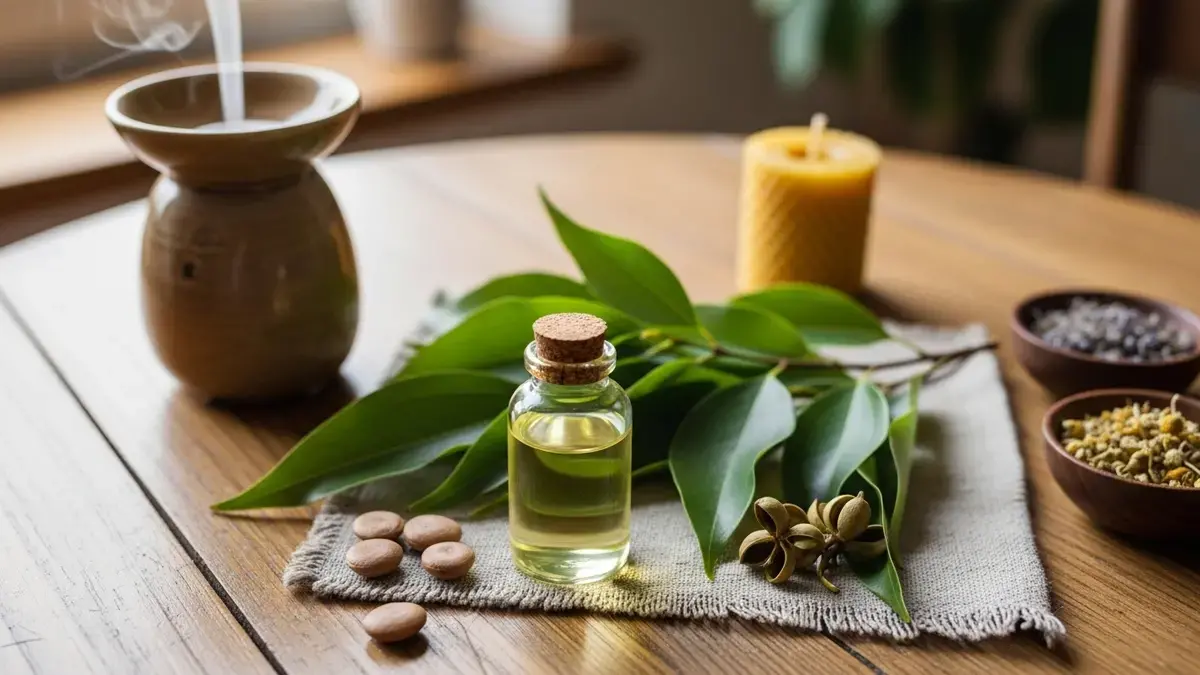
If there's one essential oil that deserves the title of "gentle warrior" in aromatherapy, it's Ravintsara essential oil. Hailing from the forests of Madagascar, where its local name means "leaf good for everything," this oil has gained immense popularity, especially during the winter months, and for very good reasons.
It's often confused with its relative, Ravensara (Ravensara aromatica), but making the distinction is crucial. The true Ravintsara we're discussing here is Cinnamomum camphora ct. 1,8-cineole. It's an incredibly powerful, yet surprisingly gentle oil, making it a favorite for many families when used correctly.
In this complete guide, we'll explore why Ravintsara is so revered, diving into its therapeutic properties, its many benefits for respiratory and immune support, and, most importantly, how to use it effectively and safely.
Properties and Composition of Ravintsara
Ravintsara essential oil is steam-distilled from the leaves of the camphor tree in Madagascar. What makes it unique isn't just its origin, but its specific chemical composition, referred to as its chemotype (ct.) 1,8-cineole.
Its main chemical component is, unsurprisingly, 1,8-cineole (also known as eucalyptol), which typically makes up 50% to 65% of the oil. It's this molecule that gives Ravintsara its remarkable properties for supporting clear breathing and the body's natural defense mechanisms.
In addition to cineole, it contains other components in smaller amounts, like sabinene and alpha-terpineol, which contribute to its balanced therapeutic profile and its aroma. The scent is fresh, camphoraceous (though much softer and less sharp than eucalyptus), and slightly sweet.
Benefits and Uses of Ravintsara Essential Oil
Ravintsara is primarily celebrated for its affinity for the respiratory system and its ability to support a healthy immune system, but its benefits don't stop there.
Benefits for Physical Wellness
- Powerful Respiratory Support: This is its superpower. The high 1,8-cineole content makes it wonderful for promoting feelings of clear breathing. It helps ease congestion and stuffiness associated with seasonal challenges.
- Impressive Cleansing Properties: Ravintsara is widely used for its powerful cleansing properties. It can be diluted and applied topically to help soothe skin irritations or blemishes, promoting a clear appearance.
- Immune System Support: More than just cleansing, Ravintsara appears to actively promote the body's natural immune response, helping us stay resilient, especially when diffused during challenging seasons.
- Purifying Properties: It's also known for its general purifying qualities, making it useful in household cleansing blends or for purifying the air when diffused.
Benefits for Mental and Emotional Well-being
- Gentle Energizer (Neurotonic): Unlike harsher stimulants, Ravintsara acts as a tonic for the nervous system. It helps combat mental fatigue and physical tiredness, promoting clarity and focus.
- Promotes Calmness: Its clean, fresh aroma has a calming and comforting effect on the mind, helping to ease nervous tension and manage occasional stress without causing drowsiness.
- Sleep Support: For those whose restless nights are linked to stuffiness or anxious feelings, diffusing Ravintsara before bed can help clear the air and calm the mind, supporting a more restful sleep.
Safe Ways to Use
To harness the benefits of Ravintsara, it's essential to choose the right application method and respect dilution rates.
Aromatic Diffusion
This is the most popular method, especially for respiratory support and purifying the environment. Add 4 to 6 drops of Ravintsara essential oil to your ultrasonic diffuser. It's excellent for use at home or in the office during seasonal threats or to maintain focus.
Topical Application (Always Diluted)
Ravintsara is gentle on the skin, but it should never be applied neat (undiluted). Dilution is key for both safety and effectiveness.
- Standard Dilution (Adults): 2% to 3%. This is about 5 to 7 drops of Ravintsara for every 10ml (one tablespoon) of carrier oil (like Jojoba, Sweet Almond, or Grapeseed oil).
- Where to Apply: Massage onto the chest and back for respiratory support, onto the soles of the feet for immune support, or along the spine.
- For Skin Blemishes: A higher dilution (up to 5%) can be used, applied directly to the area of concern with a cotton swab.
Direct or Steam Inhalation
For quick relief from stuffiness, you can place 1 drop on a tissue and inhale deeply. Alternatively, add 1-2 drops to a bowl of hot (not boiling) water, cover your head with a towel, and inhale the steam for 5 minutes (keep your eyes closed).
Safety Alerts and Precautions (Mandatory)
Ravintsara essential oil is considered one of the safest oils in aromatherapy, but "safe" doesn't mean without rules. Safety is paramount for responsible use.
Disclaimer: The information on this site is for educational purposes only and is not intended to diagnose, treat, cure, or prevent any disease. It does not replace professional medical advice. Always consult a qualified healthcare provider before using essential oils for therapeutic purposes.
- Phototoxicity: Ravintsara essential oil is not phototoxic. There are no restrictions on sun exposure after topical application (as long as it's diluted).
- Skin Irritation (Dermocausticity): The risk is very low. However, 1,8-cineole in high concentrations can be irritating to extremely sensitive skin. Always dilute in a carrier oil before applying to the skin. Perform a patch test on a small area before your first use.
- Neurotoxicity: True Ravintsara essential oil (Cinnamomum camphora ct. 1,8-cineole) is not neurotoxic. It is crucial not to confuse it with Camphor oil (Cinnamomum camphora ct. camphor), which is neurotoxic and should not be used in casual aromatherapy.
- Main Contraindications:
- Pregnancy and Nursing: As a general precaution, it is best to avoid use during the first trimester of pregnancy. Use with caution and professional guidance in the following trimesters.
- Babies and Young Children: Due to the high 1,8-cineole content, avoid use on children under 6 years old, especially application near the face or nose, as it can cause a respiratory reflex (apnea) in infants. For older children, use very low dilutions (0.5% to 1%).
- Asthmatics: People with asthma should use caution. While many find cineole beneficial, it can trigger bronchospasm in some sensitive individuals. Test with caution.
- Drug Interactions: There are no well-documented interactions, but as a precaution, consult a doctor if you are taking medications metabolized by the liver, as 1,8-cineole may affect certain enzymes.
- ⚠️ Alert for Pet Owners (Especially Cats): Essential oils rich in cineole, like Ravintsara, are extremely toxic to cats. Cats lack the necessary liver enzymes to metabolize these compounds. Never apply essential oils to cats and avoid diffusing in closed rooms where they are present. Dogs can also be sensitive, though less so than cats.
- ⚠️ General Usage Precautions:
- Never ingest essential oils without the express guidance of a healthcare professional certified in clinical aromatherapy.
- Keep out of reach of children and pets.
- Avoid contact with eyes and mucous membranes (inner ears, nose).
Blends and Synergies
Ravintsara works beautifully on its own, but it also combines harmoniously with other oils to enhance its effects.
- For Respiratory Support (Seasonal Discomfort): Combine with Eucalyptus Radiata, Tea Tree, or Pine.
- For Immune Support: Blend with Lemon, Frankincense, or Clove Bud (use Clove with extreme moderation and high dilution).
- For Focus and Energy: Try it with Peppermint or Rosemary.
- For Relaxation: Lavender or Bergamot create a calming yet uplifting blend.
- Ideal Carrier Oils: Jojoba oil (great for skin), Sweet Almond oil (nourishing), or Grapeseed oil (light and quickly absorbed) are all excellent choices.
Final Thoughts
Ravintsara essential oil is undoubtedly one of the most valuable and versatile oils in the aromatherapy pharmacopeia. Its unique combination of powerful cleansing properties and a gentle nature makes it an indispensable ally for anyone seeking a natural way to support their respiratory and immune systems.
Remember that quality matters. Always look for the correct botanical name, Cinnamomum camphora ct. 1,8-cineole, to ensure you are getting the right oil.
By using it respectfully, understanding its dilutions, and, above all, its safety precautions (especially with children and pets), Ravintsara can be a constant companion to help you breathe easier and live with greater well-being.