
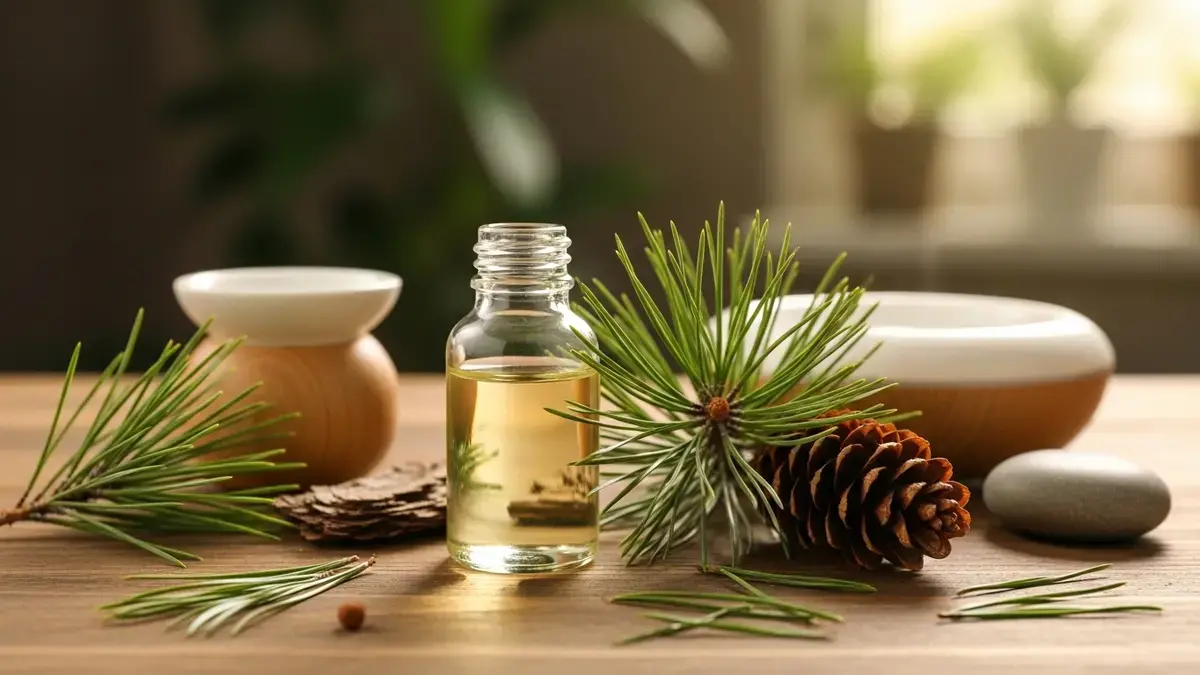
Take a deep breath. Can you imagine that fresh, clean, and invigorating aroma of a pine forest after the rain? Scots Pine essential oil (Pinus sylvestris) captures that exact essence. This isn't just a nostalgic scent from cleaning products; it's a cornerstone of aromatherapy, revered for its robust wellness properties, especially for promoting feelings of clear breathing.
Originating from the vast forests of Europe and Asia, the Scots Pine is a majestic tree, and its essential oil has been used for centuries. From purifying the air in stale rooms to soothing tired muscles, this oil is a true ally for physical and mental well-being.
Let's dive into the profound properties of this incredible oil, understand how it can benefit your wellness routine, and, most importantly, how to use it with complete safety.
Properties and Composition
Scots Pine essential oil is primarily extracted from the needles of the Pinus sylvestris tree through steam distillation. What gives it its characteristic power is its rich chemical composition, dominated by monoterpenes.
The main components you'll find in this oil are:
- $\alpha$-Pinene (Alpha-Pinene): Often present at over 40%, this is the star compound. It's largely responsible for the oil's famous soothing properties and its ability to promote feelings of clear breathing.
- $\beta$-Pinene (Beta-Pinene): Complements alpha-pinene, contributing to the aroma and cleansing action.
- Limonene: Brings a slight citrusy note and is known for its uplifting and cleansing properties.
- $\delta$-3-Carene: Another monoterpene that can help in blends designed to dry and move, useful for feelings of stuffiness.
Thanks to this chemistry, Scots Pine oil is classified as a potent air purifier, decongestant, and soother. It's also known to be a tonic for the nervous system.
Benefits and Applications
Scots Pine is a fast-acting oil, especially beneficial during the winter months or whenever you're feeling "stuffy" and run down.
Benefits for Physical Wellness
- A Staple for Respiratory Wellness: This is its most celebrated benefit. Scots Pine oil helps to loosen occasional stuffiness. It's excellent in diffusers or steam inhalations to ease seasonal congestion and promote a sense of clear breathing.
- Soothes Tired Muscles and Joints: Due to its gentle warming and soothing properties, it's a fantastic addition to massage oils. It's used to ease muscle discomfort after exercise, stiffness, and occasional aches.
- Cleansing and Purifying: Its cleansing and deodorizing properties make it ideal for diffusing, helping to clear the air of stale odors and purify the environment.
Benefits for Mental and Emotional Health
- Mental Clarity and Focus: The fresh, camphoraceous aroma is like a breath of fresh air for the brain. It helps combat mental fatigue and exhaustion, promoting a state of alertness and concentration.
- Uplifting and Grounding Effect: If you feel lethargic, Scots Pine can "lift" your spirits. At the same time, like all tree oils, it promotes a sense of stability and grounding, connecting you to the strength of nature.
How to Use
There are several safe and effective ways to incorporate Scots Pine essential oil into your routine. Always remember that dilution is key for topical use.
Aromatic Diffusion
The easiest and most popular method. Add 3-5 drops to your ultrasonic diffuser to purify the air in your office or bedroom. It's especially useful during the winter season or in enclosed spaces to neutralize odors.
Topical Application (Always Diluted)
Never apply this oil undiluted to the skin. The recommended dilution is 1% to 2%.
- For Muscle Massage: Dilute 5-6 drops of Scots Pine oil in 10ml (one tablespoon) of a carrier oil (like jojoba or sweet almond) and massage into sore areas.
- For a Chest Rub: Dilute 3 drops in 10ml of carrier oil and gently massage the chest and back to help loosen feelings of congestion.
Steam Inhalation
For intense respiratory support, add 1-2 drops of Scots Pine oil to a large bowl of hot (not boiling) water. Cover your head with a towel, close your eyes, and inhale the steam for 5-10 minutes.
Safety Alerts and Precautions
Scots Pine essential oil is generally safe when used correctly, but its potency demands respect. This section is mandatory for your safety and our blog's compliance.
❌ Risk of Skin Irritation
This oil can be irritating to the skin, especially if it is oxidized (old) or used on sensitive skin. The high levels of pinenes can cause redness and sensitization.
- Mandatory: Always perform a patch test before the first use.
- Mandatory: Always dilute to 1-2% (max 3% for acute, localized use) in a carrier oil.
- Storage: Keep your Scots Pine oil tightly capped, away from light and heat (preferably in the refrigerator) to slow oxidation.
❌ Risk for Respiratory Conditions (Asthma)
This is a crucial warning: While excellent for general congestion, the high $\alpha$-pinene content can be a trigger for some. In individuals with asthma or high respiratory sensitivity, inhaling this oil (especially via steam) can trigger bronchospasms. Use with extreme caution and discontinue if any respiratory discomfort occurs.
❌ Contraindications and Risk Groups
- Pregnancy and Lactation: Use is discouraged as a precaution, due to a lack of safety studies.
- Children: Avoid use on children under 6 years old. For older children (6-10), use in very low dilutions (0.5% to 1%) and prefer diffusion over topical application.
- Important: Never apply pinene-rich oils near the face of infants or young children, as it can cause a respiratory reflex and breathing difficulties.
⚠️ Special Alert for PET Owners (Especially Cats)
Pine essential oils are extremely toxic to cats. Cats lack the specific liver enzyme (glucuronyltransferase) needed to metabolize terpenes (like pinene). Diffusion or topical application can lead to liver failure and be fatal. Avoid use in environments where cats reside.
📜 General Precautions and FDA Disclaimer
- Do Not Ingest: Internal use of essential oils is a complex clinical practice and should only be done under the guidance of a qualified healthcare professional.
- Keep away from eyes and mucous membranes.
- FDA Disclaimer: These statements have not been evaluated by the Food and Drug Administration. This product is not intended to diagnose, treat, cure, or prevent any disease. The information on the Aromatherapy Blog is for educational purposes only and does not substitute for professional medical advice.
Blending and Synergies
Scots Pine essential oil shines on its own, but it also blends beautifully, especially with other "forest" and "medicinal-scented" oils.
- For a Respiratory-Support Blend: Mix with Eucalyptus Radiata, Tea Tree, or Ravintsara.
*For Soothing Muscles: Combine with Rosemary, Lavender, or Ginger. - For a Grounding "Forest Blend": Cedarwood Atlas, Juniper Berry, or Frankincense. - To Purify the Air: Lemon or Bergamot.
Ideal Carrier Oils
For massage, oils like Sweet Almond or Grapeseed are light and effective. For deeper relief, an Arnica-infused oil is an excellent choice.
Final Thoughts
Scots Pine essential oil is, in many ways, the forest air in a bottle. It is an oil of strength, resilience, and deep cleansing.
Whether it's helping you breathe more freely during seasonal challenges, focusing your mind for a project, or soothing your muscles after a long hike, it is a powerful ally. Remember its potency, respect the safety guidelines (especially with children, asthmatics, and pets), and enjoy the clarity that only the forest can bring.