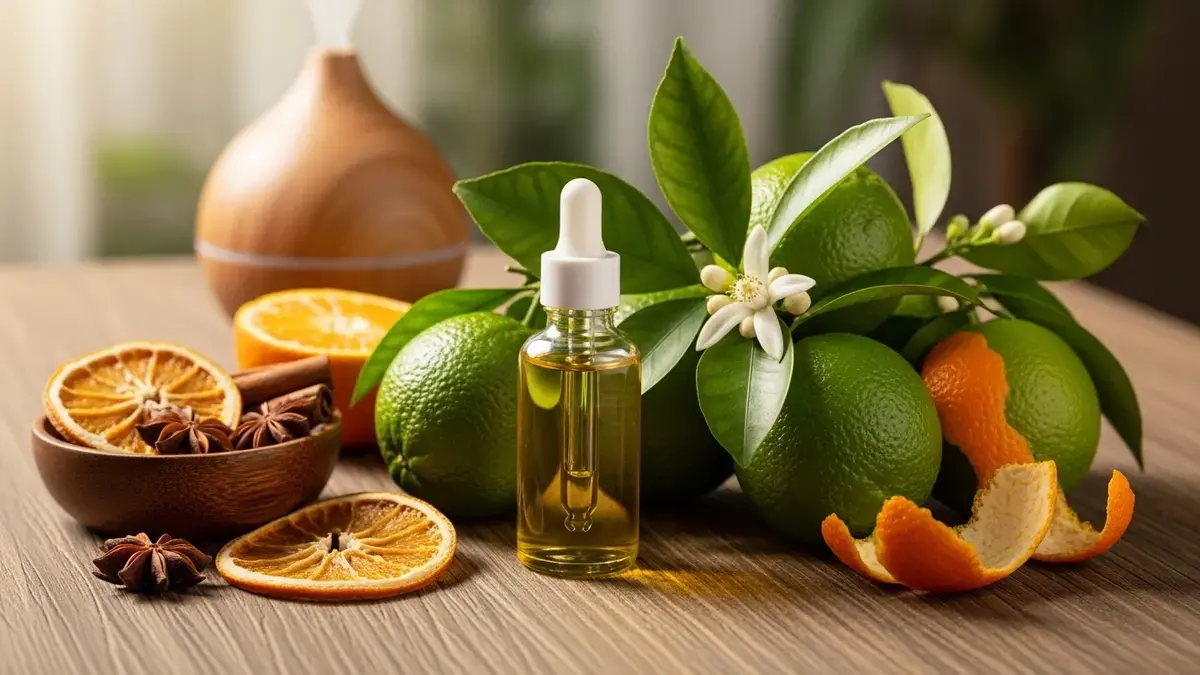
Nature is full of surprises, and the bitter orange tree (Citrus aurantium var. amara) is one of the most generous. It gifts us with not one, but three distinct essential oils: Neroli (from its delicate flowers), Bitter Orange (from the fruit peel), and our star today, petitgrain essential oil.
Petitgrain is distilled from the leaves and small twigs of the tree. Its aroma is one of the most complex and beloved fragrances in aromatherapy. Forget a simple orange scent; petitgrain is fresh, green, slightly woody, and has a subtle floral note. It's the scent of an entire orchard in a bottle.
Often called "poor man's neroli" (for having calming effects similar to the pricey orange blossom oil, but at a much lower cost), petitgrain is a wellness giant in its own right. It is the oil of choice for calming the mind and balancing the skin, and this guide will show you how to use it safely and effectively.
Properties and Composition
Petitgrain essential oil is extracted by steam distillation of the fresh leaves and twigs of the bitter orange tree. This harvesting method makes it a more sustainable option than Neroli, which relies on the blossoms.
What makes it so special is its perfect chemical balance. Its two main components are linalyl acetate (an ester) and linalool (an alcohol). If those names sound familiar, it's because they are the same components that make Lavender and Bergamot so famous for their calming and balancing properties.
Linalyl acetate is renowned for its profound ability to promote feelings of calm, while linalool is known for its soothing, cleansing, and skin-supporting properties. Together, they make petitgrain a dual-action oil: relaxing and toning.
Benefits and Applications
Petitgrain oil is a true multitasker, but its two superpowers are, without a doubt, calming the mind and cleansing the skin.
Mental and Emotional Support
This is, perhaps, petitgrain's most celebrated use. It is a true balm for an overloaded nervous system.
- Easing Stress and Anxious Feelings: It is one of the most effective oils for easing feelings of anxiousness and agitation. It helps to "turn off" a racing mind, making it perfect to use after a stressful workday.
- Sleep Support: If your restlessness comes from incessant thoughts, petitgrain is your ally. Diffusing it in the bedroom before sleep helps promote a state of deep relaxation.
- Balance and Focus: Unlike some sedatives, petitgrain calms without "knocking you out." It helps clear mental fog, promoting a state of calm focus, making it great for studying or meditation.
Physical Support and Skincare
Petitgrain is a fantastic skin tonic, especially for those who struggle with oiliness.
- Balancing Oily and Blemish-Prone Skin: It is the top choice for oily skin. It helps balance sebum production, has mild astringent properties, and offers cleansing properties that help keep pores clean.
- Natural Deodorant: Thanks to its cleansing action and its fresh, clean scent, it is a fantastic ingredient for homemade deodorants.
- Digestive Comfort: When diluted and massaged onto the abdomen, it helps ease digestive discomfort, much of which is linked to nervousness.
How to Use Petitgrain Oil
Petitgrain is a very versatile and easy-to-use oil, as it is gentle for most people.
- Aromatic Diffusion: The number one way to use it for emotional benefits. Add 5 to 7 drops to your diffuser to fill the room with instant calm.
- Topical Application (Skincare): Essential for skin benefits. Dilution is always necessary.
- Facial Serum (Oily Skin): 0.5% to 1% dilution (1 to 2 drops of petitgrain for every 10ml of jojoba or grapeseed oil).
- Abdominal Massage (Discomfort): 2% dilution (4 to 5 drops per 10ml of sweet almond oil).
- Relaxing Bath: Mix 5-6 drops into a tablespoon of Epsom salt or carrier oil and dissolve in a warm bath for a stress-relieving soak.
- Direct Inhalation: For quick relief from anxious feelings in the middle of the day, place 1 drop on a tissue and inhale deeply.
Safety Alerts and Precautions
ATTENTION: This section is vital for your safety and for AdSense compliance. Fortunately, petitgrain essential oil is one of the safest and gentlest oils in aromatherapy, but that doesn't eliminate the need for precautions.
❌ Phototoxicity
Risk: Non-existent. This is the most important information about petitgrain. Unlike Bitter Orange oil (from the peel), petitgrain oil (from the leaves) is NOT phototoxic. It is perfectly safe to use on the skin without risk of sun-related spots or burns.
❌ Skin Irritation
Risk: Low. Petitgrain is very gentle and generally non-irritating. However, like all oils rich in Linalool, it can oxidize (spoil) over time. An oxidized oil can cause sensitization (allergy). - Action: Use fresh oils and store your petitgrain bottle in the refrigerator or a cool, dark place to extend its shelf life.
❌ Neurotoxicity and Contraindications
Risk: Non-existent. It is not neurotoxic. It is considered one of the safest oils, including for use (well-diluted and with caution) during pregnancy (after the first trimester) and on children, though consulting a physician is always recommended.
❌ Drug Interactions
Risk: Non-existent. There are no known drug interactions for petitgrain oil.
⚠️ Risk to Pets (Pet Owner Alert)
Keep essential oils out of reach of animals. Especially Cats: Petitgrain is rich in Linalool. Cats lack the necessary liver enzyme (glucuronyl transferase) to metabolize this component. Exposure can be toxic and lead to liver damage. Avoid topical use and diffusion in enclosed spaces with them.
⚠️ General Usage Precautions
- Patch Test: Even though it's gentle, always do a patch test. Apply a small, diluted (at 1%) amount to the inner elbow and wait 24 hours.
- Never Ingest: Ingestion of essential oils should only be done under the guidance of a qualified clinical aromatherapist.
- Keep Away From Eyes: Avoid contact with eyes and mucous membranes.
Medical Disclaimer: The information on this post is for educational purposes only and does not substitute for professional medical advice. Always consult a qualified healthcare professional. These statements have not been evaluated by the Food and Drug Administration (FDA). This product is not intended to diagnose, treat, cure, or prevent any disease.
Combinations and Synergies
Petitgrain is a "blend harmonizer." It serves as a perfect bridge between top citrus notes and base/heart floral or woody notes.
- For Deep Relaxation (Sleep): Combine with Lavender, Roman Chamomile, or Marjoram.
- For Oily/Blemish-Prone Skin: Combine with Tea Tree, Cedarwood Atlas, or Geranium.
- For Uplifting the Mood (Citrus-Floral): Combine with Bergamot, Sweet Orange, or Ylang Ylang.
- For Calm Focus: Combine with Frankincense or Rosemary.
- Ideal Carrier Oils: Jojoba Oil (excellent for balancing facial skin) or Grapeseed Oil (light and quickly absorbed).
Final Thoughts
Calling it "poor man's neroli" is an injustice. Petitgrain essential oil is a star in its own right. It is one of the safest, most effective, and budget-friendly oils for dealing with two of modern life's biggest problems: stress and imbalance.
Its "green hug" aroma is comforting, its action on the skin is reliable, and its origin (leaves) is sustainable. It is, without a doubt, a fundamental essential oil in any collection, from the beginner to the expert.