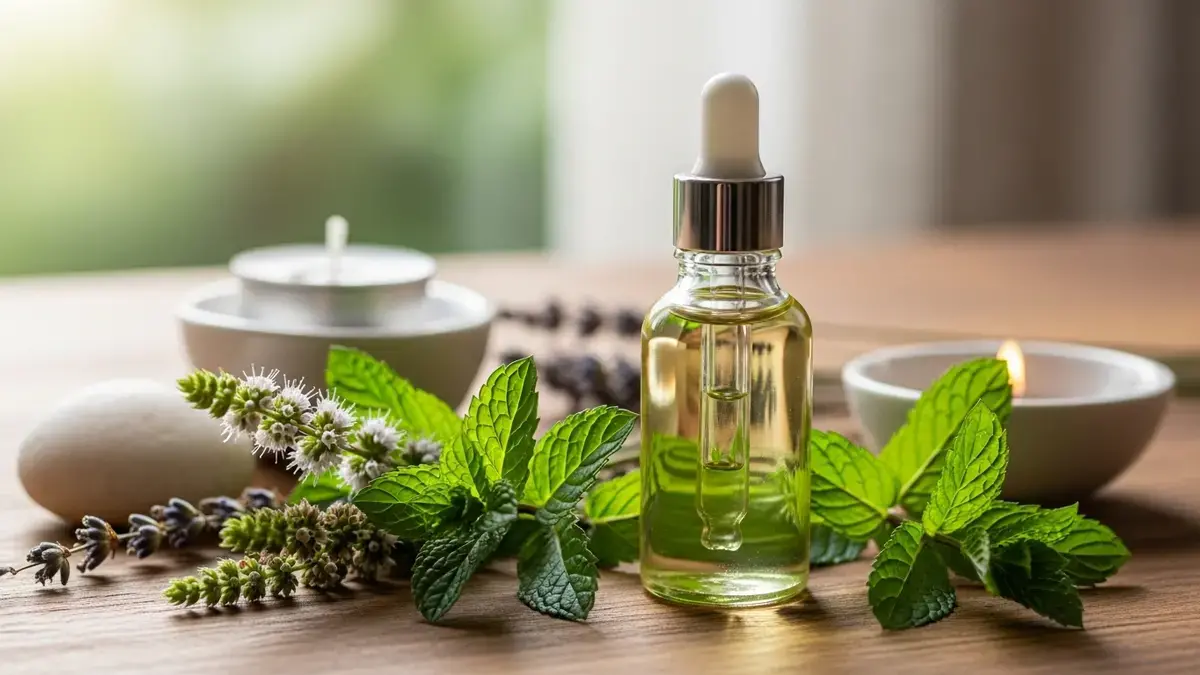
If there's one essential oil that awakens the senses and invigorates the mind, it's Peppermint essential oil. Known for its unmistakable cool, minty aroma, it's a true aromatherapy classic—an indispensable powerhouse for any collection, whether you're a beginner or an expert.
Extracted from the Mentha piperita plant, a natural hybrid of water mint and spearmint, Peppermint has a long history of use in cultures around the world, dating back to ancient Egypt. Today, it's celebrated for its versatility, acting as a powerful ally for focus, tension relief, and respiratory wellness.
Properties and Composition
The potency of Peppermint essential oil comes from its complex chemical makeup. Its main components are menthol (which provides its cooling and analgesic effect) and menthone (responsible for many of its therapeutic properties). This dynamic duo forms the basis of its effectiveness.
The oil is obtained through steam distillation of the plant's leaves and flowers, a process that captures its purest essence. Its most notable properties include being an analgesic, expectorant, anti-inflammatory, digestive aid, and mental stimulant, making it a broad-spectrum therapeutic tool.
Benefits and Applications
The benefits of Peppermint essential oil are vast, positively impacting our physical body as well as our mental and emotional state. It's a fast-acting oil that delivers almost immediate results when used correctly.
Benefits for Physical Health
- Headache Relief: It is famous for its ability to soothe tension headaches when applied (properly diluted) to the temples and the back of the neck.
- Digestive Support: It helps ease digestive discomfort, such as nausea and indigestion, through inhalation or topical application over the abdomen.
- Respiratory Wellness: The menthol acts as an excellent expectorant, helping to open the airways and relieve nasal congestion during colds and sinus issues.
- Sore Muscle Relief: Its cooling and analgesic effect makes it ideal for massaging tired, sore muscles after physical activity or a long day.
Benefits for Mental and Emotional Health
- Enhanced Focus and Concentration: Inhaling the aroma of Peppermint is a fantastic way to combat mental fatigue, clear your thoughts, and improve alertness.
- Energizing Boost: Feeling drowsy or unmotivated? A drop or two in a diffuser or personal inhaler can provide an invigorating jolt of energy.
- Stress Reduction: Although stimulating, Peppermint can also help calm the mind during stressful moments, promoting the clarity needed to solve problems.
How to Use
To safely get the most out of Peppermint essential oil, it's crucial to know the best application practices. Remember that because it's so potent, less is always more.
- Aromatic Diffusion: Use 3 to 5 drops in your diffuser to energize a room, purify the air, and promote focus during work or study. Avoid diffusing for extended periods.
- Topical Application: DILUTION IS MANDATORY. Dilute 1-2 drops in a tablespoon (about 10ml) of a carrier oil (like coconut or jojoba) before applying to the skin.
- Direct Inhalation: Place 1 drop in the palm of your hands, rub them together, and cup them over your nose to inhale (being careful to avoid the eyes!) for quick congestion relief or an instant mental pick-me-up.
Safety Warnings and Precautions
Peppermint is an extremely potent oil and requires extra care in its handling. Following these guidelines is essential for safe and effective use.
- ❌ Neurotoxicity: Peppermint oil is rich in menthone, a ketone that can be neurotoxic. It is contraindicated for babies and young children (under 6 years old), especially near the face or in diffusion, as it can cause spasms and severe respiratory distress.
- ❌ Dermocausticity/Skin Irritation: Never apply this oil undiluted ("neat") to the skin. Its high menthol content can cause intense irritation, a burning sensation, and allergic reactions. Dilution in a carrier oil is always required.
- ❌ Contraindications: Avoid use during pregnancy and breastfeeding, and by individuals with epilepsy, serious heart conditions, or severe liver problems. It should not be used in conjunction with homeopathic treatments as it may negate their effects.
- ⚠️ General Precautions: Never ingest essential oils without the guidance of a qualified clinical aromatherapist. Keep away from eyes, inner ears, and sensitive areas. Always perform a skin patch test before first use.
- ⚠️ Warning for Pet Owners (Especially Cats): Be extremely cautious when using Peppermint in homes with pets. The high concentration of menthol is toxic to dogs and especially to cats, which cannot properly metabolize its components. Diffusion can cause severe respiratory and neurological problems in pets.
Disclaimer: The information provided in this post is for educational purposes only and does not constitute medical advice. It is not intended to diagnose, treat, cure, or prevent any disease. The Blog da Aromaterapia assumes no liability for the misuse of the information presented here.
Combinations and Synergies
Peppermint essential oil is versatile and blends very well with other oils, creating potent synergies for different purposes.
- For Focus and Study: Combine with Lemon and Rosemary.
- For Respiratory Relief: Blends wonderfully with Eucalyptus Globulus and Tea Tree.
- For Sore Muscles: Create a powerful synergy with Lavender and Wintergreen.
- Ideal Carrier Oils: Grape Seed oil for faster absorption in massages, and Fractionated Coconut Oil for a smooth, non-greasy application.
Final Thoughts
Peppermint essential oil is a force of nature, a powerful ally for the mind and body. Its ability to invigorate, soothe, and clarify makes it an aromatherapy staple. However, its potency demands respect and knowledge.
By using it consciously and safely, following all precautions, you can enjoy all of its incredible benefits. Explore the refreshing power of Peppermint and let it bring a new burst of energy to your day.