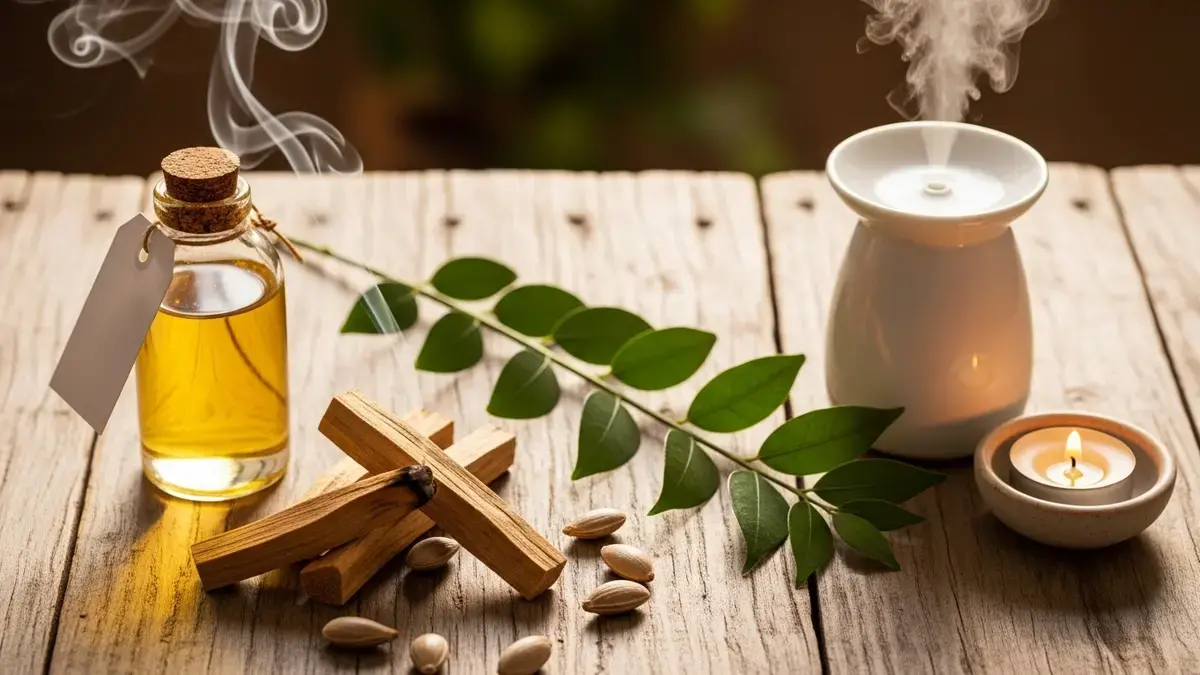
There is an aroma that, for many, is synonymous with peace and purification. We're talking about the "Holy Wood" from South America, and more specifically, palo santo essential oil. If you've ever burned the wood, you know that fragrant, sweet, and woody smoke that seems to instantly cleanse the air and calm the mind.
But what happens when that essence is captured in a bottle? The essential oil (Bursera graveolens) is the distilled soul of this mystical tree, used for centuries by Incan shamans and healers for spiritual cleansing and well-being. Its perfume is a complex blend of woody notes, a sweet citrusy touch (almost like pine and lemon), and a resinous, balsamic undertone.
However, behind its spiritual power lies a fascinating chemistry and, more importantly, rules of safety and sustainability that every aromatherapy user needs to know. This guide is your map to using palo santo effectively, respectfully, and, above all, safely.
Properties and Composition
The first and most crucial point about palo santo essential oil is its origin. The true magic of this oil doesn't come from the living wood. On the contrary, the highest quality oil is steam distilled exclusively from dead trees and fallen branches that have rested on the forest floor for several years (typically 4 to 10 years). It is during this "curing" time that the resin matures and develops its full chemical profile.
Any oil distilled from living or prematurely cut trees is not only unsustainable but also chemically inferior. Ethics and quality go hand-in-hand here.
Chemically, the main component of palo santo is Limonene (usually between 40% to 70%). This monoterpene is famous for its uplifting properties (found in citrus peels) and its potent cleansing action. Other important components include α-Terpineol (alpha-terpineol), known for its calming effects, and Menthofuran, which contributes to its unique aromatic note.
Benefits and Applications
Palo santo is revered for its profound effects on the mind and spirit, but it also offers interesting physical applications.
Mental and Emotional Support
This is the territory where palo santo shines brightly. It is a "grounding" oil.
- Energetic Cleansing and Purification: Its most traditional use. It is used in diffusers to cleanse a space of "negative energy," promoting an environment of peace. It's the perfect substitute for the wood smoke, for those who are sensitive to it.
- Soothing to the Nerves: It's a fantastic ally for meditation, yoga, or simply for unwinding after a chaotic day. It helps to quiet "mental noise" and reduce feelings of stress and anxiousness.
- Mental Clarity: By calming the mind, it allows for greater focus. It's great to use before creative work or a moment of introspection.
Physical Support and Applications
- Respiratory Support: Thanks to the high limonene and alpha-terpineol content, it's an excellent oil to diffuse during seasonal challenges. It helps promote feelings of clear airways and easier breathing.
- Muscle and Joint Comfort: When properly diluted, its gently warming and soothing properties make it a great addition to massage oils to ease muscle tension and minor joint discomfort.
- Skincare: Its cleansing properties make it useful (in very low dilution) for toning and cleansing the skin.
How to Use Palo Santo Oil
Palo santo is potent, and its complex aroma develops best when used sparingly. Less is more.
- Aromatic Diffusion (The Best Use): The safest and most effective way to use it for spiritual and respiratory benefits. Add 3 to 5 drops to your diffuser to fill the room. It is wonderful for meditating or before sleep.
- Topical Application (Dilution Required): Dilution is crucial due to the risk of sensitization (read the safety section).
- For Massage (Comfort): 1% to 2% dilution (3 to 6 drops of palo santo for every 10ml of carrier oil, like sweet almond).
- For Grounding (Perfumery): 1% dilution (3 drops per 10ml) in jojoba oil. Apply to wrists, soles of the feet, or the chest.
- Direct Inhalation: Place 1 drop on a tissue and inhale deeply. It's an instant "reset" for a moment of stress.
Safety Alerts and Precautions
MAXIMUM ATTENTION: This is the most important chapter. Despite its gentle and "sacred" aroma, palo santo oil is not mild like lavender. It requires specific care to be used without risk, which is vital for AdSense compliance and your health.
❌ Risk of Skin Irritation (Sensitization)
Risk: Moderate. Palo santo essential oil is very high in Limonene. Limonene is a component that oxidizes (spoils) very easily when exposed to air, light, and heat. Oxidized limonene is one of the most common skin sensitizers in aromatherapy. This means that if you use an old or poorly stored oil, you can develop an allergy (contact dermatitis) to it. - Action: ALWAYS dilute palo santo. NEVER apply it undiluted. - Action: Use only fresh oil. Check the expiration date and store your bottle in the refrigerator to slow oxidation.
❌ Contraindications and Interactions
- Pregnancy and Lactation: As a standard precaution, the use of palo santo is discouraged during pregnancy and breastfeeding.
- Children: Use with extreme caution on children (over 2 years) and only in very low dilutions (0.5% or less), and preferably only in a diffuser.
- Drug Interactions: There are no well-documented drug interactions for topical or aromatic use, but consult your physician if you are under medical care.
❌ Phototoxicity and Neurotoxicity
Risk: Non-existent. Steam-distilled palo santo oil is not phototoxic, despite the high limonene content. It is also not considered neurotoxic in normal use.
⚠️ Risk to Pets (Pet Owner Alert)
Keep essential oils out of reach of animals. Using diffusers in homes with pets should be done with extreme caution and with an open door. Especially Cats: Palo santo is high in terpenes (limonene, alpha-terpineol), which are toxic to cats. They lack the necessary liver enzyme (glucuronyl transferase) to metabolize these components, which can lead to serious harm. Avoid diffusing in enclosed spaces with them.
⚠️ General Usage Precautions
- Patch Test: Mandatory. Apply a small, diluted (at 1%) amount to the inner elbow and wait 24 hours.
- Never Ingest: Ingestion of essential oils should only be done under the guidance of a qualified clinical aromatherapist.
- Keep Away From Eyes: Avoid contact with eyes and mucous membranes.
Medical Disclaimer: The information on this post is for educational purposes only and does not substitute for professional medical advice. Always consult a qualified healthcare professional. These statements have not been evaluated by the Food and Drug Administration (FDA). This product is not intended to diagnose, treat, cure, or prevent any disease.
Combinations and Synergies
Palo santo essential oil is a wonderful base/heart note that serves as a bridge between citrus notes and deep resins.
- Sacred Meditation Synergy: Combine with Frankincense, Myrrh, or Sandalwood.
- Calming and Uplifting Synergy: Combine with Bergamot, Sweet Orange, or Lavender.
- Woody Synergy: Combine with Cedarwood, Vetiver, or Patchouli.
- Ideal Carrier Oils: Jojoba Oil (excellent for perfumery and stability) or Sweet Almond Oil (for body massages).
Final Thoughts
Palo santo is more than an essential oil; it's a spiritual tool and a reminder of the importance of sustainability. When purchasing, always look for ethical suppliers who guarantee the oil comes from naturally fallen and cured wood.
It is a profound oil that calms the mind, purifies the space, and connects us to something more ancient. By using it with respect for its potency (especially its limonene chemistry) and its origin, you can enjoy its profound benefits with complete safety.