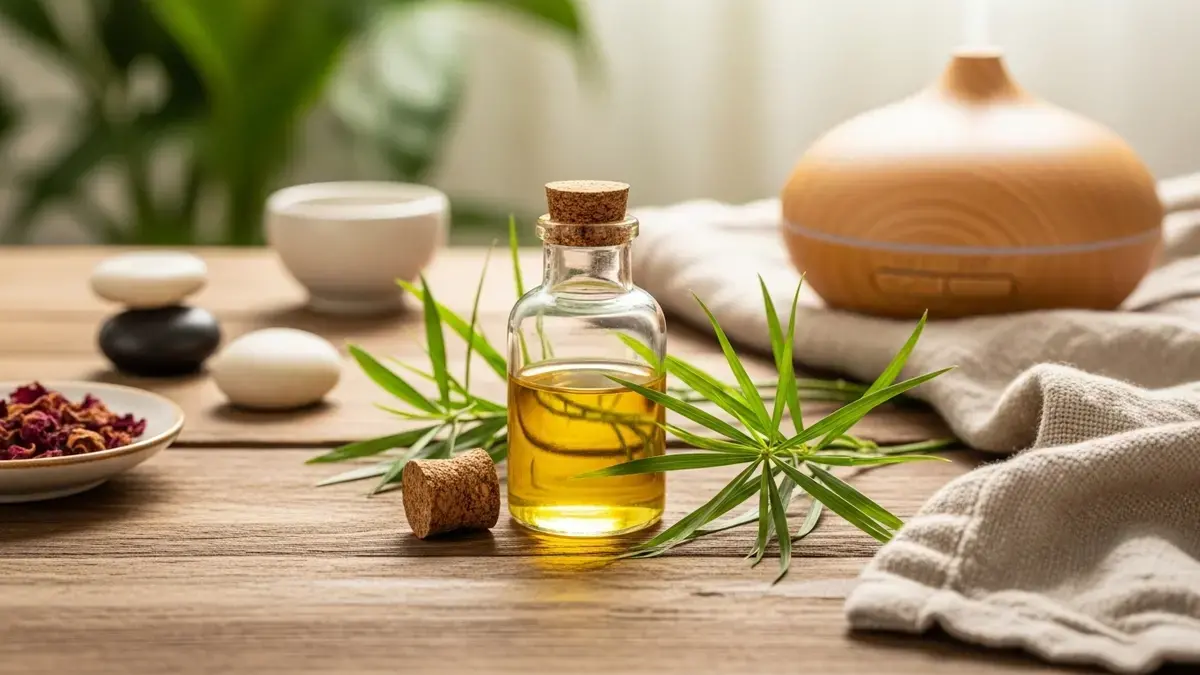
In the fascinating world of aromatherapy, some oils take you by surprise. Palmarosa essential oil is, without a doubt, one of them. From the name, you might easily think it's a type of rose, right? But here’s the first surprise: palmarosa (Cymbopogon martinii) is actually a tropical grass, a close relative of lemongrass and citronella.
So, why the confusion? Because its aroma is extraordinary. It exudes a floral, sweet, soft, and distinctly rosy scent. It's so similar to rose that, historically, it was often used to adulterate expensive rose oil. But make no mistake: palmarosa is a powerhouse in its own right, especially when it comes to caring for our skin and balancing our emotions.
In this guide, we'll uncover why this oil, often called "the affordable rose," is an indispensable item in any aromatherapy kit, focusing on its well-regarded benefits and, of course, its safe use.
Properties and Composition
Palmarosa essential oil is extracted by steam distillation of the dried grass before it flowers, which helps concentrate its most valuable compounds. The result is a pale-colored oil with a scent that pleases almost everyone.
Its great chemical secret has a name: geraniol. Palmarosa is incredibly rich in this component (often between 70% to 85%), which is the same monoterpene alcohol that gives rose much of its characteristic perfume. What does this mean for us?
Geraniol is extensively studied and known for its potent properties. It gives palmarosa oil its strong skin-supporting action, as well as being an excellent cleanser and a general toner for the body. It's this chemistry that makes palmarosa such a versatile oil.
Benefits and Applications
Palmarosa is perhaps one of the most "democratic" oils that exist. It acts in a unique way, especially on the skin, serving both dry and oily skin types. Furthermore, its gentle aroma is a balm for the mind.
Benefits for Physical Support and Skin
This is palmarosa's true superpower. It is considered the "moisturizer" of aromatherapy.
- Skin Balancing: Palmarosa has an incredible ability to help balance sebum production. This makes it fantastic for oily and blemish-prone skin (helping to balance) and, at the same time, for dry and mature skin (promoting a moisturized appearance).
- Powerful Moisturizer: It helps the skin retain moisture, making it a luxurious addition to any facial cream or serum.
- Supports Skin Rejuvenation: Because it supports the look of healthy skin, it is a wonderful ally for softening the appearance of fine lines, wrinkles, and scars.
- Cleansing Action: Thanks to its high geraniol content, palmarosa is very effective for cleansing. It's a popular choice for refreshing feet and scalps.
- Natural Deodorant: Its cleansing action, combined with its floral scent, makes it perfect for homemade deodorants, as it helps neutralize odors.
Benefits for Mental and Emotional Support
- Calming and Balancing: The aroma of palmarosa is like a hug. It helps to soothe the nervous system, easing feelings of stress, anxiousness, and agitation.
- "Oil of Adaptability": Just as it adapts to different skin types, it helps us "flow" better in situations of change or transition, calming insecurity.
- Emotional Comfort: It is a gentle oil that uplifts the mood without overstimulating, bringing a sense of comfort and security.
How to Use Palmarosa Oil
To enjoy the benefits of palmarosa, proper dilution is your best friend. Because it's so pleasant, it's very easy to incorporate into your routine.
- Aromatic Diffusion: The ideal way to get its emotional benefits. Add 4 to 6 drops to your diffuser to create a calm, welcoming environment, perfect for easing the day's stress.
- Topical Application (Skincare): Its most famous use. Dilution is mandatory and fundamental.
- Facial Serum (Dry, Mature, or Oily Skin): 0.5% to 1% dilution (1 to 2 drops of palmarosa for every 10ml of carrier oil).
- Moisturizing Body Oil: 1% to 2% dilution (3 to 6 drops for every 10ml of carrier oil).
- Deodorant Spray: Mix a few drops with witch hazel or grain alcohol and distilled water in a spray bottle.
- Direct Inhalation: For quick relief from anxious feelings, place 1 drop on a tissue and inhale deeply a few times.
Safety Alerts and Precautions
Palmarosa essential oil is considered one of the safest oils (GRAS - Generally Regarded as Safe) in aromatherapy. However, "safe" does not mean free from rules. Safety compliance is vital for AdSense and for your well-being.
❌ Risk of Skin Irritation (Sensitization)
Risk: Low to Moderate. Although not dermocaustic, palmarosa is very high in geraniol, which is a known allergen for a small portion of the population. People with extremely sensitive skin or a known allergy to fragrance components should be cautious. Never use undiluted on the skin; always dilute.
❌ Neurotoxicity and Phototoxicity
Risk: Non-existent. Palmarosa oil is not neurotoxic or phototoxic. It is safe to use on the skin (diluted) without risk of sun-related spots.
❌ Contraindications and Interactions
- Pregnancy and Lactation: While many sources consider it safe, as a general precaution, it is best to avoid topical use during the first trimester of pregnancy. Aromatic use (diffuser) is generally considered safe.
- Drug Interactions: There are no known drug interactions for palmarosa oil.
⚠️ Risk to Pets (Pet Owner Alert)
Keep essential oils out of reach of animals. Using diffusers in homes with pets should be done with extreme caution and with an open door. Especially Cats: Cats lack the necessary liver enzymes to metabolize many essential oil components (including geraniol). Exposure, whether topical or via diffusion, can be toxic. Avoid diffusing in enclosed spaces with them.
⚠️ General Usage Precautions
- Patch Test: Always perform a patch test. Apply a small, diluted amount to the inner elbow and wait 24 hours.
- Never Ingest: Ingestion of essential oils should only be done under the guidance of a qualified clinical aromatherapist.
- Keep Away From Eyes: Avoid contact with eyes and mucous membranes.
Medical Disclaimer: The information on this post is for educational purposes only and does not substitute for professional medical advice. Always consult a qualified healthcare professional. These statements have not been evaluated by the Food and Drug Administration (FDA). This product is not intended to diagnose, treat, cure, or prevent any disease.
Combinations and Synergies
Palmarosa is a wonderful middle note that blends with almost everything, especially florals, citruses, and woods.
- For Skincare Synergies: Combine with Lavender, Geranium, Frankincense, and Rosehip (as a carrier oil).
- For Calming Synergies: Combine with Bergamot, Sandalwood, or Lavender.
- For Cleansing Synergies (Deodorant): Combine with Tea Tree (Melaleuca), Cypress, or Lemon.
- Ideal Carrier Oils: Jojoba Oil (perfect for balancing facial skin), Rosehip Oil (for mature skin), or Sweet Almond Oil (for body moisturizing).
Final Thoughts
Palmarosa essential oil is proof that you don't need the price tag of rose to get royal benefits. It is the great equalizer of aromatherapy: it balances the skin's appearance, balances emotions, and has an excellent safety profile.
If you are looking for a versatile oil that can moisturize your skin, calm your mind after a stressful day, and still leave a delightful floral scent in the air, palmarosa is, without a doubt, one of the best choices you can make. Use it consciously and enjoy its gentle nature.