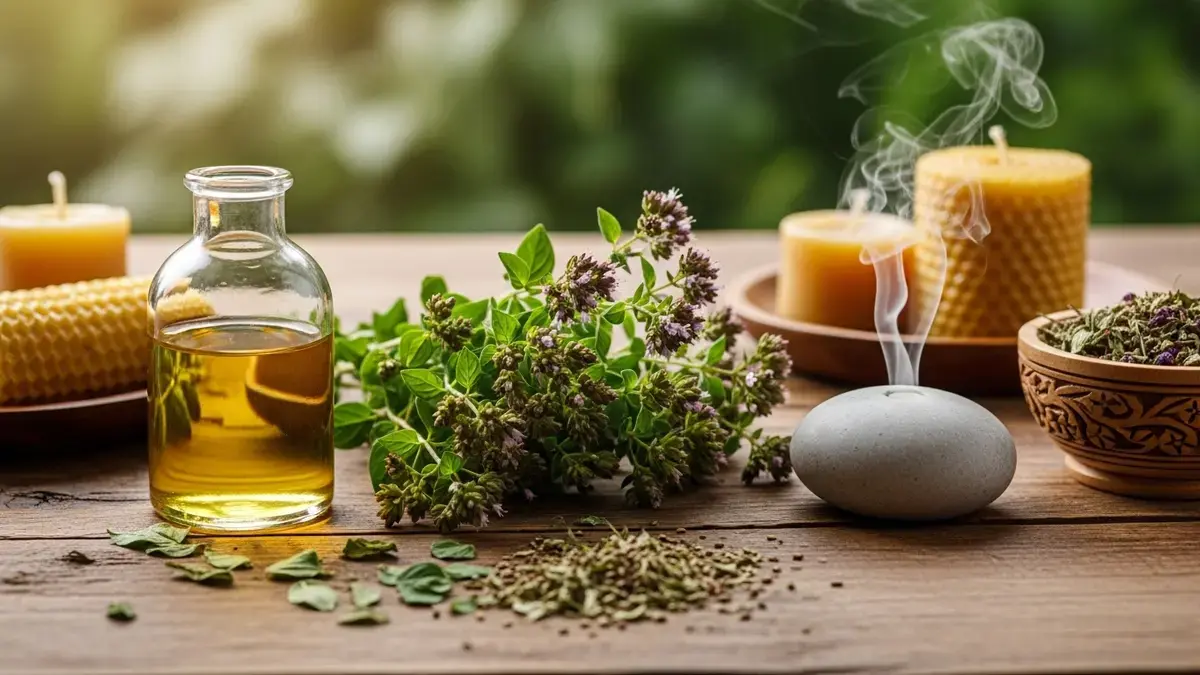
When someone mentions "oregano," what comes to mind? Probably pizza, tomato sauce, and the warmth of Italian cooking, right? The smell is unmistakable. However, when we leave the kitchen and enter the world of aromatherapy, oregano essential oil (Origanum vulgare) takes on a completely different personality. It stops being a friendly seasoning and becomes one of the most potent and aggressive tools we have available.
This is not an oil for beginners. In fact, oregano oil is considered the "heavy artillery" of aromatherapy, revered for its unrivaled cleansing properties, but it demands deep knowledge and absolute respect.
If you're ready to learn about this incredible but intense oil, this guide is for you. We will detail its composition, its uses, and, most importantly, how to use it without taking risks, ensuring a safe and effective practice.
Properties and Composition
Oregano essential oil is extracted by steam distillation of the leaves and flowers of the Origanum vulgare plant. The resulting liquid is incredibly concentrated and has a hot, pungent, herbaceous, and, of course, spicy aroma.
What makes it so powerful? Its chemistry. Oregano is dominated by a class of components called phenols, specifically carvacrol (which can make up 60% to 80% of the oil) and, to a lesser extent, thymol.
Phenols are the reason for its fame. In the aromatherapy world, they are known for having the strongest cleansing action and for supporting the body's natural defenses. However, this same potency is what makes them highly aggressive to the skin and mucous membranes. This is why it's an oil that should never, under any circumstances, be used undiluted.
Benefits and Applications
Due to its potent properties, the uses of oregano oil are almost exclusively focused on physical support and environmental purification. It is not an oil commonly used for relaxation or emotional balance.
Physical Support and Purification
- Cleansing Properties: This is its greatest strength. Carvacrol is extensively studied for its ability to stand up to a wide range of seasonal challenges. It's a fantastic ally for the body during the winter months.
- Support for Natural Defenses: Used (with extreme caution) topically or aromatically, it is known to support and bolster the body's natural defense systems.
- Muscle and Joint Comfort: Thanks to its "hot" (rubefacient) effect, oregano oil, when heavily diluted, can be used in localized massage oils to bring a warming sensation and comfort to tired muscles or overworked joints.
- Home Cleansing: It is one of the best essential oils to add to homemade cleaning products. A few drops in a vinegar or water spray can effectively purify surfaces.
Mental and Emotional Support
As mentioned, oregano is not a calming oil. On the contrary, its aroma is strong and energizing. It is considered an oil that promotes feelings of security and strength, but its primary use remains functional and physical.
How to Use Oregano Oil
This is the most critical section. Improper use of oregano essential oil can cause harm. The golden rule is: ALWAYS DILUTE.
- Topical Application (Only with Extreme Dilution):
- NEVER use it neat (undiluted) on the skin. It is dermocaustic and will cause chemical burns.
- The maximum safe dilution for oregano is 1%. This means 1 drop of essential oil for, at minimum, 5ml (1 tsp) of carrier oil (like jojoba or coconut).
- For beginners, we recommend a 0.5% dilution (1 drop per 10ml/2 tsp of carrier oil).
- The best place to apply it, due to its aggressive nature, is on the soles of the feet, where the skin is thickest. Avoid the face, neck, and sensitive skin.
- Aromatic Diffusion (With Moderation):
- Oregano can be very irritating to the respiratory tract if diffused in excess.
- Use only 1-2 drops in the diffuser, and always blend it with softer oils (like lemon or lavender) to "buffer" its intensity.
- Diffuse for short periods (e.g., 30 minutes).
- Direct Inhalation (Not Recommended): We do not recommend smelling the oil directly from the bottle or in a personal inhaler, as the high concentration of phenols can severely irritate the nasal passages.
Safety Alerts and Precautions
MAXIMUM ATTENTION: This section is the most important in this article and is mandatory for AdSense compliance and your safety. Oregano is not a typical essential oil; it requires expert-level care.
❌ Critical Risk: Dermocaustic and Mucous Membrane Irritation
Oregano essential oil is rich in phenols (carvacrol, thymol), which are highly dermocaustic. This means it WILL BURN the skin if applied undiluted. It will also burn mucous membranes (nose, eyes, mouth, genitals). NEVER use it without heavy dilution (maximum 1%).
❌ Strict Contraindications
The use of this oil is STRICTLY CONTRAINDICATED (by all routes: topical, aromatic, or ingestion) for: - Pregnant and nursing women (risk of toxicity and stimulating menstrual flow). - Young children (under 10 years old). - Individuals with sensitive, damaged, or broken skin.
❌ Drug Interactions (Anticoagulants)
RISK: High. Oregano oil may inhibit platelet aggregation (thin the blood). It is contraindicated for people taking anticoagulant medications (e.g., Warfarin), aspirin, or who have bleeding disorders. Discontinue use at least 48 hours before any surgery.
⚠️ Risk to Pets (Especially Cats)
Pet Owner Alert: Oils high in phenols, like oregano, are extremely toxic to cats. Cats lack the necessary liver enzyme (glucuronyl transferase) to metabolize phenols, leading to fatal liver failure. DO NOT use this oil topically on cats, and avoid diffusing it in enclosed spaces where they reside.
⚠️ General Usage Precautions
- Phototoxicity: Oregano oil is not phototoxic.
- Never Ingest: Ingestion of oregano oil should only be considered under the guidance of a certified clinical aromatherapist, as it can cause severe liver damage (hepatotoxicity) and stomach lining damage if used incorrectly.
- Patch Test: Even when diluted to 1%, perform a patch test. Apply the blend to the inner elbow and wait 24 hours.
- Keep Away From Eyes: If contact occurs, flush with a carrier oil (olive, jojoba) and NOT with water.
Medical Disclaimer: The information on this post is for educational purposes only and does not substitute for professional medical advice. Always consult a qualified healthcare professional. These statements have not been evaluated by the Food and Drug Administration (FDA). This product is not intended to diagnose, treat, cure, or prevent any disease.
Combinations and Synergies
Because oregano essential oil is so intense, it dominates any blend. The goal when combining it is usually to soften its aroma or enhance its supportive action.
- For Cleansing Support (Diffusion): Combine 1 drop of Oregano with 3 drops of Lemon and 2 drops of Tea Tree (Melaleuca).
- For Muscle Comfort Massage (Diluted to 1%): Combine with Rosemary or Ginger.
- To Soften the Aroma: Lavender, Lemon, or Sweet Orange help "round out" the pungent, medicinal note.
- Ideal Carrier Oils: Use nourishing, thick oils that protect the skin, such as Jojoba Oil, Avocado Oil, or Olive Oil.
Final Thoughts
Oregano essential oil is, without a doubt, a powerhouse of nature. It's an incredible tool for purification and support in times of need, but it is not an oil for casual or daily use.
Treat it with the respect a specialist would treat a potent chemical. Knowledge and caution are your best friends here. By mastering the safe use of oregano, you gain a powerful ally for your wellness, but remember: when in doubt, choose a gentler oil, like Tea Tree or Ravintsara.