
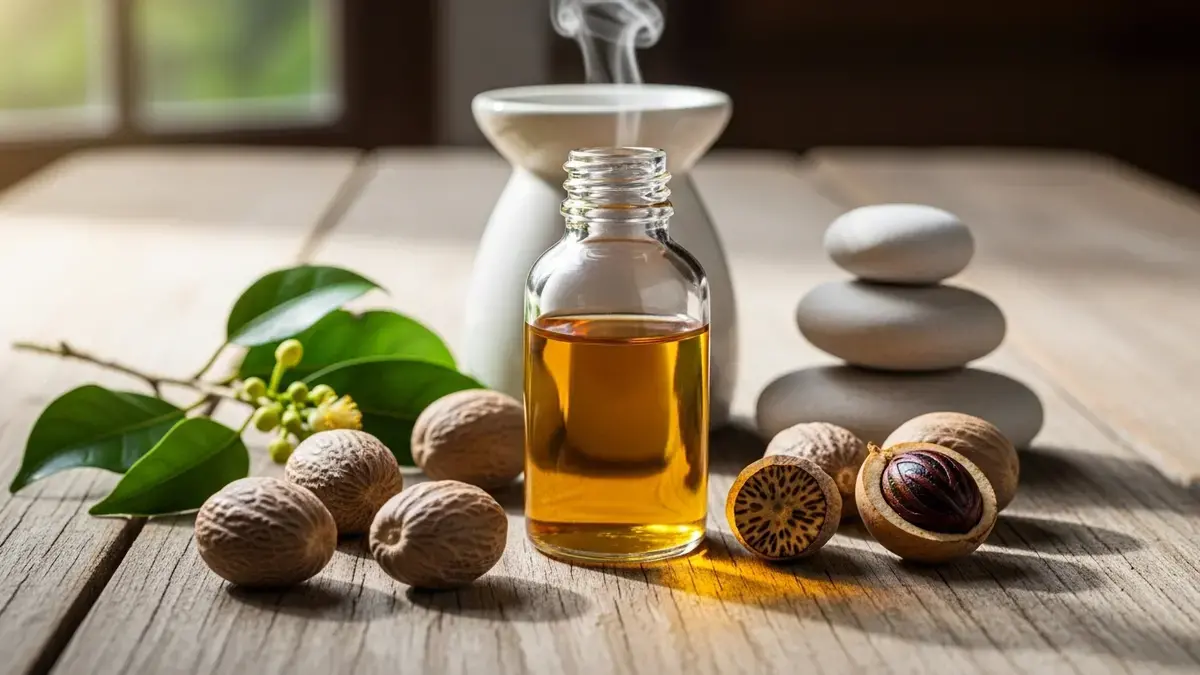
When we think of nutmeg, most of us are transported to cozy recipes, warm winter drinks, and desserts that comfort the soul. But what if I told you that this familiar spice hides one of the most potent and complex essential oils in aromatherapy? Nutmeg essential oil (Myristica fragrans) is a true sleeping giant.
This is an oil of extremes: deeply warming, comforting, and uplifting, but it demands a level of respect and knowledge far above the average. Its benefits are real, but its risks, if used incorrectly, are also significant.
If you're looking for an oil that brings relief to seasonal muscle discomfort, digestive support, or a boost of mental energy, Nutmeg essential oil can be an incredible ally. However, this is a guide where the safety section is the most important one of all. Let's learn to use it with reverence and, above all, with safety.
Nutmeg Oil's Properties and Composition
Nutmeg essential oil is extracted by steam distillation of the dried seed (the nut) of the Myristica fragrans tree. Its aroma is exactly what you'd expect, but more concentrated: warm, sweet, spicy, and woody. It's the scent of comfort in a bottle.
Its chemical composition is fascinating and is what defines both its benefits and its dangers. The main components include:
- Monoterpenes (Sabinene, α-Pinene, β-Pinene): This group makes up the bulk of the oil. They are responsible for the uplifting, toning, and warming properties when applied topically.
- Myristicin and Safrole (Phenylpropanoids): Here is the point of caution. Myristicin is the component that, in high doses, gives the oil its neurotoxic and psychoactive potential. Safrole is also a restricted component.
- Eugenol and Isoeugenol: Present in smaller amounts, they contribute to the spicy aroma but also increase the potential for skin irritation.
It is because of myristicin and safrole that Nutmeg oil should never be used casually or in high dosages. It is a specialist, not an oil for general use.
Benefits and Applications
When used in safe, very low dilutions, Nutmeg shines in very specific applications, mainly related to warmth and movement.
Physical Support (Main Focus)
Where Nutmeg truly excels is in soothing physical discomforts, thanks to its potent warming properties.
- Soothing for Muscle and Joint Discomfort: This is its most famous use. Nutmeg oil is fantastic for soothing tired muscles, stiff joints, and discomfort associated with cold weather or physical exercise. It provides a warming sensation that brings comfort and relief to the affected area.
- Digestive System Support: Just like the spice, the essential oil is an excellent support for digestion. When massaged (well-diluted) over the abdomen, it helps to soothe occasional bloating and digestive upset, promoting comfort.
Mental and Emotional Well-being
Its aroma acts directly on the limbic system, offering a burst of energy when needed.
- Mental Stimulation and Focus: Nutmeg essential oil is energizing for the mind. It is excellent for combating mental fatigue, lethargy, and "brain fog." A very few drops in the diffuser can help clear the mind for work or study.
- Invigorating Properties: It is traditionally known for its invigorating and warming qualities, helping to restore a sense of energy and vitality during times of exhaustion.
How to Use Nutmeg Oil Safely (Maximum Caution)
This is the most critical point of this article. With Nutmeg oil, the golden rule is: ALWAYS USE IN VERY LOW DILUTIONS AND FOR SHORT PERIODS.
- Aromatic Diffusion (With Moderation): Use with extreme moderation. Only 1 to 2 drops in the diffuser, preferably blended with softer oils (like Sweet Orange or Lavender). Avoid diffusing for prolonged periods, especially in enclosed spaces.
- Topical Application (Dilution Required): This is its most effective form of use. Dilution is absolutely mandatory.
- For Muscle Discomfort: Dilute to 0.5% to 1% maximum. This means 1 to 2 drops of essential oil for every 10ml of carrier oil (like Sweet Almond or Jojoba). Massage vigorously into the affected area.
- For Digestive Support: Use the same 0.5% to 1% dilution and massage over the abdomen in clockwise, circular motions.
- Direct Inhalation: Not recommended to inhale directly from the bottle. Place 1 drop on a tissue and inhale gently, keeping a distance from the nose.
MANDATORY Safety Warnings and Precautions
This section is the most important in this guide. Incorrect use of Nutmeg essential oil can be dangerous.
FDA Disclaimer: These statements have not been evaluated by the Food and Drug Administration. This product is not intended to diagnose, treat, cure, or prevent any disease. This content is strictly educational and does not replace professional medical advice.
- ⚠️ General Precautions: NEVER ingest this essential oil. Keep away from eyes and mucous membranes. Always perform a strict patch test before first use. NEVER exceed the recommended dosage of 1%.
- ❌ Neurotoxicity (High Risk): This is the primary danger. Myristicin, in excessive doses (oral or exaggerated topical use), is neurotoxic. Overuse can cause undesirable psychoactive effects, such as dizziness, nausea, disorientation, dry mouth, rapid heartbeat, and even hallucinations. Use only in minimal doses.
- ❌ Dermal Irritation: YES. Nutmeg oil can be irritating to the skin (due to Eugenol and Isoeugenol) if not properly diluted. Those with sensitive skin must be extra cautious.
- ❌ Contraindications (Pregnancy, etc.): STRICTLY PROHIBITED during pregnancy and lactation (may have teratogenic and abortifacient effects). It must also be avoided in young children (under 12), frail elderly, people with epilepsy or neurological disorders, and those with severe liver or kidney problems.
- ❌ Drug Interactions: YES. May interfere with anticoagulant drugs, antidepressants (MAOIs, SSRIs), and any medication metabolized by the liver (CYP450 enzymes). Consult your doctor if you take continuous medication.
- ✅ Phototoxicity: Not considered phototoxic.
Warning for Pet Owners (Especially Cats)
USE EXTREME CAUTION with pets. Nutmeg essential oil is toxic to dogs and especially to cats. Cats cannot metabolize compounds like Eugenol. Diffusion should be avoided in environments where pets remain, and topical contact (even on yourself) should be avoided.
Combinations and Synergies
To balance its potent, spicy aroma, Nutmeg blends wonderfully with:
- For Muscle Discomfort Blends: Ginger, Black Pepper, Clove (use 1 drop of each, well-diluted), and Lavender.
- For Digestive Blends: Sweet Orange, Peppermint (1 drop), and Ginger.
- For Focus/Energy Blends: Lemon, Sweet Orange, Rosemary (ct. cineole).
- Ideal Carrier Oils: For warming, Sesame oil is a good choice. For general massage, Sweet Almond, Jojoba, or Grapeseed oil.
Final Thoughts
Nutmeg essential oil is a perfect example that "the difference between the remedy and the poison is the dose." It is an oil of immense power, capable of bringing warmth and deep relief where there is cold and stiffness.
This is not an oil for beginners or for carefree daily use. It is a specialized tool. By treating it with the respect its chemical composition demands—using it in micro-doses, well-diluted, and only when necessary—you can access its extraordinary benefits with complete safety.