
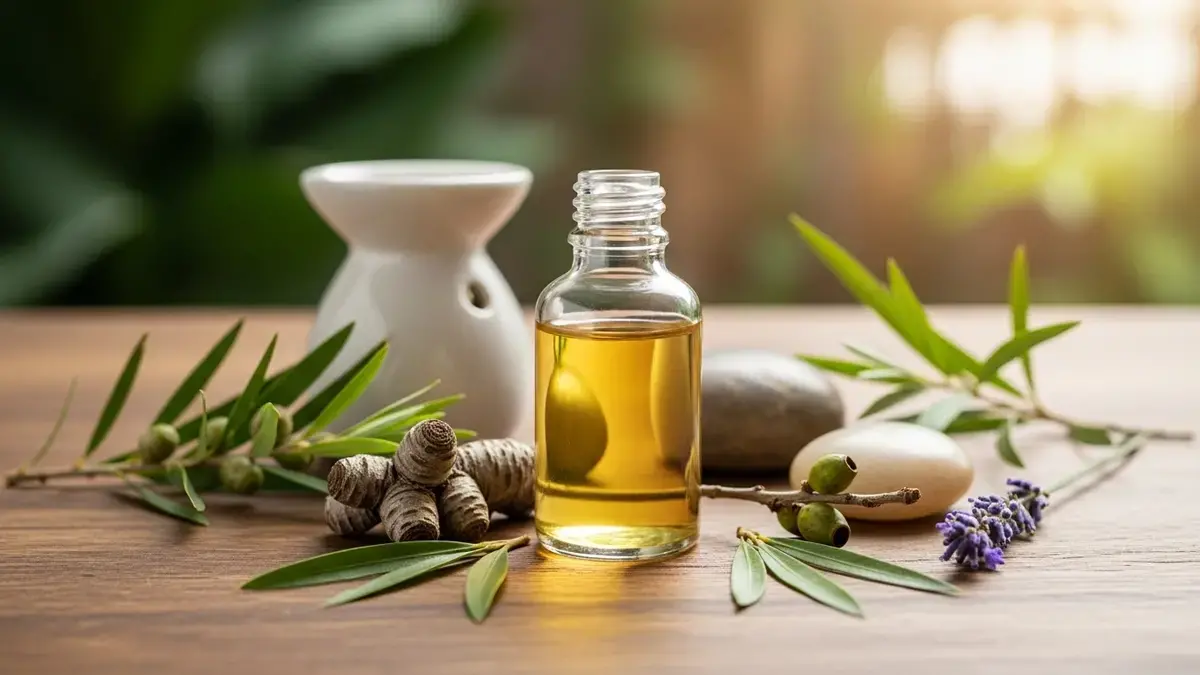
In the vast world of Melaleucas, Tea Tree gets almost all the fame. However, it has a "cousin" that is equally powerful, yet perhaps gentler and more versatile in some aspects: Niaouli essential oil (Melaleuca quinquenervia).
Native to Australia and New Caledonia, Niaouli is a large tree with peeling, papery bark and an unmistakable aroma. If you find the scent of Eucalyptus a bit too strong, Niaouli might be the perfect alternative you've been looking for.
It has that classic, fresh, and camphoraceous aroma, but with a softer, slightly sweet note. It's a truly underrated gem in aromatherapy, especially known for its incredible respiratory support and skin-purifying properties. Let's understand why Niaouli deserves a prominent place in your collection.
Niaouli Oil's Properties and Composition
Niaouli essential oil is extracted by steam distillation of the tree's leaves and young twigs. Its chemical composition is what makes it so effective, being dominated by a component many of us already know from other oils.
The main star here is 1,8-cineole (or Eucalyptol), which can make up 50% to 70% of the oil. This component gives it the "medicinal" aroma and the majority of its respiratory-supporting superpowers.
Besides cineole, we find other compounds like alpha-pinene, limonene, and viridiflorol. It's the viridiflorol, in particular, that helps "soften" the oil, making it, for many noses, more pleasant and less "sharp" than a Eucalyptus Globulus, which is also rich in 1,8-cineole.
Benefits and Applications
Niaouli is a robust oil, primarily focused on physical well-being, but with interesting benefits for mental clarity as well.
Physical and Respiratory Support
This is Niaouli's main field of action. It's one of the best oils to have at home during the winter or times of seasonal change.
- Respiratory Support: Thanks to 1,8-cineole, Niaouli is excellent for promoting the feeling of clear airways. It helps loosen seasonal buildup and ease the sensation of a stuffy nose and chest during seasonal challenges.
- Air Cleansing: When diffused, its powerful cleansing properties help to purify the air, making it great for stuffy indoor spaces or to refresh a room.
- Skin Care: Like its cousin Tea Tree, Niaouli oil is a fantastic ally for the skin. It's known for its purifying and astringent properties, making it a great choice for oily or blemish-prone skin.
- Soothing for Skin: It is traditionally used to soothe minor skin irritations, insect bites, and to help cleanse the skin.
Mental and Emotional Clarity
While not a "relaxing" oil like Lavender, Niaouli's camphoraceous aroma has a powerful effect on the mind.
- Mental Stimulant: It's an "awakening" oil. Its fresh scent helps to clear mental fog, fatigue, and lethargy.
- Focus and Concentration: It's an excellent choice to diffuse in a work or study environment, as it helps clear the mind and promote focus.
How to Use Niaouli Oil Safely
To get the most out of Niaouli essential oil, it's crucial to use it correctly. Its potency, especially from the 1,8-cineole, demands respect.
- Aromatic Diffusion (Main Use): This is the safest and most effective way to get its respiratory and mental benefits. Add 3 to 5 drops to your ultrasonic diffuser. It's perfect for use at night in an adult's bedroom or during the day in the office.
- Steam Inhalation (for Intense Congestion): Add 1 to 2 drops to a bowl of hot (not boiling) water. Cover your head with a towel and inhale the steam for 5-10 minutes, keeping your eyes closed. Caution: Not recommended for those with asthma without professional guidance.
- Topical Application (Dilution Required):
- Chest Rub: Dilute 2% to 3% (4 to 6 drops per 10ml of carrier oil, like Sweet Almond or Jojoba) and massage the chest and back to promote clear breathing.
- Skin Care (Face): Use a low dilution, 0.5% to 1% (1 to 2 drops per 10ml of Jojoba or Grapeseed oil), and apply topically to affected areas.
MANDATORY Safety Warnings and Precautions
Niaouli is an effective oil, but its high 1,8-cineole content imposes very clear safety rules, especially for AdSense compliance and responsible use.
FDA Disclaimer: These statements have not been evaluated by the Food and Drug Administration. This product is not intended to diagnose, treat, cure, or prevent any disease. This content is strictly educational and does not replace professional medical advice.
- ⚠️ General Precautions: Never ingest essential oils. Keep away from eyes, mucous membranes, and out of reach of children and pets. Always perform a patch test before a new topical use.
- ❌ HIGH RISK IN CHILDREN (Neurotoxicity): This is the most important warning. Oils rich in 1,8-cineole (like Niaouli, Eucalyptus Globulus, and Peppermint) are CONTRAINDICATED for infants and young children (under 10 years old), especially for topical application near the face (chest, neck, or nose). They can cause laryngeal spasm and severe respiratory distress (suffocation).
- ❌ Asthma: People with asthma should use extreme caution. While it may help some, 1,8-cineole can, paradoxically, trigger asthma attacks in sensitive individuals. Never use during an attack.
- ❌ Pregnancy and Lactation: Use is discouraged during the entire pregnancy and breastfeeding period as a precaution.
- ✅ Phototoxicity: Niaouli essential oil is not phototoxic.
- ✅ Skin Irritation: Not considered dermocaustic, but because it contains 1,8-cineole and limonene, it must always be diluted to avoid sensitization in sensitive skin.
- ⚠️ Drug Interactions: May interfere with medications metabolized by the liver (CYP450 enzymes). Consult your doctor if you are on continuous medication.
Warning for Pet Owners (Especially Cats)
USE EXTREME CAUTION with pets. Niaouli essential oil is rich in 1,8-cineole, which is highly toxic to cats. The feline liver cannot metabolize this compound, leading to serious risks of poisoning, even through diffusion. Dogs are also sensitive. Keep oils out of their reach and avoid diffusion in enclosed spaces where they remain.
Combinations and Synergies
The fresh aroma of Niaouli blends very well with a variety of other oils, creating potent synergies:
- For Clear Breathing Blends: Eucalyptus Radiata (milder), Pine, Ravintsara, and Lemon.
- For Skin Cleansing: Lavender, Tea Tree, Geranium, and Palmarosa.
- For Mental Focus: Rosemary (ct. cineole) and Peppermint (use sparingly).
- Ideal Carrier Oils: For the face, Jojoba (balances oiliness) or Grapeseed. For body massage, Sweet Almond or Sunflower.
Final Thoughts
Niaouli essential oil is truly a "breath of fresh air" in a bottle. It is a powerful and effective tool for supporting the respiratory system, clearing the mind, and caring for oily skin.
Although it's often considered the "gentle cousin" of Eucalyptus, its potency should not be underestimated. Respect the contraindications (especially with children and pets) and use it wisely. By doing so, you'll have one of the most robust allies that aromatherapy can offer.