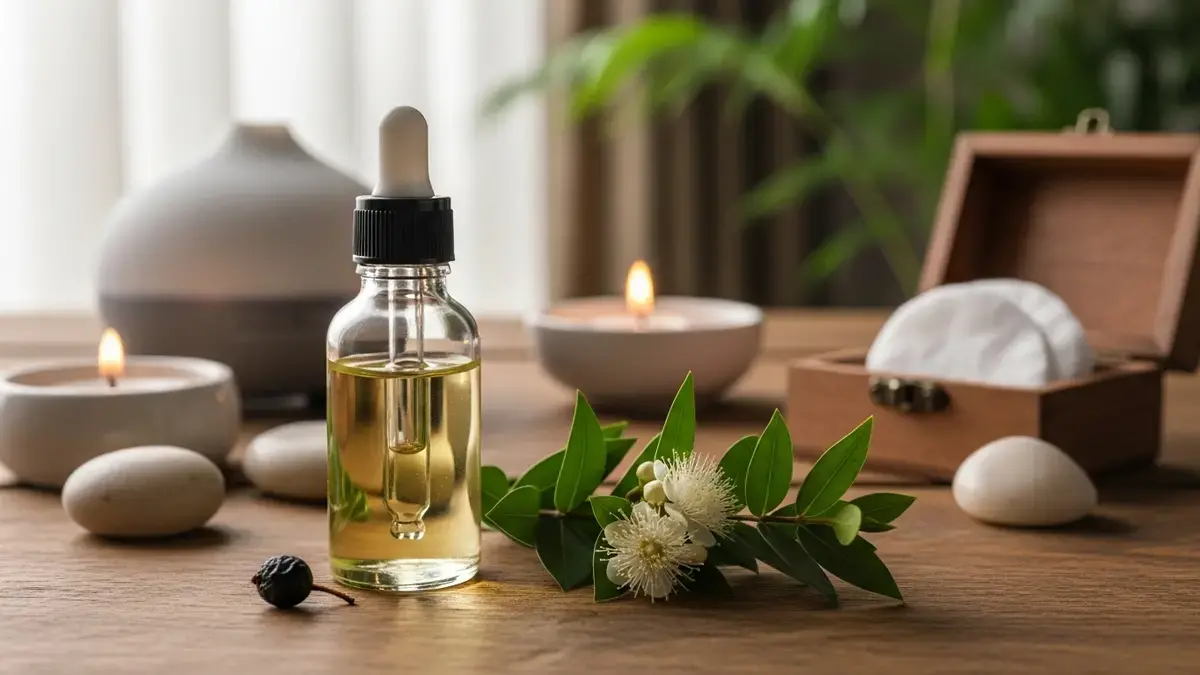
In the vast universe of aromatherapy, there are botanical gems that, while less famous than Lavender or Tea Tree, offer profound benefits and a truly purifying aroma. Myrtle essential oil (Myrtus communis) is, without a doubt, one of them.
Native to the Mediterranean basin, myrtle is a shrub revered since antiquity. To the Greeks, it was a symbol of love and purity, often associated with the goddess Aphrodite. But beyond its symbolism, its leaves and flowers hide a complex and incredibly useful essential oil.
If you're seeking an aroma that brings uplifting clarity, a sense of cleanliness, and gentler respiratory support than more potent eucalyptus oils, myrtle essential oil deserves your attention. Let's explore why it's so special and how to use it consciously and safely.
Myrtle Oil's Properties and Composition
Myrtle essential oil is predominantly extracted from the leaves and small branches of the Myrtus communis plant through steam distillation. The result is a pale liquid with a surprising aroma: it's fresh, camphoraceous (similar to eucalyptus, but softer) and has a slightly sweet, herbal note.
Its therapeutic profile is defined by its chemistry. The main components usually include:
- 1,8-cineole (Eucalyptol): This is the protagonist, responsible for most of its famous respiratory-supporting properties. It's the same dominant compound in many eucalyptus oils, but here, it presents in a more balanced way.
- Alpha-pinene: Brings the fresh "forest" touch and contributes cleansing and soothing properties.
- Myrtenyl acetate: An ester that provides the softer, sweeter notes, also bringing mild calming properties.
This combination makes myrtle essential oil an effective choice for promoting clear breathing, but with a gentleness that makes it a preferred option over Eucalyptus Globulus for many aromatherapists in more delicate situations.
Benefits and Applications
Myrtle is a versatile oil, primarily supporting the respiratory system and skin, while also offering valuable emotional support.
Respiratory and Skin Support
- Respiratory Support: This is its superpower. The high 1,8-cineole content makes it excellent for promoting feelings of clear airways. It helps loosen seasonal buildup, making it easier to breathe freely during coughs and seasonal discomfort.
- Easing Congestion: In diffusers or steam inhalations, it helps "open" the chest and relieve the stuffy feeling caused by seasonal challenges.
- Air Cleansing: It can be diffused to help purify the air in indoor environments, especially during winter months.
- Skin Care: It possesses notable astringent qualities. It's a great choice for homemade facial toners (always diluted) aimed at oily or blemish-prone skin, helping to balance oiliness and cleanse pores.
Mental and Emotional Well-being
- Mental Clarity: Just as it "clears" the lungs, myrtle seems to "clear mental fog." It's an excellent oil to diffuse during study or work, promoting focus and a clear head.
- Emotional Balance: Unlike other cineole-rich oils that can be overly stimulating, myrtle has a balancing effect. It uplifts the spirit without causing agitation.
- Purification and Harmony: Its history of use in purifying rituals is no accident. Its aroma helps dissipate negativity, bringing a sense of peace and harmony to a space.
How to Use Myrtle Oil Safely
To enjoy the benefits of myrtle essential oil, it is crucial to use it correctly. The potency of essential oils should never be underestimated.
- Aromatic Diffusion: This is one of the safest and most effective methods, especially for respiratory and emotional support. Add 3 to 5 drops to your ultrasonic diffuser to cleanse the air and promote easy breathing.
- Steam Inhalation (for a Stuffy Feeling): Add 1 to 2 drops to a bowl of hot (not boiling) water. Cover your head with a towel and inhale the steam for 5 minutes, keeping your eyes closed. Caution: Not recommended for children or individuals with asthma without guidance.
- Topical Application (Skin and Chest): Dilution is mandatory.
- Facial Use (oily skin): Dilute to 0.5% (approx. 1 drop per 10ml of carrier oil, like Jojoba or Grapeseed).
- Chest Rub (for seasonal comfort): Dilute 1% to 2% (2 to 4 drops per 10ml of carrier oil, like Sweet Almond) and massage onto the chest and back.
MANDATORY Safety Warnings and Precautions
Myrtle essential oil is generally well-tolerated, but its high 1,8-cineole content requires specific precautions to ensure safe use and avoid problems.
FDA Disclaimer: These statements have not been evaluated by the Food and Drug Administration. This product is not intended to diagnose, treat, cure, or prevent any disease. This content is strictly educational and does not replace professional medical advice.
- ⚠️ General Precautions: Never ingest essential oils without explicit professional guidance. Keep away from eyes and mucous membranes. Keep out of reach of children and pets.
- ⚠️ Patch Test: Before the first topical use, perform a patch test. Apply a small amount of the diluted oil (at 1%) to the crook of your elbow and wait 24 hours to check for any allergic reaction.
- ❌ Contraindication (Neurotoxicity): Due to the 1,8-cineole, this oil is contraindicated for individuals with epilepsy or a history of seizures.
- ❌ Contraindication (Pregnancy and Lactation): The use of myrtle oil should be avoided during pregnancy and while breastfeeding.
- ❌ HIGH RISK IN CHILDREN: This is the most critical warning. Oils rich in 1,8-cineole (like Myrtle and Eucalyptus) MUST NOT BE APPLIED near the face (nose, chest) of infants and young children (under 10 years old), as they can cause laryngeal spasm and severe breathing difficulties (suffocation). Avoid topical use on children under 3 and prefer low-dose diffusion for older children, always with caution.
- ⚠️ Asthma: Although it helps many with respiratory issues, 1,8-cineole can, paradoxically, trigger attacks in some asthmatic individuals. Use with extreme caution if you have asthma.
- ✅ Phototoxicity: Myrtle essential oil is not considered phototoxic.
- ⚠️ Drug Interactions: May potentially interfere with medications metabolized by the liver (CYP450 enzymes). Consult your doctor if you are on continuous medication.
A Warning for Pet Owners (Especially Cats)
USE EXTREME CAUTION with pets. The liver of cats lacks the necessary enzymes to safely metabolize many compounds found in essential oils (including 1,8-cineole and phenols). Diffusing in environments where cats live can lead to serious toxicity over time. Dogs are also sensitive. Never apply essential oils topically to your pets without guidance from a veterinarian specializing in animal aromatherapy.
Combinations and Synergies
Myrtle essential oil shines on its own, but it also blends beautifully with other oils, creating potent synergies:
- For Clear Breathing Blends: Combines well with Pine, Fir Needle, Eucalyptus Radiata (milder), and Lemon.
- For Clarity and Focus: Try it with Rosemary (ct. cineole) or Peppermint (use sparingly).
- For Relaxation and Purification: Blends perfectly with Lavender, Bergamot, and Cedarwood Atlas.
- Ideal Carrier Oils: For the face, prefer Jojoba or Grapeseed. For the body (chest rub), Sweet Almond or Calendula (if the skin is sensitive) are excellent.
Final Thoughts
Myrtle essential oil is a gift from the Mediterranean, offering a literal and figurative breath of fresh air. It is a powerful tool for supporting those dealing with seasonal congestion and a balm for the overwhelmed mind.
However, its potency demands respect. Always remember the safety precautions, especially regarding children and pets. Used consciously, myrtle can be an incredible ally on your wellness journey.