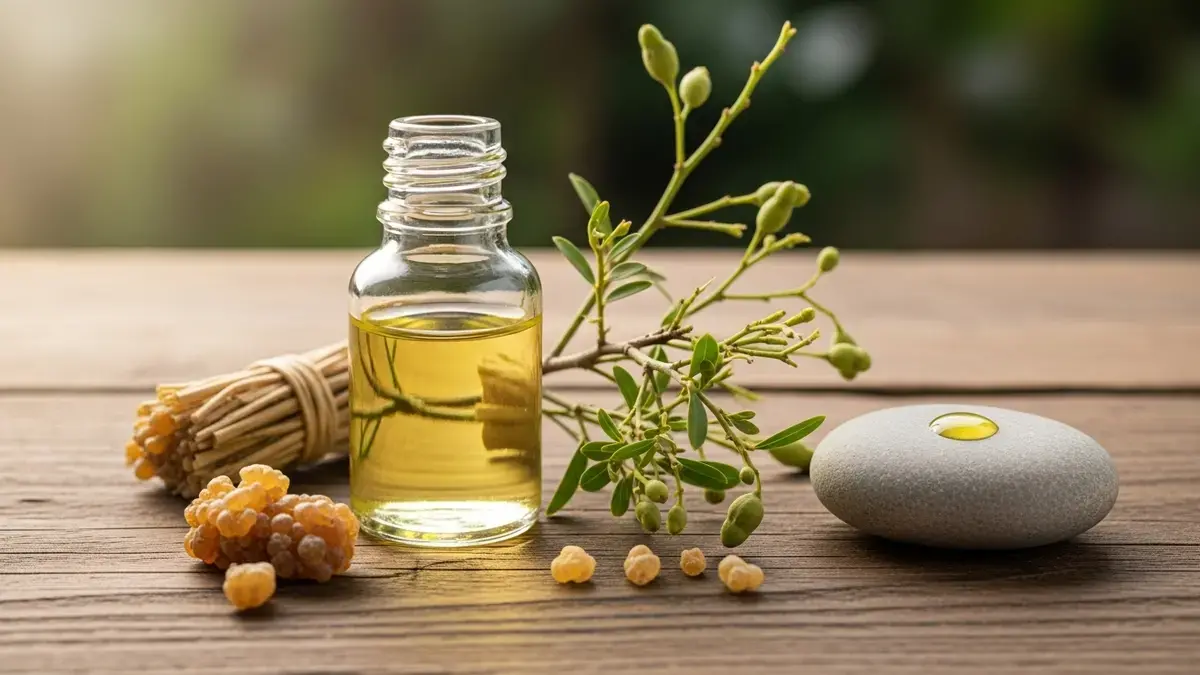
Few essential oils carry such profound historical and spiritual weight as Myrrh essential oil. Often associated with ancient rituals, Egyptian embalming practices, and famously known as one of the gifts of the Magi, this oil is far more than just a relic of the past.
Extracted from the resin of the Commiphora myrrha tree, native to regions of Africa and the Middle East, myrrh has been used for millennia for its vast wellness properties. Its aroma is complex: balsamic, warm, earthy, and slightly bitter, providing a deep foundation for many blends.
Today, in modern aromatherapy, we are rediscovering the power of this oil, especially its incredible benefits for the skin and its deep, grounding effect on emotions. Let's explore why myrrh deserves a prominent place in your aromatherapy kit.
Properties and Composition
Myrrh essential oil is obtained through steam distillation of the gum resin that naturally oozes or is tapped from the tree's bark. This process yields a thick, viscous oil, ranging in color from amber to reddish-brown.
Its chemical complexity is what gives it so many virtues. It is rich in sesquiterpenes (like curzerene and furanoeudesma-1,3-diene), which are molecules known for their calming properties. These components are primarily responsible for its reputation as a powerful wellness tool.
Myrrh's main therapeutic properties include:
- Skin Soothing and Rejuvenating: Exceptional for promoting healthy-looking skin.
- Calming Properties: Helps to soothe the appearance of redness or irritation.
- Cleansing Properties: Known for its cleansing effects, making it a great addition to skin and oral care routines.
- Respiratory Support: Helps promote feelings of clear breathing.
- Astringent Qualities: Helps to tone and tighten the appearance of skin.
- Grounding and Calming: Promotes a tranquil state of mind.
Benefits and Applications
The benefits of Myrrh essential oil are vast, ranging from topical skin care to profound emotional and spiritual balance. It is an oil that "anchors" and stabilizes.
Skin Health and Personal Care
This is, perhaps, myrrh's most celebrated use today. Its rejuvenating properties are a gift to the skin.
- Mature Skin: It is one of the most potent oils for mature skin, helping to minimize the appearance of fine lines and wrinkles and promoting skin vitality.
- Blemishes and Cracks: Its soothing properties help calm minor skin irritations and are excellent for dry, cracked skin (like on the heels).
- Troubled Skin: Used in safe dilutions, it can help soothe and moisturize extremely dry or troubled skin, thanks to its calming effects.
- Oral Care: Due to its astringent and cleansing qualities, it is a common ingredient in natural mouth rinses for promoting a clean mouth feel and soothing gums.
Emotional and Spiritual Balance
Myrrh's deep, earthy aroma has a powerful effect on the mind.
- Meditation and Spiritual Practice: Myrrh has been used for centuries to deepen meditation. It quiets a busy mind, reduces mental clutter, and fosters a sense of spiritual connection.
- Grounding: In moments of feeling overwhelmed, "spacey," or having racing thoughts, myrrh helps bring energy back into the body, promoting stability.
- Emotional Comfort: It is an oil that brings comfort during times of loss or deep sadness.
Respiratory Support
As a soothing oil, myrrh can be useful in diffusers or steam inhalations to ease feelings of congestion and soothe a dry, stuffy environment.
Forms of Use
To harness the benefits of myrrh, it is essential to use it correctly. Because it is a very thick (viscous) oil, you may need to gently warm the bottle between your hands before use.
- Aromatic Diffusion: Use 3-5 drops in your ultrasonic diffuser. It is ideal for meditation, yoga, or to create a tranquil, introspective atmosphere before sleep.
- Topical Application (Diluted): This is the best way to use it on the skin. Myrrh MUST be diluted in a carrier oil (like jojoba or rosehip seed oil).
- For the Face (Mature Skin): 0.5% to 1% dilution (about 1-2 drops of myrrh per 10ml of carrier oil).
- For the Body (Dry Spots): 2% to 3% dilution (about 4-6 drops per 10ml of carrier oil).
- Mouth Rinse (Oral Care): Add 1 drop of myrrh essential oil to a small glass of warm water (and a pinch of salt, if desired). Swish vigorously for 30 seconds and DO NOT SWALLOW.
- Direct Inhalation: For a quick grounding effect, place 1 drop on a tissue or cotton ball and inhale deeply a few times.
Safety Alerts and Precautions
Myrrh essential oil is powerful, and like every tool in aromatherapy, it demands respect and knowledge. Safety is paramount for an effective wellness practice and for compliance with health guidelines.
Read all contraindications and precautions carefully before using this oil.
❌ Critical Alerts and Contraindications
- Pregnancy and Breastfeeding: Myrrh oil is ABSOLUTELY CONTRAINDICATED during pregnancy. It has strong emmenagogue properties (can induce or increase menstrual flow) and poses a risk of miscarriage. Avoid during breastfeeding as a precaution. "Myrrh oil is contraindicated during pregnancy and lactation." Source: [Tisserand & Young, Essential Oil Safety, 2014].
- Drug Interactions: People using anticoagulant medications (like Warfarin) or diabetes medications should use extreme caution and seek medical advice. Myrrh may interfere with blood clotting and blood sugar levels.
- Children: Avoid use on young children (under 5 years old), except under the guidance of a qualified clinical aromatherapist.
⚠️ General Precautions for Use
- Never Ingest: Myrrh essential oil should not be ingested. Internal use should only occur under the prescription and supervision of a health professional licensed for such practice.
- Patch Test: Before applying to your skin for the first time, even when diluted, perform a patch test. Apply a small amount of the diluted mixture to the inside of your elbow and wait 24 hours. If any redness or itching occurs, do not use.
- Dilution is Mandatory: Never apply pure myrrh to the skin. Because it is thick and potent, it can cause sensitization (allergy) over time.
- Eyes and Mucous Membranes: Keep away from eyes, inner ears, and other sensitive areas.
🐾 Special Alert for Pet Owners (Especially Cats)
Use extreme caution when using essential oils around household pets. Cats, in particular, are at serious risk.
Felines lack (or have very limited amounts of) the liver enzymes needed to safely metabolize many components of essential oils, such as terpenes and phenols. Exposure, whether through diffusion (inhalation) or topically (licking a person who used the oil), can lead to toxic buildup, causing liver or respiratory failure. Never use myrrh (or most oils) on or around cats in enclosed spaces.
Medical Disclaimer
The information contained in this post is for educational purposes only. It is not intended to diagnose, treat, cure, or prevent any disease. The statements presented here have not been evaluated by the Food and Drug Administration (FDA). This information does not replace professional medical advice. Always consult your physician or qualified healthcare provider before starting any new treatment.
Combinations and Synergies
Myrrh is a classic base note, meaning it anchors the aroma and adds depth to a blend. It harmonizes beautifully with other resinous, woody, and some citrus oils.
- The Classic Synergy (Spiritual): Myrrh and Frankincense. This is the most famous combination, perfect for meditation and introspection.
- For Mature Skin: Myrrh, Frankincense, and Lavender in a Rosehip Seed or Jojoba carrier oil.
- For Grounding: Myrrh, Sandalwood, and Patchouli.
- For Emotional Comfort: Myrrh, Bergamot, and Ylang Ylang.
Final Thoughts
Myrrh essential oil is truly a treasure of nature, with a rich history that proves its value. Whether used to rejuvenate the appearance of mature skin, deepen your meditation practice, or simply find a moment of calm and grounding, this oil offers profound benefits.
Always remember that its potency demands respect. Use it consciously, prioritizing safety, respecting dilutions, and, above all, honoring its contraindications. By doing so, you can safely enjoy all that this ancestral gift has to offer.