
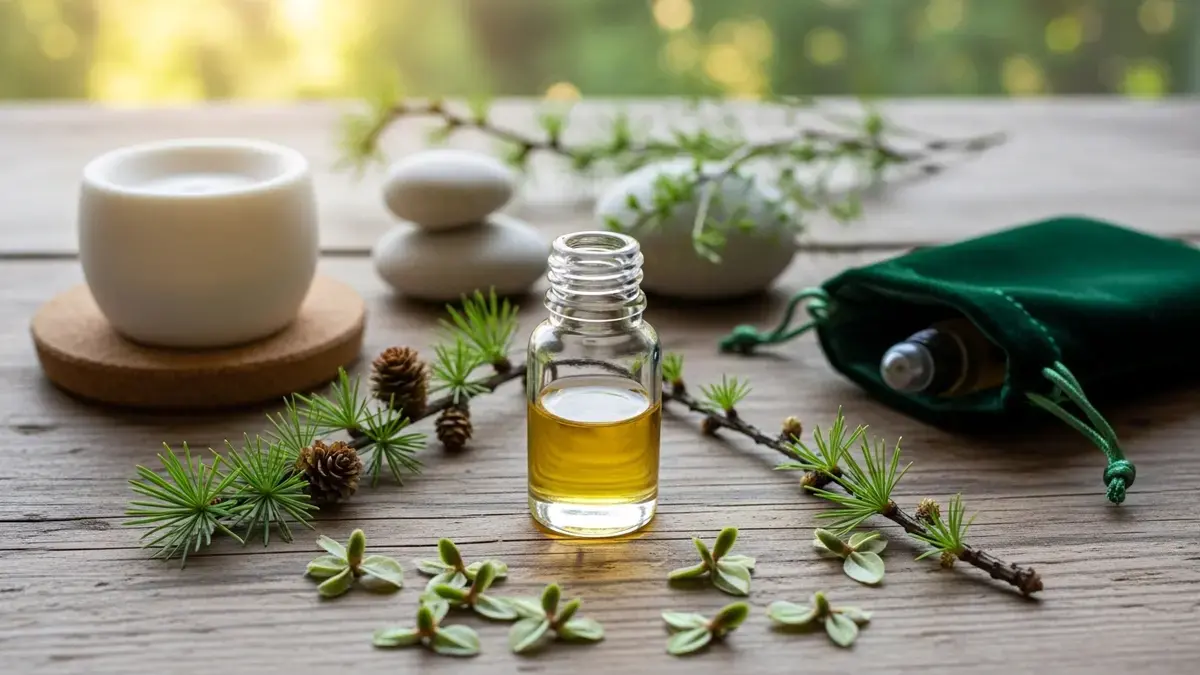
Imagine the scent of a dense, ancient forest, where the air is pure, crisp, and filled with the woody and slightly sweet aroma of the trees. That is the experience that Larch essential oil encapsulates. Extracted from the Larch tree (Larix decidua), a unique conifer that sheds its needles in the winter, this oil is a true treasure in aromatherapy, known for invigorating the body and mind.
Less common than other conifer oils like pine or cedar, Larch has a distinct and powerful personality. Historically, the tree was seen as a symbol of renewal and courage. Today, its essential oil offers respiratory support, mental clarity, and a deep sense of grounding, connecting us to the resilient strength of nature.
In this guide, we will explore the fascinating properties of Larch essential oil, from its chemical composition to its practical wellness applications, ensuring you can use it safely and effectively on your self-care journey.
Properties and Composition
The power of Larch essential oil lies in its complex biochemical makeup, obtained through the steam distillation of its needles and twigs. This careful process preserves the integrity of its volatile compounds, resulting in an oil with a robust profile and an aroma that is at once fresh, balsamic, and woody.
The main chemical components that define its properties are:
- Alpha-Pinene and Beta-Pinene: These monoterpenes are responsible for the characteristic "forest" aroma. They are widely studied for their properties that can help create a feeling of clear breathing, making the oil an excellent choice for respiratory support.
- Bornyl Acetate: An ester that contributes to the balsamic aroma and is noted for its calming and relaxing effects on the nervous system.
- Limonene and Delta-3-Carene: Other monoterpenes that add citrusy and woody notes, along with having cleansing and purifying properties.
This combination of molecules makes Larch a well-balanced oil, capable of supporting both physical and emotional well-being.
Wellness Benefits and Applications
Larch essential oil is a versatile ally, especially valued during the colder months, but its benefits extend throughout the year, promoting feelings of strength, confidence, and vitality.
Benefits for Physical Well-being
- Supports the Respiratory System: It is one of the most effective oils for respiratory support. Diffusing it can help promote feelings of clear airways and easy breathing, making it ideal during seasonal changes.
- Soothes Muscles and Joints: When diluted and applied in a massage, it can help soothe tired muscles and joints, making it useful after physical activity or for those experiencing occasional discomfort.
- Cleansing Properties: It can be used in a diffuser to purify and freshen the air in indoor spaces, helping to neutralize stale odors and create a healthier-feeling environment.
Benefits for Mental and Emotional Well-being
- Boosts Confidence: Larch is often known as the "oil of self-confidence." Its grounding and uplifting aroma helps to dispel feelings of self-doubt and fear, encouraging the courage to face challenges.
- Promotes Mental Clarity and Focus: By encouraging deeper breathing, it helps clear mental fog, improve concentration, and maintain focus on important tasks.
- Encourages Emotional Stability: It acts as a tonic for the nervous system, helping to calm the mind during moments of stress and promoting a sense of inner stability and security.
How to Use
To integrate Larch essential oil into your wellness routine, you can choose from several application methods, always prioritizing safety.
- Aromatic Diffusion: Add 5 to 8 drops to your diffuser to purify the air, support respiratory function overnight, or create an atmosphere of focus and confidence in your workspace or study area.
- Topical Application: Always dilute in a carrier oil. For a soothing chest rub or to ease tired muscles, use a 2-3% dilution (4 to 6 drops of essential oil per 10ml of a carrier oil like jojoba or almond oil).
- Direct or Steam Inhalation: For quick respiratory support, add 1 to 2 drops to a bowl of hot water, cover your head with a towel, and inhale the steam for a few minutes. Alternatively, place 1 drop in your palms and inhale deeply.
Safety Alerts and Precautions
Using essential oils requires responsibility. Although Larch essential oil is generally safe, it is crucial to follow these guidelines for a positive and risk-free experience.
❌ Dermal Irritation
Because it contains monoterpenes like alpha-pinene and limonene, this oil may cause skin irritation if applied undiluted, especially on sensitive skin. Dilution in a carrier oil is mandatory. Always perform a patch test on a small area of skin before widespread use.
❌ Contraindications
The use of Larch oil should be avoided by pregnant or nursing women and young children without guidance from a qualified healthcare professional. Individuals with asthma or chronic respiratory conditions should use it cautiously, starting with low concentrations in a diffuser.
⚠️ Risk to Pets - A Warning for Pet Owners
Be extremely cautious when using essential oils around pets. Cats, in particular, lack the necessary liver enzymes to metabolize many essential oil components (especially pinenes), making them highly toxic. Avoid diffusing in enclosed spaces where pets cannot leave.
⚠️ General Precautions & Disclaimer
Never ingest essential oils without the guidance of a certified healthcare professional. Keep out of reach of children and pets. Avoid direct contact with eyes and mucous membranes.
FDA Disclaimer: The statements in this post have not been evaluated by the Food and Drug Administration. This product is not intended to diagnose, treat, cure, or prevent any disease. Always seek the advice of your physician or other qualified health provider with any questions you may have regarding a medical condition.
Combinations and Synergies
Larch essential oil blends wonderfully with other oils, enhancing its effects and creating complex, pleasant aromas.
- Complementary Essential Oils: It harmonizes perfectly with other conifer oils (Cedarwood, Fir, Cypress), citrus oils (Lemon, Bergamot), and herbaceous oils (Rosemary, Eucalyptus, Lavender).
- Recommended Blends: For a powerful respiratory blend, combine with Eucalyptus Radiata and Peppermint. For a focus and courage synergy, mix with Rosemary and Lemon. For relaxation, blend with Lavender and Frankincense.
- Ideal Carrier Oils: Jojoba Oil, Grapeseed Oil, and Sweet Almond Oil are excellent bases for diluting Larch for topical application.
Final Thoughts
Larch essential oil is a gem in aromatherapy, offering a direct connection to the strength and resilience of nature. Whether you use it to support your respiratory system, boost your self-confidence, or simply bring the clean scent of the forest indoors, it is a powerful and versatile resource.
By using it mindfully and respecting its safety guidelines, you allow the wisdom of this magnificent tree to support your health and wellness journey. We encourage you to explore its depths and breathe with more clarity and courage.