
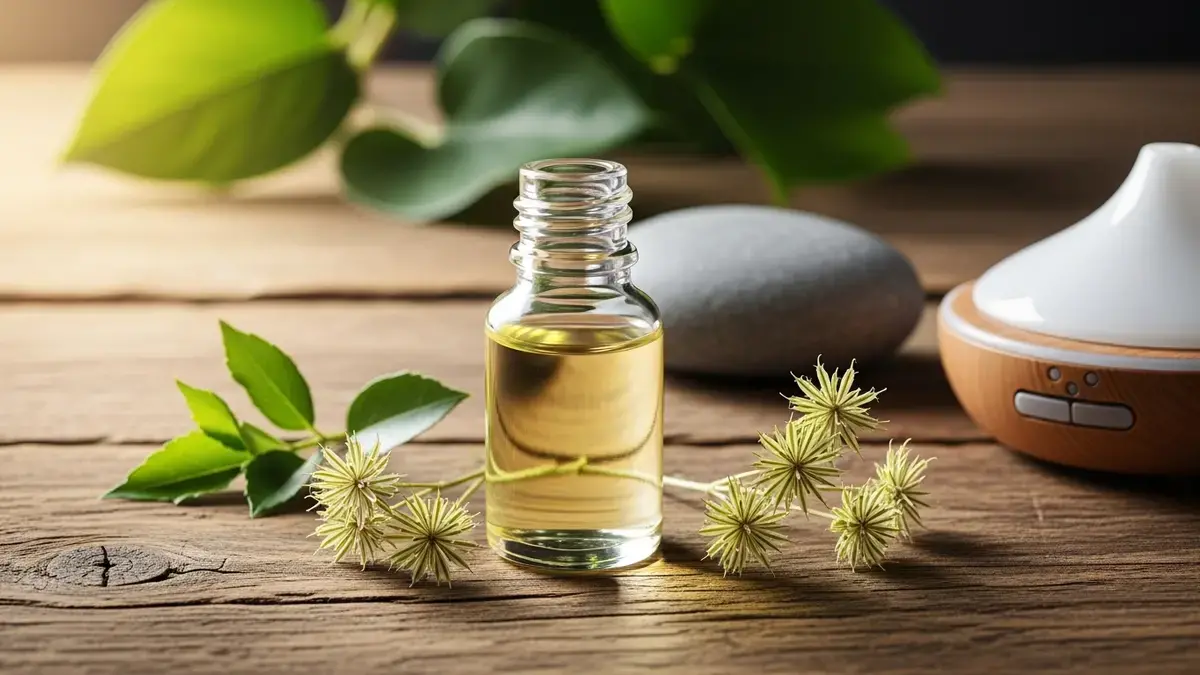
In the vast universe of aromatherapy, there are essential oils that, despite not being widely popular, hold extraordinary properties. Sweet Inula essential oil (Inula graveolens) is one of these hidden treasures, a true specialist when it comes to the respiratory system, but whose potency demands careful and well-informed use.
Native to Corsica, France, and other Mediterranean regions, Inula is a plant with yellow flowers whose essential oil has a complex, herbal, and camphoraceous aroma. Although rare and precious, it is considered by many aromatherapists to be one of the most effective oils for promoting respiratory comfort, especially during seasons of stuffiness.
Properties and Composition
What makes Inula essential oil so special is its unique chemical composition, which sets it apart from other oils with similar purposes. Its main components are bornyl acetate (around 70%) and camphene, which work in synergy to create a remarkable aromatic effect.
The most celebrated property of this oil, steam-distilled from its flowers, is its powerful effect on the feeling of congestion. As noted in French aromatherapy literature, "Inula is regarded as one of aromatherapy's most powerful oils for promoting a sense of clear breathing, especially effective in helping soothe a chest heavy with congestion." Its main recognized properties include:
- Promotes Clear Breathing: It is primarily used to help loosen and clear feelings of thick, stubborn congestion.
- Supports Respiratory Comfort: Helps to ease the expulsion of buildup from the bronchial passages, clearing the airways.
- Soothes Spasms: Helps to calm and soothe the airways during persistent coughing spells.
- Calms Mucous Membranes: Its aroma is known to soothe inflammation in the respiratory linings.
Benefits and Applications
The focus of Inula essential oil is almost entirely on the respiratory system. Its use is highly specific and targeted for conditions where there is a feeling of excessive mucus, making it a valuable resource for well-being during the colder months or allergy seasons.
Benefits for Physical Well-being
- Comfort for Bronchial and Sinus Stuffiness: It is extremely effective for soothing a heavy chest and sinus pressure associated with these discomforts.
- Soothes a Productive Cough: Its ability to loosen the feeling of phlegm helps the body's natural clearing process, making coughs feel more effective.
- Support for Asthmatic Conditions: In asthmatic situations where there is a lot of secretion, its soothing and clearing properties can bring great comfort (always with medical supervision).
- Lung Cleansing Sensation: It is useful for creating a sensation of cleansed lungs after inhaling pollutants like smoke or dust, thanks to its refreshing aroma.
Although its emotional use is less common, its penetrating aroma is believed to help "dissolve" feelings of stagnation, bringing clarity and movement, much like it does for physical congestion.
Forms of Use
Due to its potency, Inula essential oil should be used moderately and in ways that directly target the respiratory system. With this oil, less is definitely more.
- Steam Inhalation: Add 1 to 2 drops to a bowl of hot water. Cover your head with a towel and inhale the steam for 5 to 10 minutes. This is the most effective way to achieve a clearing sensation.
- Topical Application (Chest Rub): Dilution is mandatory. Dilute 2 to 3 drops in a tablespoon (15ml) of a carrier oil (like jojoba or almond oil) and gently massage onto the chest and back.
- Aromatic Diffusion: Use with great moderation. Just 1 to 2 drops in a diffuser, preferably blended with other gentler oils, are sufficient for an effect on the environment.
Safety Alerts and Precautions
ATTENTION: This is a crucial section. Inula oil is potent, and its use requires knowledge and care. Please read with maximum attention.
- ❌ Skin Irritation: Can be irritating to the skin, especially for those with sensitivity. Never apply undiluted to the skin. Dilution in a carrier oil is mandatory.
- ❌ Contraindications: It is contraindicated for pregnant or nursing women and for children under 10 years old. Its use should be avoided by individuals with a history of seizures or epilepsy.
- ⚠️ General Precautions: Internal use (ingestion) is not recommended without the supervision of a qualified professional. Keep away from eyes and mucous membranes. Always perform a patch test by applying a small amount of the diluted mixture to your forearm and wait 24 hours.
- ⚠️ Alert for Pet Owners (Especially Cats): This oil, like many others, can be toxic to animals. Cats, in particular, have difficulty metabolizing the components of essential oils, which poses a serious risk. Do not use in environments where pets roam freely.
FDA Disclaimer: These statements have not been evaluated by the Food and Drug Administration. This product is not intended to diagnose, treat, cure, or prevent any disease. Always consult your physician for any medical concerns, especially in cases of chronic respiratory conditions.
Combinations and Synergies
To balance its potency and complement its effects, Inula essential oil blends very well with other oils that also support the respiratory system in a gentler way.
- Complementary essential oils: Eucalyptus Radiata (a gentle decongestant), Siberian Fir (expectorant), Thyme Linalool (a gentle antiseptic), and True Lavender (calming).
- Respiratory Comfort Blend: In 1 oz (30ml) of calendula-infused oil, add 3 drops of Inula, 5 drops of Eucalyptus Radiata, and 4 drops of Lavender. Use to massage the chest and back.
- Ideal carrier oils: Jojoba Oil, Sweet Almond Oil, or Calendula Oil (for its skin-soothing action) are excellent choices.
Final Thoughts
Sweet Inula essential oil is a true specialist, an incredibly effective natural tool for anyone seeking comfort from respiratory conditions involving excess secretion. Its power, however, comes with great responsibility.
Using it consciously, in low dilutions, and strictly adhering to its contraindications is the key to benefiting from its unique properties with complete safety. Inula teaches us that in aromatherapy, the most potent oils are often those that demand the most wisdom and respect.