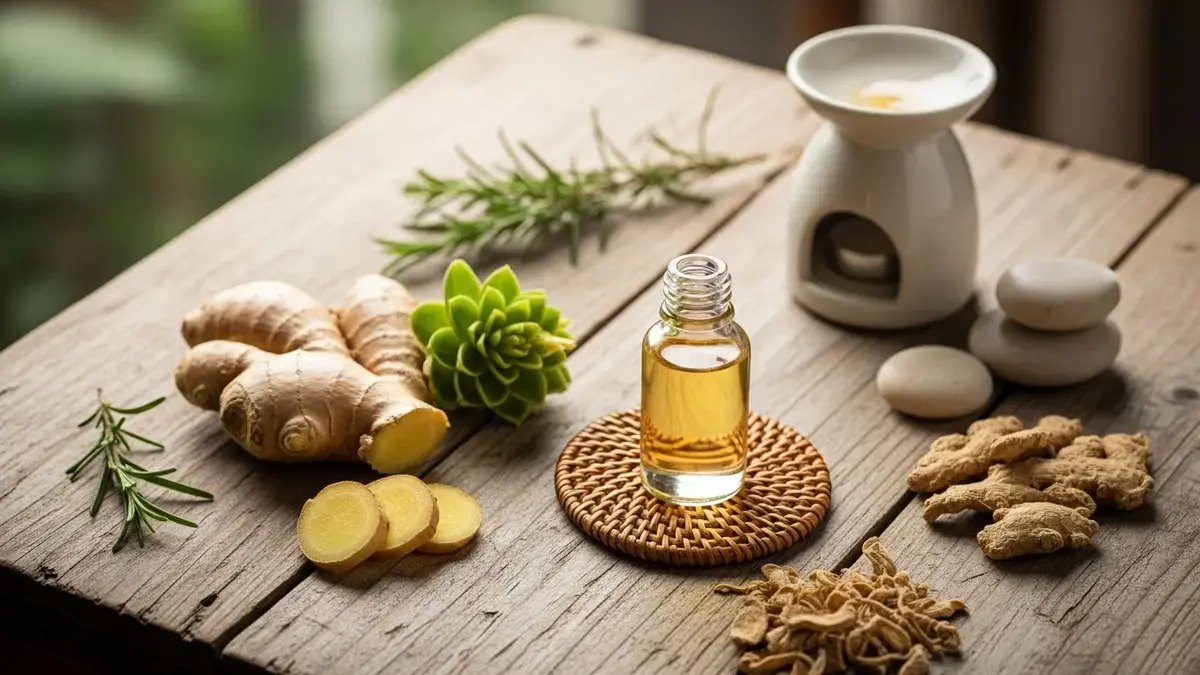
Hello, aromatherapy and wellness enthusiast! Welcome back to the Aromatherapy Blog. If there's one aroma that instantly brings a feeling of warmth and comfort, it's ginger. But did you know that beyond the kitchen, Ginger essential oil is one of the most potent and versatile tools we can have in our aromatherapy kit?
Extracted from the rhizome of the Zingiber officinale plant, native to Southeast Asia, ginger has been revered for millennia in Ayurvedic and Chinese wellness traditions for its incredible properties. Its essential oil concentrates this power into drops, offering a spicy, warm, and woody aroma that warms the body and invigorates the mind.
Get ready to dive into the world of this fascinating oil. We'll explore its properties, its many benefits for physical and emotional well-being, and, of course, all the guidelines for using it with complete safety and confidence.
Properties and Composition
The secret to the potency of Ginger essential oil lies in its rich and complex chemical composition. Obtained through steam distillation of the rhizome, it is rich in sesquiterpenes, with zingiberene being its main component, responsible for the characteristic aroma.
In addition to zingiberene, it contains camphene, curcumene, and geranial. It's these compounds that give the oil its celebrated properties, especially those known for soothing, comforting, and stimulating the senses. It's the science of nature working for us in every drop.
"Ginger is a classic home remedy for indigestion... the essential oil is similarly effective, being an excellent carminative and intestinal tonic." Source: [Valerie Ann Worwood, The Complete Book of Essential Oils and Aromatherapy, 2016]. This quote reinforces its most traditional and well-known use.
Benefits and Applications
Ginger essential oil is a true powerhouse, working brilliantly on several fronts to promote our overall well-being.
Benefits for Physical Well-being
- Excellent Digestive Support: This is perhaps its most famous benefit. It's a powerful ally for easing occasional nausea, motion sickness, and indigestion. A diluted massage on the abdominal area can bring almost immediate comfort.
- Soothes Sore Muscles and Joints: Thanks to its warming and comforting action, it's fantastic for massages on sore muscles, stiff joints, and general aches. Its warming effect helps to release tension.
- Promotes Healthy Circulation: As a warming oil, it helps to create a warming sensation that is great for people who often feel chilly or for an invigorating massage.
- Respiratory Comfort: Its properties make it useful in diffusers during seasonal sniffles, helping to promote a feeling of clear breathing and comfort.
Benefits for Mental and Emotional Health
- The Oil of Empowerment: Ginger is known to foster feelings of self-confidence and willpower. Its stimulating aroma combats apathy and hesitation, giving us a "push" to take action.
- Energizing and Invigorating: Inhaling its aroma is a great way to awaken the mind and body, fighting off fatigue and bringing more energy and vitality to your day.
- Grounding and Focusing: Despite being stimulating, its earthy aroma also helps us stay grounded, promoting focus and determination.
Forms of Use
To make the most of Ginger essential oil, it's crucial to use it correctly. Safety and proper dilution are the keys to a positive experience.
- Aromatic Diffusion: Add 3 to 5 drops to your diffuser to create an energizing and welcoming atmosphere. Perfect for starting the day with more vigor or for purifying the air.
- Topical Application (Massage): As a hot oil, dilution is mandatory. Use a 1% to 2% concentration (3 to 6 drops per 15 ml or 1 tablespoon of carrier oil, like almond or grapeseed) for body massages.
- Direct Inhalation: For quick relief from occasional nausea or for an energy boost, place 1 drop on a tissue and inhale deeply for a few moments.
Safety Alerts and Precautions
This is the most important section of this guide. Conscious and safe use defines effective aromatherapy. Ginger essential oil is potent and demands respect.
- ❌ Skin Irritation: This is a "hot" oil and can cause irritation and sensitization if applied undiluted. It is mandatory to dilute it generously in a carrier oil before any topical application.
- ❌ Phototoxicity: Some experts indicate that ginger oil may pose a slight risk of phototoxicity. As a precaution, it is recommended to avoid direct sun exposure on the applied area for at least 12 hours.
- ❌ Contraindications: Use with caution during pregnancy (always with professional guidance and in low dilutions). Avoid use on young children.
- ❌ Drug Interactions: People using anticoagulant medications (like warfarin or aspirin) should avoid frequent topical use of ginger oil, as it may potentially enhance the effect of these drugs. Consult your doctor.
- ⚠️ Risk to Pets (Especially Cats): Be very careful when using diffusers in homes with animals. Cats, in particular, lack the necessary enzymes to metabolize many essential oil components, which can lead to serious toxicity. Never apply essential oils to a cat's skin or fur.
- ⚠️ General Usage Precautions: Always perform a patch test before first use. Never ingest essential oils without the guidance of a qualified professional. Keep out of reach of children and avoid contact with eyes and mucous membranes.
Disclaimer: These statements have not been evaluated by the Food and Drug Administration (FDA). This product is not intended to diagnose, treat, cure, or prevent any disease. The information on this blog is for educational purposes only and is not a substitute for professional medical advice. Always seek the advice of your physician with any questions you may have regarding a medical condition.
Combinations and Synergies
Ginger essential oil is an excellent team player in blends, combining its warmth and potency with other aromas harmoniously.
- For Muscle Relief: Create a powerful blend with Copaiba, Rosemary, and Peppermint.
- For Digestive Support: Combine with Sweet Orange, Fennel, or Peppermint oils for an abdominal massage.
- For Energy and Focus: Mix with citrus oils like Lemon or Bergamot, and a touch of Cardamom in the diffuser.
- Ideal Carrier Oils: Arnica oil is an excellent base for massaging sore areas. For general use, Grapeseed and Sweet Almond oils are perfect choices.
Final Thoughts
Ginger essential oil is a true gem of nature, a source of warmth, energy, and comfort. Whether to soothe an uneasy stomach, warm up your muscles, or strengthen your resolve, it's an ally that rarely disappoints.
Always remember to honor its potency through safe and conscious use. By doing so, you can enjoy all the incredible benefits this ancient oil has to offer. Warm your body, mind, and soul with the power of Ginger!