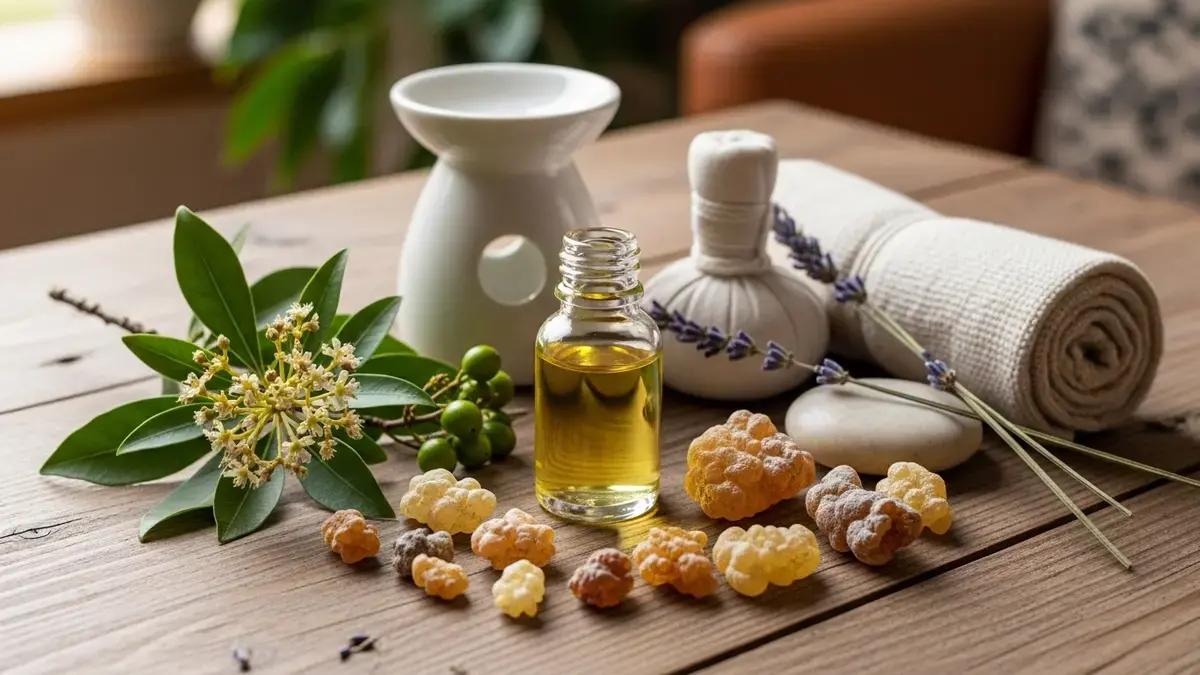
If there is one essential oil that spans millennia, carrying an air of reverence and history, it is frankincense essential oil (Boswellia carterii or Boswellia sacra). Famous for being one of the gifts of the Magi, its use extends far beyond religious ceremonies; it is a true gem in aromatherapy.
Sourced from the resin "tears" of the frankincense tree, native to arid regions of Africa and the Middle East, this oil has a complex aroma: it's woody, earthy, slightly citrusy, and has an unmistakable balsamic note. It is known as the oil of meditation, but its talents extend deep into skin care and respiratory support.
In this guide, we'll explore why frankincense is so revered, unpacking its composition and how to safely integrate it into your wellness routine, all while maintaining the respect this ancient oil deserves.
Properties and Composition
Frankincense essential oil is obtained through steam distillation of the dried resin. It's a process that captures the lightest volatile components, resulting in a precious, fluid oil.
Chemically, it is rich in monoterpenes, with α-pinene (alpha-pinene) being its major component. It also contains significant amounts of limonene, sabinene, and myrcene. These are the compounds that give the oil its notable calming, cleansing, and skin-supporting properties.
An important note: You may have heard of "boswellic acids," famous for their potent soothing properties. It is crucial to understand that these molecules are very heavy and, therefore, are not present in the steam-distilled essential oil. They are found in the raw resin or in CO2 extracts, which are different products.
Benefits and Applications
Where frankincense truly shines is in its ability to calm, center, and rejuvenate. Its benefits are traditionally divided between emotional/mental support and physical support, especially for the skin.
Mental and Emotional Support
- Meditation and Focus: This is its classic use. The aroma of frankincense helps to slow and deepen the breath, quieting "mental chatter" and facilitating meditative and introspective states.
- Stress and Tension Support: Its chemical profile, rich in α-pinene, provides a "grounding" effect. It helps anchor the mind, bringing calm and stability during moments of agitation or mental overload.
- Emotional Support: It is considered an oil that brings comfort and helps in processing the past, promoting a sense of inner peace.
Physical Support and Skin Care
- Skin Care: Frankincense is perhaps mature skin's best friend. It has mild astringent properties and is renowned for its ability to support skin rejuvenation.
- Cosmetic Applications: It is fantastic in facial serums, helping to tone the skin, soften the appearance of fine lines and wrinkles, and even out the look of skin tone, including the appearance of scars and blemishes.
- Respiratory Support: Thanks to its cleansing properties (from α-pinene), frankincense is excellent in diffusers or steam inhalations to help promote feelings of clear airways and ease breathing during times of congestion.
How to Use Frankincense Oil
To enjoy the benefits of frankincense, safety and proper dilution are key. It is versatile and can be used in several ways:
- Aromatic Diffusion: The most popular method for meditation and mental wellness. Add 3 to 5 drops to your ultrasonic diffuser. It's perfect for creating a serene environment before sleep or during a yoga practice.
- Topical Application (Skin Care): This is the best route for skin benefits. Frankincense MUST be diluted in a high-quality carrier oil.
- For the Face: A 0.5% to 1% dilution (1 to 2 drops of frankincense for every 10ml, or 2 tsp, of jojoba or rosehip oil).
- For the Body (Massage): A 1% to 2% dilution (2 to 4 drops for every 10ml of sweet almond oil).
- Direct Inhalation: For quick stress support or to center the mind, place 1 drop on a tissue or personal inhaler and breathe deeply a few times.
Safety Alerts and Precautions
Frankincense essential oil is widely considered one of the safest and gentlest oils in aromatherapy (non-toxic and non-irritating for most people). However, "safe" does not mean free from precautions. Safety compliance is vital.
❌ Risk of Skin Irritation (Sensitization)
Risk: Low. Frankincense is not considered dermocaustic. However, the risk of sensitization (allergy) can increase if the oil is oxidized (old or poorly stored). Always store your oil away from light and heat and use fresh oils.
❌ Neurotoxicity and Phototoxicity
Risk: Non-existent. Frankincense essential oil is not neurotoxic or phototoxic. There is no need to avoid the sun after topical application (when properly diluted).
❌ Contraindications and Drug Interactions
- Pregnancy and Lactation: As a general precaution, some experts recommend avoiding use during the first trimester of pregnancy. After that, diluted topical or aromatic use is generally considered safe, but please consult your doctor.
- Interactions: People using anticoagulant (blood thinner) medications (like Warfarin) should use caution. While the risk is theoretical and low, α-pinene may have a mild thinning property. Consult a healthcare professional.
- Children and the Elderly: It is considered safe, provided it is used in very low dilutions (0.5% or less).
⚠️ Risk to Pets (Pet Owner Alert)
Keep all essential oils out of reach of animals. Using diffusers in homes with pets should be done with extreme caution in a well-ventilated area, with a door open so the animal can leave. Especially Cats: Cats lack the specific liver enzymes needed to metabolize many essential oil components (like terpenes, present in frankincense). Exposure, whether topical or via diffusion, can be toxic. Never apply oils to cats and avoid diffusing in enclosed spaces with them.
⚠️ General Usage Precautions
- Patch Test: Before your first topical use, apply a small amount (already diluted) to the inner elbow and wait 24 hours.
- Never Ingest: Ingestion of essential oils should only be done under the guidance of a qualified clinical aromatherapist.
- Keep Away From Eyes: Avoid contact with eyes and mucous membranes.
Medical Disclaimer: The information on this post is for educational purposes only and does not substitute for professional medical advice. Always consult a qualified healthcare professional before using essential oils for wellness purposes. These statements have not been evaluated by the Food and Drug Administration (FDA). This product is not intended to diagnose, treat, cure, or prevent any disease.
Combinations and Synergies
Frankincense is an excellent "fixative" in blends, deepening and enriching other notes. It harmonizes beautifully with a variety of oils:
- For Meditation: Combine with Sandalwood, Myrrh, or Cedarwood.
- For Relaxation: Combine with Lavender or Bergamot (a classic!).
- For Skin Care: Combine with Geranium, Palmarosa, or Lavender.
- For Respiratory Support: Combine with Eucalyptus (Radiata or Globulus) or Peppermint.
- Ideal Carrier Oils: Jojoba Oil (for the face, as it mimics the skin's sebum), Rosehip Oil (to enhance skin's appearance), or Sweet Almond Oil (for body massage).
Final Thoughts
Frankincense essential oil is much more than an ancient aroma; it's a powerful tool for introspection, skin care, and respiratory support. Its gentle nature makes it a fantastic entry-level oil for beginners, while its depth keeps it a favorite among experienced aromatherapists.
When choosing your frankincense, look for sustainably harvested sources, as the Boswellia tree faces risks from over-harvesting. By using it with respect, awareness, and safety, you are honoring a wellness tradition that has endured for millennia.