
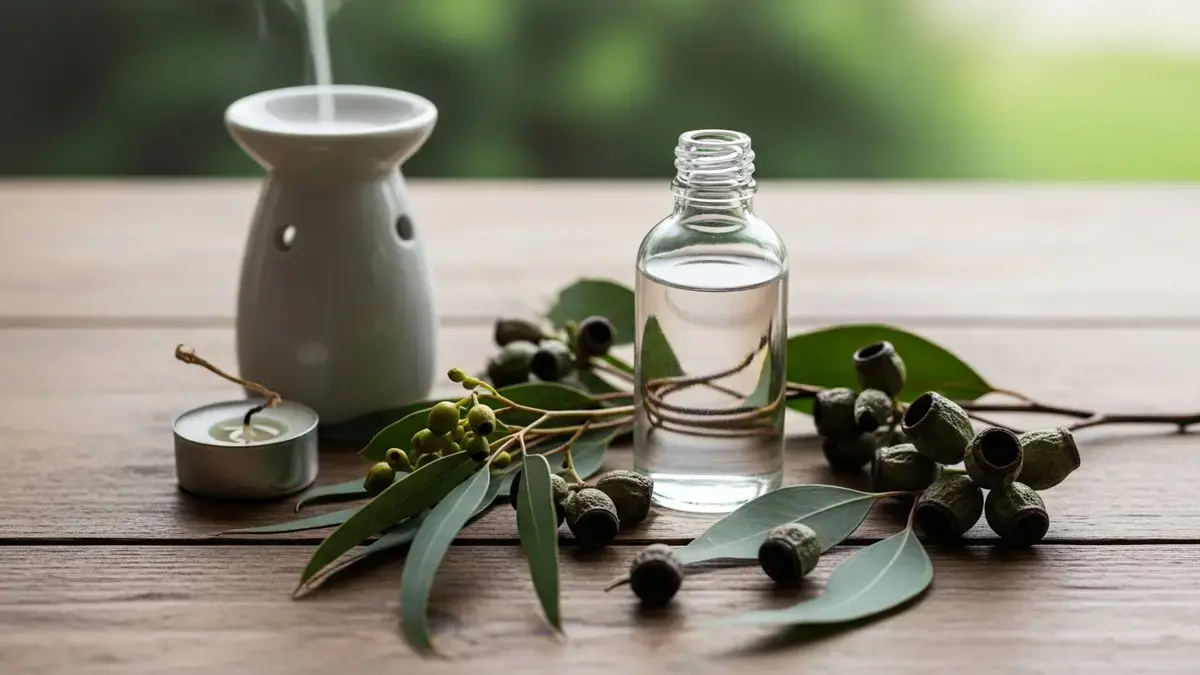
If there's one aroma that instantly brings to mind fresh air, clear breathing, and revitalization, it's that of Eucalyptus essential oil. A staple in any aromatherapy first-aid kit, this giant of nature is much more than just a clean scent; it's a therapeutic powerhouse, especially for our respiratory system.
Native to Australia and belonging to a genus with over 700 species, eucalyptus provides us with oils of different chemical profiles. Today on the Aromatherapy Blog, we'll focus on the most famous one, Eucalyptus globulus, and understand how to use it with maximum effectiveness and, above all, complete safety.
Properties and Composition
The secret behind the strength of Eucalyptus essential oil lies in a chemical component called 1,8-cineole, also known as eucalyptol. In Eucalyptus globulus, this molecule can make up 70% to 90% of the oil, making it largely responsible for its renowned expectorant, mucolytic, and decongestant properties.
It is 1,8-cineole that gives eucalyptus its ability to clear the airways, but it's also because of this component that using this oil requires caution and knowledge, especially with children. The oil is extracted via steam distillation of the leaves and young twigs of the tree.
Which Eucalyptus to Choose? Globulus vs. Radiata
Although Eucalyptus globulus is the most common, it's worth knowing about Eucalyptus radiata. It is also rich in 1,8-cineole but in a lower concentration, making it a gentler option and therefore considered safer for older children (over 10) and sensitive individuals.
Benefits and Applications
Eucalyptus is a versatile oil, but it truly shines when it comes to respiratory care and mental stimulation. It's like a breath of fresh air that cleanses, purifies, and invigorates the body and mind.
The Guardian of the Respiratory System
- Congestion Relief: It is a powerful expectorant and mucolytic, helping to thin and expel mucus trapped in the lungs and sinuses. It offers crucial support during colds, the flu, sinusitis, and bronchitis.
- Clear Breathing: It helps to open the airways, easing the feeling of nasal congestion and a heavy chest, promoting easier and deeper breathing.
- Air Purifier: Its antiseptic and antimicrobial properties make it excellent for diffusing in a room, helping to cleanse the air and prevent the spread of germs.
Mental Clarity and Energy
- Focus Boost: Its strong, camphoraceous scent is a natural wake-up call for the mind. It helps to combat mental fatigue, lethargy, and difficulty concentrating.
- Energetic Cleansing: Just as it cleanses the air, eucalyptus also helps to "clear" negative thoughts and feelings of stagnation, bringing more clarity and vitality.
How to Use
To get the most out of Eucalyptus essential oil, it is essential to choose the correct application method for each situation. Safety is always the priority.
- Aromatic Diffusion: The most common and safest method. Add 4 to 6 drops to your diffuser to purify the air, ease congestion, and promote focus.
- Steam Inhalation: For intense congestion, add 1 to 2 drops to a bowl of hot water. Cover your head with a towel and inhale the steam for a few minutes, keeping your eyes closed.
- Topical Application: ALWAYS DILUTED! Dilute 3 to 5 drops in 10ml (2 tsp) of a carrier oil (like almond or coconut) and massage onto the chest, back, and soles of the feet to soothe a cough and congestion.
Safety Warnings and Precautions
Attention: This section is mandatory reading. Eucalyptus is one of the oils that requires the most care. Its improper use, especially in at-risk groups, can be dangerous.
❌ Key Contraindications and Risks
- Young Children and Infants: The use of Eucalyptus globulus is STRICTLY PROHIBITED for children under 10 years old. The high 1,8-cineole content can cause glottal spasms and central nervous system depression. Never apply it near a child's face.
- Pregnancy and Breastfeeding: Use is discouraged, especially during the first trimester. Always consult a healthcare professional.
- Asthma and Chronic Conditions: People with asthma should use extreme caution. While it can help in some cases, the strong aroma can trigger an attack in others. Avoid in cases of serious liver disease.
⚠️ Essential Alert for Pet Owners (Especially Cats)
Eucalyptus is known to be toxic to dogs and, especially, to cats if ingested or absorbed through the skin. Diffusion can also be problematic. Keep oils out of their reach and ensure the room is always well-ventilated.
⚠️ General Use Precautions
- It can cause skin irritation. Always perform a patch test before use.
- Never ingest Eucalyptus essential oil without the guidance of a qualified clinical aromatherapist.
- Keep out of reach of children and pets.
- Avoid contact with eyes and mucous membranes.
Disclaimer: The information contained in this post is for educational purposes and does not substitute for professional medical advice. Always consult a healthcare provider to address medical conditions.
Combinations and Synergies
The penetrating aroma of Eucalyptus combines perfectly with other oils, enhancing its therapeutic effects.
Oils that Pair Well with Eucalyptus
- For the Respiratory System: Peppermint, Tea Tree, Rosemary, Pine, and Ravintsara.
- For Focus and Energy: Lemon, Rosemary, and Peppermint.
- For Muscle Aches: Lavender, Rosemary, and Wintergreen.
Blend Suggestion: "Breathe Deep" Synergy (For a Diffuser)
Add to your diffuser: 3 drops of Eucalyptus essential oil, 2 drops of Lemon, and 2 drops of Tea Tree. Use during the day to keep the air clean and the mind alert.
Ideal Carrier Oils
Oils like Jojoba, Grapeseed, and Sweet Almond are excellent for diluting Eucalyptus for topical application as they are light and easily absorbed.
Final Thoughts
Eucalyptus essential oil is a true gift from nature, a pillar of aromatherapy for respiratory health and mental clarity. Its effectiveness is unquestionable, but its power goes hand in hand with the need for responsible use.
When you have a bottle of Eucalyptus in your hands, always remember the golden rule: keep it far away from young children. Used with awareness and respect, it will be your great ally to breathe more freely, in every sense of the word.
“1,8-cineole is chiefly responsible for both the therapeutic action of eucalyptus oil on the respiratory tract, and for its safety risk to young children.” Source: Tisserand, R., & Young, R., Essential Oil Safety, 2nd Edition, 2013.