
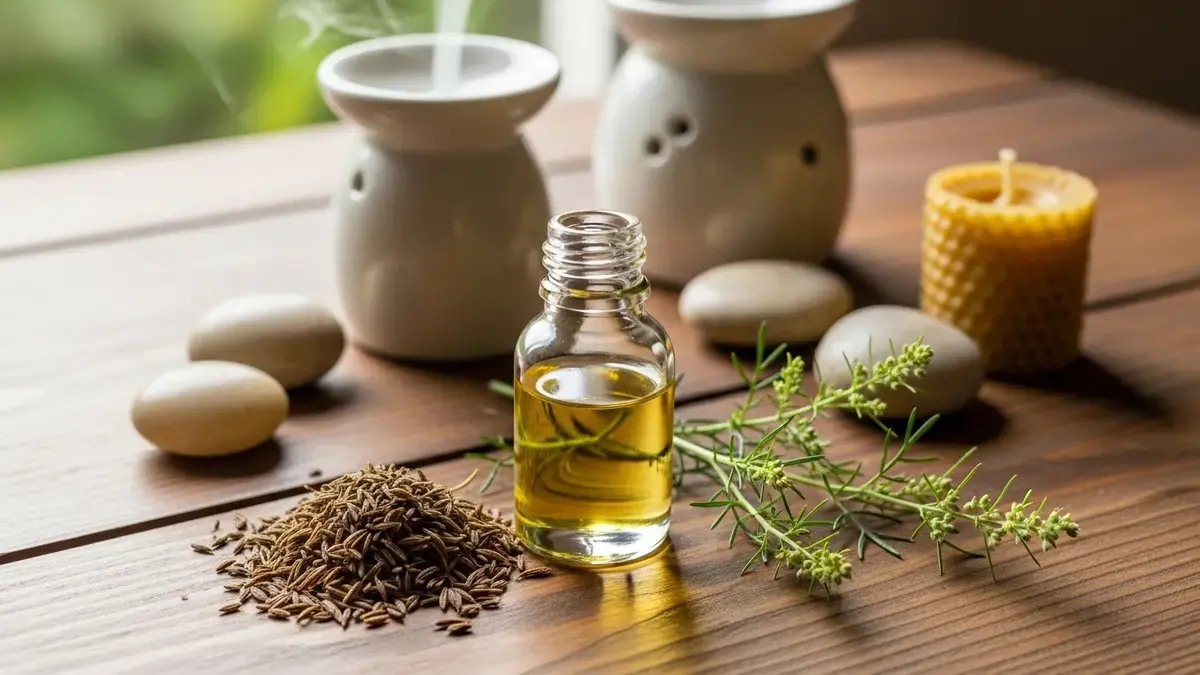
Hello, aroma and wellness enthusiast! In the universe of aromatherapy, some oils surprise us with their potency and depth. Today, on the Aromatherapy Blog, we're going to explore one of these treasures: cumin essential oil. Known for millennia as a distinctive spice, its essential oil carries an equally impressive therapeutic strength.
Extracted from the seeds of the Cuminum cyminum plant, this oil has a warm, spicy, and earthy aroma that might not be for everyone, but its properties are undeniable. Used since Ancient Egypt, cumin has always been revered for its digestive virtues and purifying qualities. It's an oil that invites us to ground ourselves, focus on the present, and care for our vital center: the digestive system.
In this complete guide, we'll dive into the properties, surprising benefits, and, crucially, the strict safety guidelines for using cumin essential oil effectively and responsibly.
Properties and Composition
The power of cumin essential oil lies in its complex chemical composition, which is dominated by a component called cuminaldehyde. It is this aldehyde that gives the oil its characteristic aroma and many of its most notable therapeutic properties, especially its role as a digestive tonic.
In addition to cuminaldehyde, we find other compounds like cymene, beta-pinene, and gamma-terpinene, which contribute to its cleansing and antioxidant qualities. The oil is typically extracted by steam distillation of the dried, ground seeds, a process that concentrates these potent components into every drop.
This unique composition makes cumin a "hot" essential oil, which must be handled with extreme respect and knowledge, as we will detail further on.
Benefits and Applications
Cumin oil is a specialist when it comes to bodily support, especially for the digestive and muscular systems. Its benefits are targeted and potent, always requiring mindful use.
Benefits for Physical Wellness
- Exceptional Digestive Support: This is perhaps cumin's most celebrated benefit. Used in abdominal massages (always heavily diluted), its warming sensation helps soothe discomfort from gas, bloating, and indigestion, promoting healthy digestive function.
- Comfort for Tired Muscles: Its warming properties make it an excellent ally in massage oils for sore and tense muscles after physical activity, helping to relax and ease stiffness.
- Cleansing Properties: Cumin stimulates circulation and can support the body's natural detoxification processes, making it useful in massages and lymphatic drainage.
- Antimicrobial Qualities: It helps purify the air and surfaces when used in diffusers or homemade cleaning products, although its strong aroma can be overpowering.
Benefits for Mental and Emotional Well-being
- Grounding Effect: Its earthy, robust aroma helps to calm the mind, reduce agitation, and promote a feeling of stability and presence. It's ideal for moments when we feel scattered or anxious.
- Mental Boost: While calming, cumin also has a quality that helps to invigorate the mind, promoting focus and mental clarity when fatigue sets in.
How to Use
Due to its potency, cumin essential oil must be used with extreme caution and in very low concentrations. The "less is more" approach is fundamental here.
- Topical Application (Primary Use): This is the most effective way to experience its physical benefits. Dilution is MANDATORY and must be very low: use a maximum of 1 drop of cumin oil for every 30 ml of carrier oil (a dilution of approximately 0.1-0.2%).
- Aromatic Diffusion: Use sparingly. Just 1 drop in a diffuser, combined with other milder oils, is sufficient. Its aroma is very strong and can be irritating to the respiratory tract if overused.
- Direct Inhalation: Not recommended due to the intensity of the aroma and the potential for irritating the nasal passages.
Safety Warnings and Precautions
ATTENTION: This is the most important section of this guide. Cumin essential oil is powerful, and its improper use can cause serious adverse reactions. Please read with utmost care.
❌ High Phototoxicity: This oil is HIGHLY PHOTOTOXIC. After topical application, even with proper dilution, do not expose the treated skin to direct sunlight or UV rays (tanning beds) for a minimum of 24 to 48 hours. The risk of severe burns and permanent dark spots is very high.
❌ Dermocaustic/Skin Irritation: Never, under any circumstances, apply this oil undiluted to the skin. It is considered dermocaustic and can cause irritation, redness, and a burning sensation. The maximum recommended dilution for safety is extremely low (below 0.4%).
❌ Contraindications: - Pregnancy and Lactation: Use is contraindicated. - Children: Contraindicated for young children. Avoid use in children under 12. - Medical Conditions: People with sensitive, damaged, or dermatological conditions should avoid use.
❌ Drug Interactions: May interact with anticoagulant and diabetes medications. Consult a doctor before use if you are on any continuous medication.
⚠️ Warning for Pet Owners (Especially Cats): "Hot" essential oils like cumin are dangerous for animals. Cats, in particular, cannot metabolize their components, which can lead to severe poisoning. Do not use this oil in diffusers or topically on animals or in environments where they remain for long periods.
⚠️ General Precautions: - Always perform a patch test with the already diluted product on a small area of skin. - Never ingest essential oils without the guidance of a qualified healthcare professional. - Keep away from eyes, ears, and mucous membranes.
FDA Disclaimer: The information in this post is for educational purposes only. These statements have not been evaluated by the Food and Drug Administration. This product is not intended to diagnose, treat, cure, or prevent any disease.
Blends and Synergies
To balance its strong aroma and enhance its effects, cumin essential oil blends well with other spice and wood oils. Use it as a base note in blends, always in a smaller proportion.
- For a Digestive Synergy: Combine 1 drop of cumin with 3 drops of Coriander and 3 drops of Ginger in 30ml of sesame oil for a gentle abdominal massage.
- For a Muscle Blend: Mix 1 drop of cumin with 4 drops of Black Pepper and 4 drops of Marjoram in 30ml of arnica oil.
- Ideal Carrier Oils: Sesame oil, grapeseed oil, and sweet almond oil are excellent options.
Final Thoughts
Cumin essential oil is proof that nature concentrates immense power in small drops. It is a valuable therapeutic tool, especially for the digestive system, but it demands knowledge, respect, and a flawless safety approach.
Remember that in aromatherapy, potency is not in excess, but in conscious and well-informed use. By strictly following the dilution and safety guidelines, you can enjoy the profound benefits that this ancient oil has to offer.