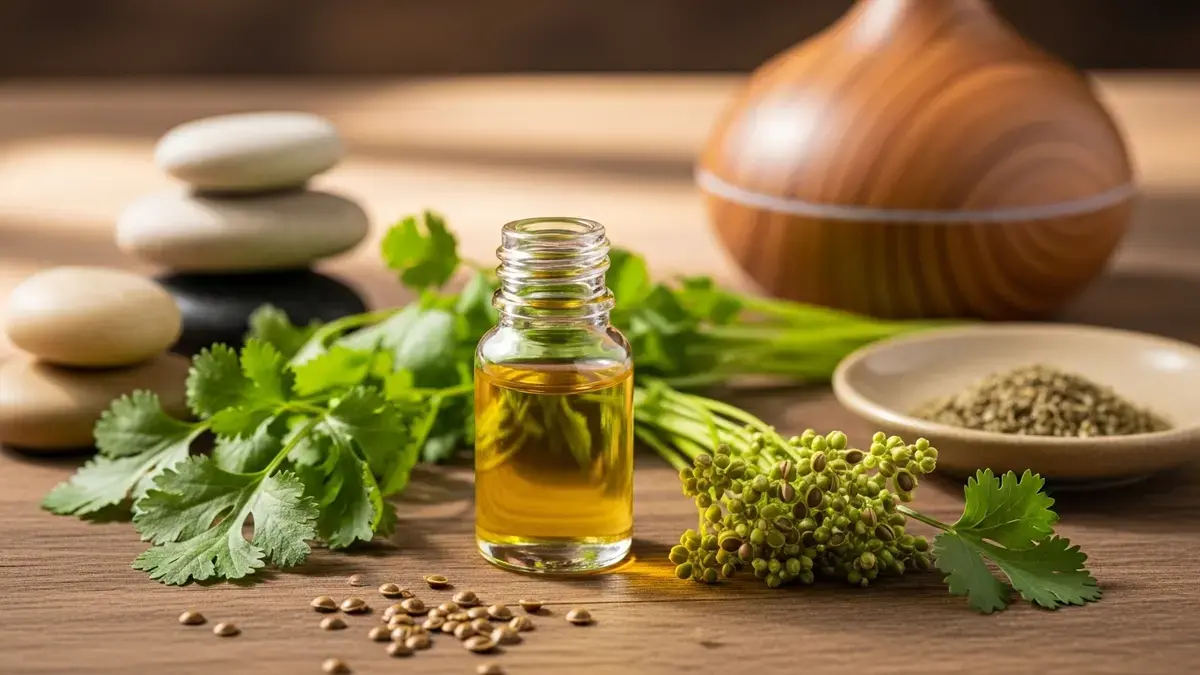
Loved by some, misunderstood by others, cilantro is one of those herbs that doesn't go unnoticed. But when we step out of the kitchen and into the world of aromatherapy, we discover that Coriander Seed essential oil is a true gem, with a surprisingly sweet, herbaceous, and slightly spicy aroma that is far more complex than the fresh leaf.
Extracted from the seeds of the Coriandrum sativum plant, coriander oil has a rich history, used by ancient civilizations in Egypt, Rome, and Greece for both culinary and wellness purposes. Today, we'll explore the power of this versatile oil, revealing how its properties can support our physical and emotional well-being safely and effectively.
If you're looking for natural digestive support, a balm for a busy mind, or a cleansing agent for the body, keep reading. Coriander Seed essential oil might be exactly what your aromatherapy collection needs.
Properties and Composition
The secret to Coriander Seed essential oil's effectiveness lies in its rich chemical composition. Obtained primarily through steam distillation of the plant's ripe seeds, its main biochemical component is Linalool, which can make up to 80% of the oil. This monoterpene alcohol is largely responsible for most of its acclaimed beneficial properties.
Linalool is widely studied for its calming, relaxing, and soothing effects on the nervous system. In addition, we find other components in smaller proportions, such as α-pinene, camphor, and geraniol, which contribute to its aromatic and therapeutic profile, lending it soothing and cleansing properties.
“Linalool has been shown to possess a range of pharmacological activities, including anxiolytic, sedative, and analgesic effects.” Source: [Peana, A. T., & Moretti, M. D. L., Pharmacological Activities of Linalool, 2009].
Benefits and Applications
Coriander Seed essential oil is a true jack-of-all-trades, working gently but profoundly on several fronts within our body. Its fresh, uplifting aroma is, in itself, an invitation to balance.
Benefits for Physical Well-being
- Digestive Support: This is perhaps its most well-known benefit. It helps to ease occasional digestive discomforts like indigestion, gas, and bloating, promoting smoother digestion. An abdominal massage with the diluted oil can be extremely comforting.
- Cleansing and Purifying Properties: Coriander oil is known for its cleansing qualities, supporting the body's natural detoxification processes and assisting in the elimination of unwanted substances.
- Comfort for Muscles and Joints: Thanks to its soothing properties, it can be a great ally in massages to comfort minor aches and muscle tension.
- Antioxidant Support: It helps combat damage from free radicals, contributing to the body's overall cellular health.
Benefits for Mental and Emotional Well-being
- Calming and Relaxing Effect: The high Linalool content makes Coriander a superb oil for calming the mind and easing feelings of stress, nervous tension, and irritability.
- Promotes Restful Sleep: By soothing the nervous system, it prepares the body and mind for a more restful night's sleep, making it a great option to diffuse in the bedroom before bed.
- Mental Clarity and Focus: Although relaxing, it doesn't typically cause drowsiness. On the contrary, its aroma helps clear mental fog, promoting focus and creativity.
How to Use
To get the most out of Coriander Seed essential oil, it's essential to use it correctly. Here are the safest and most effective methods:
- Aromatic Diffusion: Add 5 to 8 drops to your ultrasonic diffuser. It's ideal for creating a peaceful environment, unwinding after a long day, or purifying the air.
- Topical Application: Dilution is a must. For a body massage or localized application, use a 1% to 2% dilution (about 2 to 4 drops of essential oil for every 10ml of a carrier oil like sweet almond or jojoba).
- Direct Inhalation: For quick relief from tension or to clear your mind, place 1 or 2 drops on a tissue and inhale deeply a few times.
Safety Alerts and Precautions
Safety is the cornerstone of responsible aromatherapy. Coriander oil is generally safe, but it requires attention to some important guidelines.
- ❌ Skin Irritation: While not considered a strong irritant, it can cause sensitivity in some individuals, especially if the oil has oxidized. Always perform a patch test and adhere to proper dilution rates.
- ❌ Contraindications: Use should be avoided by pregnant and nursing women without professional guidance. For children and the elderly, use with caution and at lower dilutions (1% maximum).
- ❌ Medication Interactions: Due to its high Linalool content, which may have a relaxing effect, individuals using sleep aids or blood pressure medications should consult a healthcare professional before use.
- ⚠️ Risk to Pets - Warning for Pet Owners (Especially Cats): The diffusion and topical application of essential oils can be toxic to animals. Cats, in particular, lack the necessary enzymes to metabolize many oil components, posing a serious risk. Avoid using diffusers in enclosed spaces with pets and never apply oils to their skin or fur.
- ⚠️ General Use Precautions: Never ingest essential oils without the recommendation of a qualified professional. Keep away from eyes, inner ears, and mucous membranes. Store in a cool, dark place, out of reach of children.
Disclaimer: These statements have not been evaluated by the Food and Drug Administration. This product is not intended to diagnose, treat, cure, or prevent any disease. The information in this post is for educational purposes only.
Combinations and Synergies
The aroma of Coriander Seed essential oil is wonderfully versatile, blending well with several oil families and enhancing incredible synergies.
- Complementary Essential Oils: It harmonizes perfectly with citrus oils (Bergamot, Lemon), spices (Black Pepper, Ginger), florals (Lavender, Geranium), and other herbaceous oils (Basil, Clary Sage).
- Recommended Blends: For a digestive support synergy, combine 3 drops of Coriander, 3 of Peppermint, and 2 of Ginger in your diffuser. For a relaxing blend, try 4 drops of Coriander, 3 of Lavender, and 2 of Bergamot.
- Ideal Carrier Oils: Grapeseed, jojoba, and sweet almond oils are excellent choices as they are lightweight and easily absorbed by the skin.
Final Thoughts
Coriander Seed essential oil is a perfect example of how nature offers us complex and multifaceted tools for well-being. Whether it's to soothe an unsettled stomach, calm an anxious mind, or simply bring a fresh, clean aroma to your space, it is a valuable and safe addition to your aromatherapy practice.
We encourage you to explore this oil with curiosity and, above all, with mindfulness. By respecting safety guidelines and choosing high-quality products, you can enjoy all the benefits this gift from nature has to offer.