
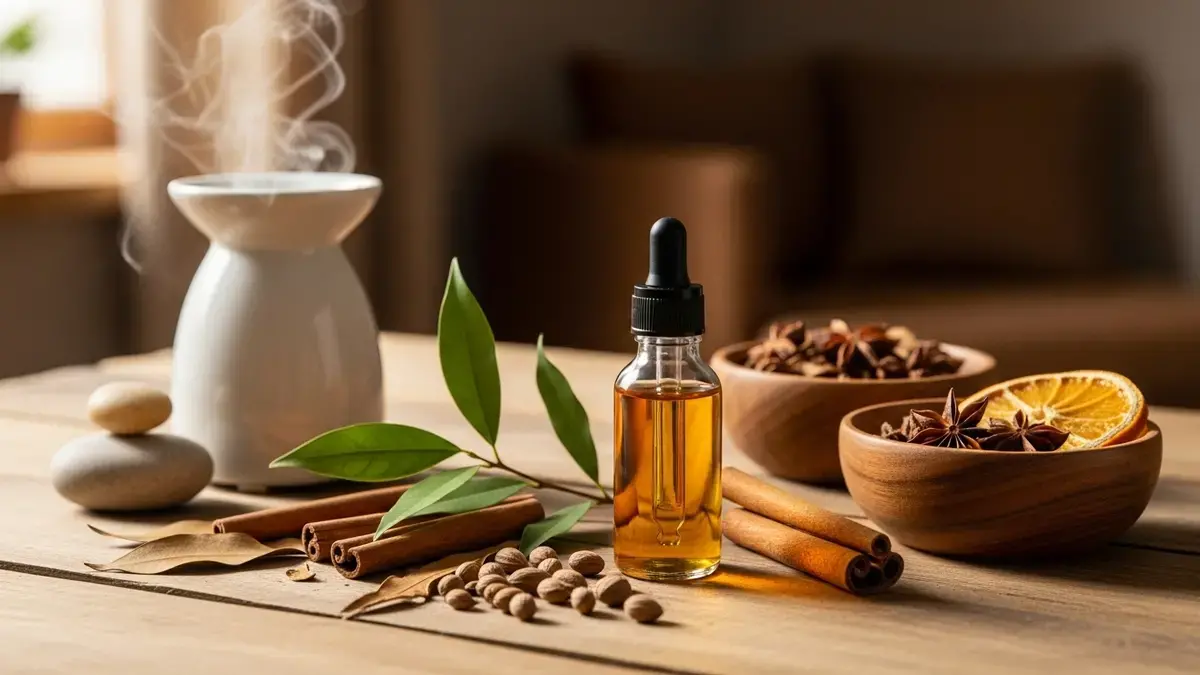
If there's one aroma that instantly transports you to a feeling of comfort and warmth, it's cinnamon. But did you know that beyond its unmistakable scent, cinnamon essential oil holds a treasure trove of therapeutic properties? Extracted from the Cinnamomum zeylanicum (or Cinnamomum verum) plant, this oil is one of the most potent and versatile in aromatherapy.
Used for millennia across various cultures, from Ancient Egypt to traditional Chinese medicine, cinnamon has always been valued for its warming and stimulating qualities. Today, we'll dive deep into this aromatic world, exploring how cinnamon essential oil can warm your body, invigorate your mind, and most importantly, how to use it with complete safety.
Get ready for a complete guide to this fascinating oil, which goes far beyond the kitchen spice rack and can become a powerful ally in your wellness journey.
Properties and Composition
It's crucial to understand that there are two main types of cinnamon essential oil: one extracted from the leaf and the other from the bark. Although both come from the same plant, their chemical compositions, and therefore their uses and precautions, are different.
- Cinnamon Bark Oil: More potent and intense, it's rich in cinnamaldehyde (often over 60%). This component gives it its classic aroma and powerful antimicrobial properties, but it also makes it extremely irritating to the skin.
- Cinnamon Leaf Oil: Gentler in comparison, its main component is eugenol (often over 70%), with a lower cinnamaldehyde content. It has a spicier, more earthy aroma and is considered safer for topical use (when properly diluted!).
Both oils are typically extracted via steam distillation. Their most well-known therapeutic properties include being a powerful antimicrobial, antifungal, anti-inflammatory, and a circulatory and digestive stimulant. Without a doubt, cinnamon essential oil is a potent supporter of the body's natural defenses.
Benefits and Applications
The applications for cinnamon essential oil are vast, impacting both physical and emotional well-being. Its penetrating warmth brings comfort and relief in multiple ways.
Benefits for Physical Wellness
- Supports a Healthy Immune System: Its cleansing properties make it an excellent choice for purifying the air in diffusers, especially during the winter months, helping to maintain a healthy home environment.
- Soothes Occasional Aches and Discomfort: As a natural warming agent, it's great in massage blends (heavily diluted) to soothe overworked muscles and joints after a workout, thanks to its ability to warm the area and promote circulation.
- Promotes Digestive Comfort: It can help ease occasional indigestion and upset stomach. A gentle abdominal massage with a highly diluted blend can be very comforting.
- Encourages Healthy Circulation: Its stimulating effect helps encourage blood flow, which is beneficial for those who often experience cold hands and feet.
Benefits for Mental & Emotional Health
- Combats Fatigue and Exhaustion: The warm, stimulating aroma of cinnamon essential oil helps fight mental fatigue, sluggishness, and low energy, promoting a sense of alertness and vitality.
- Sparks Creativity and Focus: This is an oil that "warms up ideas." It's perfect for diffusing in a work or study environment to encourage concentration and inspiration.
- Aphrodisiac Properties: Traditionally known for awakening the senses and sensuality, its exotic and inviting aroma helps create an atmosphere of intimacy.
How to Use Cinnamon Oil
To enjoy the benefits of cinnamon essential oil safely, it's essential to respect the proper usage methods and dilution rates.
- Aromatic Diffusion: The safest and most common method. Add 2 to 4 drops to your ultrasonic diffuser to purify your space, uplift your mood, and support your immune system.
- Topical Application (Dilution is Mandatory): This method requires the most caution. Due to its dermocaustic potential, the maximum recommended dilution is 0.1% for bark oil and 0.5% for leaf oil. This translates to just 1 drop of bark oil per 10ml (or 2 teaspoons) of carrier oil, or 2-3 drops of leaf oil per 10ml.
- Direct Inhalation: For a quick energy boost, you can inhale gently from the bottle (avoiding contact) or add one drop to a tissue and breathe deeply.
Safety Alerts and Precautions
Disclaimer: The statements on this page have not been evaluated by the Food and Drug Administration (FDA). This product is not intended to diagnose, treat, cure, or prevent any disease. The information provided is for educational purposes only and is not a substitute for professional medical advice.
Cinnamon essential oil is powerful and must be respected. Please read the following carefully before use.
- ❌ Skin Irritation (Dermocausticity): Extremely irritating to skin and mucous membranes. Never apply undiluted. Cinnamon Bark oil is more aggressive than Cinnamon Leaf. Strictly adhere to the maximum 0.1% dilution. Always perform a patch test on a small area of skin first.
- ❌ Potential Neurotoxicity: Cinnamaldehyde, highly concentrated in the bark oil, can be neurotoxic in high doses or with prolonged use. Use sparingly and for short durations only.
- ❌ Contraindications: Do not use if pregnant, nursing, or on babies and young children. Individuals with sensitive skin, blood clotting disorders, or those preparing for surgery should avoid use. Use with caution if you have high blood pressure.
- ❌ Drug Interactions: May interact with anticoagulant (blood thinner) medications, diabetes medication, and certain antibiotics. Consult your doctor if you are under medical care.
- ⚠️ Risk to Pets: A critical alert for pet owners, especially cat owners! Cats lack the liver enzymes needed to metabolize components found in many essential oils, including cinnamon. Diffusing this oil or applying it topically to yourself can be toxic to them. Avoid use around felines. Dogs can also be sensitive.
- ⚠️ General Precautions: Never ingest essential oils without guidance from a qualified clinical aromatherapist. Keep away from eyes, ears, and sensitive areas. Store in a cool, dark place, out of reach of children and pets.
Blending and Synergies
To enhance its effects and create more complex aromas, cinnamon essential oil blends wonderfully with other oils.
- Complementary Essential Oils: Sweet Orange, Clove, Ginger, Cardamom, Frankincense, Cedarwood, and Mandarin.
- Focus & Energy Diffuser Blend: 2 drops Cinnamon Leaf + 4 drops Sweet Orange + 2 drops Frankincense.
- Cozy Winter Diffuser Blend: 1 drop Cinnamon Bark + 3 drops Ginger + 4 drops Cedarwood.
- Ideal Carrier Oils: For topical use, choose nourishing, easily absorbed vegetable oils like Fractionated Coconut Oil, Jojoba, Grapeseed, or Sweet Almond Oil.
Final Thoughts
Cinnamon essential oil is a true gift from nature, capable of bringing warmth, protection, and vitality into our lives. Its power is immense, but its strength demands knowledge and responsibility.
When choosing your oil, opt for reputable brands that specify the origin (bark or leaf) and chemotype. Always remember the golden rule of aromatherapy: less is more. Use it consciously, respect the safety guidelines, and allow its transformative aroma to enrich your days safely and effectively.