
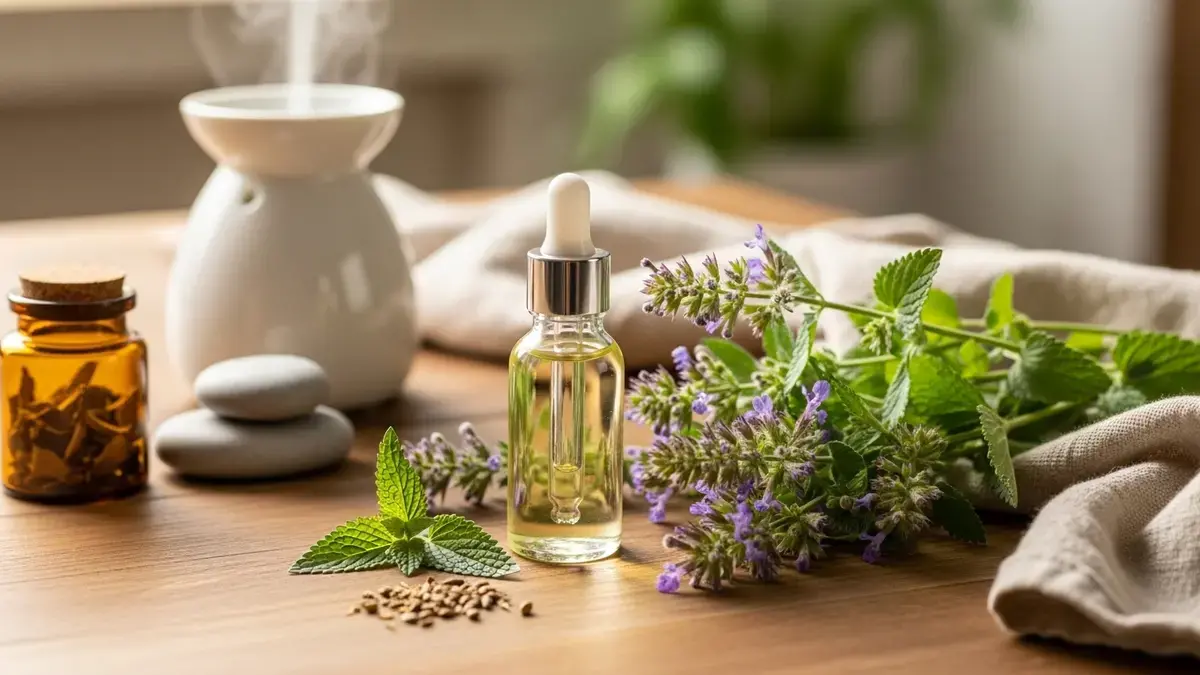
You probably know catnip for its famous ability to send felines into a state of playful euphoria. But did you know that for us humans, the essential oil extracted from this plant, Nepeta cataria, offers an almost opposite effect? Far from making us want to scratch the sofa, it’s an invitation to relaxation and tranquility.
In this complete guide from the Aromatherapy Blog, we'll explore the fascinating world of catnip essential oil. Native to Europe and Asia, this member of the mint family has a history of traditional use that goes far beyond entertaining pets, being valued for its remarkable calming and therapeutic properties.
Get ready to discover how this often-underestimated oil can become a powerful ally on your wellness journey—as long as it's used with the knowledge and safety that serious aromatherapy demands.
Properties and Chemical Composition
The secret behind catnip essential oil's effectiveness lies in its unique biochemical composition. The main component, and the real star of this oil, is nepetalactone. This is the molecule that causes the curious reaction in cats and, in us, acts as a powerful calming agent for the nervous system.
“Chromatographic analysis of Nepeta cataria oil consistently reveals high levels of nepetalactones... which are responsible for most of its biological activities, including its calming and insect-repellent effects.” Source: [Journal of Agricultural and Food Chemistry].
Beyond nepetalactone, we find other components in smaller amounts, such as caryophyllene, which has soothing properties. The oil is typically extracted via steam distillation of the leaves and flowers, a method that preserves the purity and potency of its therapeutic compounds.
Benefits and Therapeutic Applications
The catnip essential oil is surprisingly versatile. Its benefits range from physical wellness to emotional balance, making it a valuable addition to your aromatherapy kit.
For Physical Wellness:
- Soothes Muscle Tension: Its properties help ease tight, overworked muscles and soothe discomfort from overexertion.
- Digestive Comfort: As a good member of the mint family, it can be aromatically soothing when experiencing minor digestive discomfort or feelings of bloating.
- Powerful Repellent: Scientific studies confirm that nepetalactone is an extremely effective insect repellent, offering a natural alternative to keep mosquitoes at bay.
- Respiratory Comfort: When diffused, it can help promote a feeling of clear breathing and soothe the air during times of seasonal discomfort.
For the Mind and Emotions:
- Stress and Tension Relief: This is its most celebrated benefit. It acts as a gentle calming agent, promoting a deep sense of peace and easing feelings of tension.
- Supports Restful Sleep: For those with occasional sleeplessness or restless nights, diffusing catnip oil before bed can create a serene environment conducive to restorative sleep.
- Emotional Balance: It helps to quiet an overactive mind, easing racing thoughts and promoting a state of serenity and mental clarity.
Safe Ways to Use
To enjoy the benefits of catnip essential oil, it is essential to follow aromatherapy best practices. The potency of essential oils should never be underestimated.
- Aromatic Diffusion: Add 3 to 5 drops to your ultrasonic diffuser to create a relaxing atmosphere at home, especially in the bedroom before sleep or during meditation.
- Topical Application (Always Diluted): Dilute 1 to 2 drops of essential oil in one tablespoon (about 15ml) of a carrier oil (like jojoba or sweet almond oil). Massage onto areas of muscle tension, the chest for respiratory comfort, or the wrists for a calming effect. A safe dilution is 0.5% to 1%.
- Direct Inhalation: Place 1 drop on a cotton tissue or personal inhaler and breathe deeply a few times for quick relief from feelings of stress during the day. Avoid direct contact with the skin on your nose.
Safety Warnings and Precautions
Your safety is our top priority. Using essential oils requires responsibility. Please read the following precautions carefully before using catnip essential oil.
❌ Contraindications and Specific Risks
- Pregnancy and Breastfeeding: Catnip oil is considered an emmenagogue, meaning it may stimulate menstrual flow. Its use is strictly contraindicated throughout pregnancy and while nursing.
- Young Children: Avoid use on children under 6 years old due to its potent calming effects and potential for skin irritation.
- Skin Irritation: While not the harshest, it can cause skin irritation (dermocausticity) if used undiluted or in high concentrations. Dilution is mandatory.
⚠️ Warning for Pet Owners (Especially Cats)
This is a critical point: what is fun in the plant can be dangerous in the essential oil. Catnip essential oil is highly concentrated and TOXIC to cats if inhaled from diffusers or applied to their skin. A cat's liver cannot metabolize the components of essential oils the same way humans do, which can lead to severe liver damage and can even be fatal. Never use essential oil diffusers in rooms your cat cannot freely leave, and never apply oils to their fur.
⚠️ General Usage Precautions
- Patch Test: Before your first topical use, perform a patch test. Apply a small amount of the diluted oil to the fold of your elbow and wait 24 hours to check for any reaction.
- Do Not Ingest: Ingestion of essential oils should only be done under the guidance of a healthcare professional qualified in clinical aromatherapy. Oral self-medication is dangerous.
- Avoid Eyes and Mucous Membranes: Keep the oil away from eyes, inner ears, and other sensitive areas. In case of accidental contact, flush with a carrier oil (not water).
FDA Disclaimer: The information in this post is for educational purposes only. These statements have not been evaluated by the Food and Drug Administration. This product is not intended to diagnose, treat, cure, or prevent any disease. Always consult your doctor or a certified aromatherapist before starting any new treatment.
Blends and Synergies
Catnip essential oil harmonizes beautifully with other oils, enhancing their therapeutic effects in synergistic blends.
Blend for Restful Nights:
In a diffuser, combine 3 drops of Catnip, 2 drops of Lavender, and 1 drop of Roman Chamomile. This synergy creates the perfect environment to unwind and prepare for sleep.
Natural Repellent Synergy:
For a body spray, dilute in 3.5 oz (100ml) of distilled water with a solubilizer: 5 drops of Catnip, 5 drops of Citronella, and 3 drops of Geranium. Remember to shake well before each use.
Ideal Carrier Oils: Jojoba Oil, Grapeseed Oil, and Sweet Almond Oil are excellent vegetable bases due to their light texture and good absorption by the skin.
Final Thoughts
The catnip essential oil is a true gift from nature, offering a refuge of calm in our hectic daily lives. Its deeply relaxing properties, combined with its power as a natural repellent, make it a multifaceted and extremely useful oil.
Remember, however, that its potency demands respect. Conscious and safe use is the key to enjoying all its benefits without risking your health or that of your pets. In aromatherapy, less is always more.
Here at the Aromatherapy Blog, we encourage you to explore this and other oils with curiosity and, above all, with great responsibility. Nature offers us incredible tools for wellness; it is up to us to learn to use them wisely.