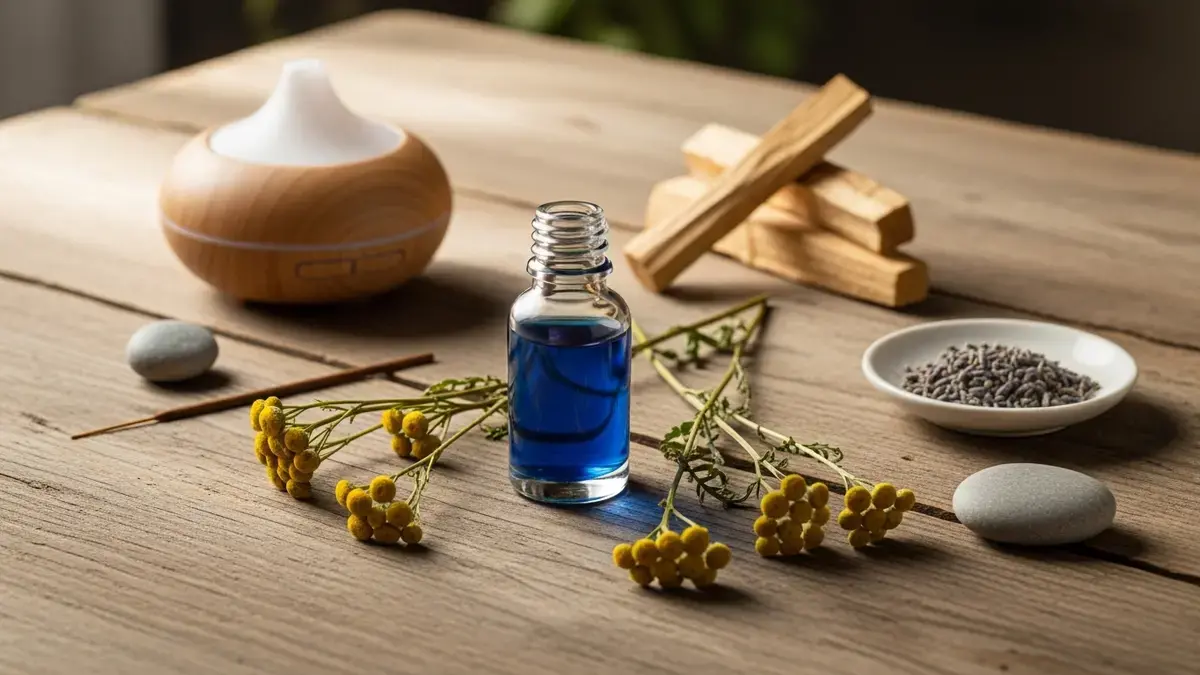
If you've ventured into the world of aromatherapy, you've likely heard of a rare and precious "blue gem": Blue Tansy essential oil. With its mesmerizing indigo color and complex, sweet, herbal aroma, this oil stands out not just for its appearance, but for its powerful benefits.
Extracted from the plant Tanacetum annuum, native to Morocco, it's often called "Moroccan Blue Chamomile." However, it must not be confused with common Tansy (Tanacetum vulgare), which is toxic and never used in aromatherapy. True blue tansy is a potent ally, especially for calming the skin and the mind.
In this complete guide, we'll explore why Blue Tansy essential oil is so revered, how to use it correctly, and, most importantly, all the safety precautions you need to know.
Properties and Composition: The Secret Behind the Blue Color
This oil's most striking feature is, without a doubt, its deep blue color. This hue isn't artificial; it emerges during the steam distillation process of the plant's flowers and leaves.
The heat from distillation transforms a component called matricin into chamazulene. Chamazulene is the real star here, responsible not only for the color but also for the oil's most potent soothing and skin-calming properties.
Besides chamazulene, blue tansy is rich in other chemical components that define its action:
- Sabinene: Known for its cleansing properties and for helping to soothe the skin.
- Myrcene: Possesses qualities that promote relaxation and restfulness.
- Camphor: Present in varying amounts, it contributes to the aroma and has mild comforting effects, but it also requires attention to safety (as we'll see).
Thanks to this complex chemistry, Blue Tansy essential oil is celebrated primarily as a powerful skin-soothing and nerve-calming agent.
Benefits and Applications of Blue Tansy
Where blue tansy truly shines is in caring for troubled skin and managing everyday stress. Its calming power is twofold, acting on both the physical and emotional levels.
Skin Health and Physical Comfort
This is, perhaps, the most famous use of Tanacetum annuum. Its ability to reduce the appearance of redness and calm irritation makes it a luxury ingredient in products for sensitive skin.
- Soothing Reactive Skin: It's a balm for skin that appears red, irritated, or reactive. It helps diminish the look of irritation and calms itchiness associated with dry skin or environmental stressors.
- After-Sun Care: Its cooling and soothing action is excellent for calming skin after excessive sun exposure.
- Bug Bites: Helps to reduce the look of swelling and calms itchiness from minor insect bites.
- Blemish-Prone Skin: While calming, it also has cleansing properties that can help soothe skin that looks inflamed and irritated from breakouts, without harshness.
Emotional Well-Being and Stress
Blue Tansy's aroma is as calming as its action on the skin. It's sweet, herbal, and slightly camphoraceous, making it deeply relaxing for the nervous system.
- Easing Feelings of Stress: It's an excellent oil to diffuse during moments of high stress or when you feel overwhelmed.
- Promoting Restful Sleep: Used before bed, it can help "quiet" the mind and prepare the body for a restorative night's sleep.
- Mental Clarity: By calming agitation, it allows for greater focus and patience, making it useful during meditation or mindfulness practices.
Safe Ways to Use
Blue Tansy essential oil is potent and generally expensive. The good news is you only need a small amount. Important: Its intense blue color can temporarily stain skin, light-colored clothing, and diffusers, so use with caution.
Topical Application (Primary Use)
This is the most effective way to use blue tansy for the skin. Dilution is mandatory.
- For the Face (Sensitive Skin): Dilute to 0.5% to 1%. This means 1 to 2 drops of blue tansy for every 10ml (2 teaspoons) of carrier oil (like Jojoba or Grapeseed).
- For the Body (Irritation): Dilute to 2% to 3%. About 4 to 6 drops for every 10ml of carrier oil (like Calendula-infused or Sweet Almond).
- Spot Application: For a bug bite, 1 drop in a teaspoon of aloe vera gel can be sufficient.
Aromatic Diffusion
For emotional benefits, diffusion is ideal. As its aroma is strong, start with just a few drops.
- In an Ultrasonic Diffuser: Use 2-3 drops of blue tansy, preferably blended with lighter oils (like Lavender or Sweet Orange) to avoid overpowering the senses (or staining the diffuser).
Direct Inhalation
For quick stress relief, inhalation is effective. Place 1 drop on a tissue or a personal inhaler (aroma necklace) and breathe deeply. Avoid inhaling directly from the bottle frequently.
Safety Alerts and Precautions (Mandatory)
Despite its calming benefits, Blue Tansy essential oil demands respect and knowledge. Safety is paramount in aromatherapy.
❌ Potential Neurotoxicity (Due to Camphor): This oil contains camphor. While generally at levels considered safe for aromatherapy, excessive, prolonged, or high-dose use can pose neurological risks. It must never be ingested.
❌ Key Contraindications:
- Pregnancy and Lactation: Use is contraindicated due to the presence of camphor and a lack of safety studies.
- Children: Avoid use on small children (under 6 years old). For older children, use only in very low dilutions (0.5%) and with professional guidance.
- Medical Conditions: People with epilepsy, neurological disorders, or a history of seizures should avoid this oil.
- Allergies: Individuals with known allergies to plants in the Asteraceae family (like ragweed, chrysanthemums, daisies) may have a cross-sensitivity.
❌ Drug Interactions: May interact with sedative medications, potentially enhancing their effects. If you take controlled medication, consult your doctor before use.
⚠️ Risk of Sensitization: Although it's used for sensitive skin, the risk of individual contact dermatitis always exists. Always perform a patch test before the first use.
⚠️ Pet Safety Alert (Especially for Cat Owners): EXTREME CAUTION. Diffusing or topically applying essential oils can be dangerous for pets. Cats, in particular, lack the necessary liver enzymes to metabolize common oil components (like terpenes), leading to a serious risk of poisoning, which can be fatal. Never use essential oils topically on cats and avoid diffusing in enclosed spaces they frequent.
⚠️ General Usage Precautions:
- NEVER INGEST. Internal use of essential oils should only be done under the supervision of a healthcare professional qualified in clinical aromatherapy.
- Keep away from eyes, inner ears, and mucous membranes.
- Keep out of reach of children and pets.
- Store in a cool, dark place in its original amber glass bottle.
Medical Disclaimer: The information contained in this post is for educational purposes only. It does not replace professional medical diagnosis, treatment, or advice. Always consult your physician or a qualified aromatherapist before starting any new treatment.
Combinations and Synergies
Blue Tansy blends beautifully with other oils, enhancing their effects and creating more complex aromas.
- Ideal Carrier Oils: Jojoba Oil (for the face), Calendula-infused Oil (for extra-irritated skin), Fractionated Coconut Oil (for quick absorption), or Sweet Almond Oil (general use).
- To Soothe Skin: Blend with Lavender, Roman Chamomile, or Helichrysum (Immortelle).
- For Deep Relaxation: Blend with Frankincense, Bergamot, Marjoram, or Sandalwood.
- For Respiratory Comfort (Mild): One drop with Eucalyptus Radiata or Siberian Fir in a diffuser can help soothe and comfort airways.
Final Thoughts
Blue Tansy essential oil is indeed a jewel of aromatherapy. Its power to transform the appearance of irritated skin and calm a stressed mind is undeniable. However, its potency comes with a strict need for safe, conscious, and compliant use.
Respect the dilutions, understand the contraindications, and above all, listen to your body. Used correctly, blue tansy can be one of the most precious and effective allies in your aromatherapy kit.