
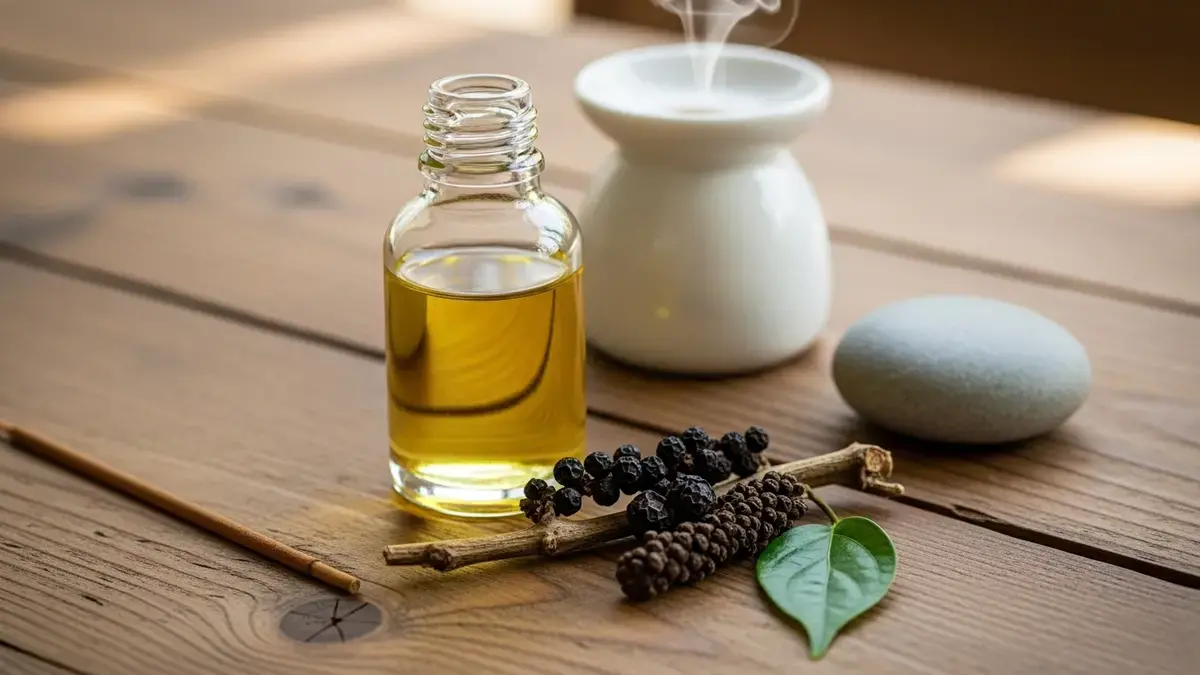
Ah, black pepper. When we think of it, the first image is the grinder next to the salt shaker, right? It's the world's most ubiquitous spice, indispensable in the kitchen. But what if I told you that black pepper essential oil, extracted from that same spice, is one of the most potent and underrated oils in aromatherapy, especially for discomfort and energy?
An immediate surprise: unlike the powder, the essential oil (Piper nigrum) doesn't make you sneeze. And, although it is profoundly "hot" in its effects, it doesn't have the "bite" of capsaicin (the "spicy" molecule in chili peppers) or piperine, as these molecules are not volatile and do not transfer to the oil during distillation.
Instead, we have an oil with a fresh, dry, woody, and, of course, spicy aroma. It is an oil of warming, movement, and endurance. In this guide, we'll explore how black pepper essential oil can be a powerful ally for your muscles and your mind, and how to use it with the respect its potency demands.
Properties and Composition
Black pepper essential oil is extracted by steam distillation of the peppercorns (the dried berries) from the Piper nigrum vine. The result is a thin oil, pale to slightly greenish in color, with a much more complex aroma than pepper powder.
Its chemistry is fascinating and is what explains its benefits. It is rich in monoterpenes, like Limonene, Pinene, and Sabinene, which give it uplifting and cleansing properties. However, its star component belongs to another class.
The main active in black pepper oil is Beta-Caryophyllene, a sesquiterpene. This is an incredible compound, also found in Cannabis and Copaiba, known for its potent ability to interact with the body's CB2 receptors. This makes it a powerful agent for its soothing and comforting properties, but without any psychotropic effects.
Benefits and Applications
Black pepper is, above all, an oil of "fire" and "movement." It warms, stimulates, and gets things circulating. Its benefits are primarily physical, but its effect on the mind is noteworthy.
Physical Support
This is black pepper's domain. It's one of the best oils for promoting comfort and circulation.
- Soothes Muscle and Joint Discomfort: Thanks to beta-caryophyllene, this oil is a top-tier choice for its comforting and soothing properties. It's fantastic in massage oils to ease discomfort from sore muscles, stiffness, and overexertion.
- Warming and Circulatory (Rubefacient): It's a rubefacient oil, meaning it draws blood to the surface of the skin, creating a warming sensation. This makes it ideal for warming cold feet and hands and as a pre-exercise rub to prep muscles.
- Digestive Support: Like the spice, the oil is a digestive aid. It helps to ease gas (carminative) and support sluggish digestion.
Mental and Emotional Support
The pungent, fresh aroma of black pepper has a direct effect on the brain.
- Energy and Mental Focus: This is not a relaxing oil; it's a stimulating one. It's excellent to diffuse when you feel mentally fatigued, lethargic, or have "brain fog." It "wakes up" the mind.
- Stamina and Endurance: It's a great oil for moments of emotional weakness or when you need "grit" and stamina to face a challenge.
- Support for Quitting Smoking: Several studies and anecdotal reports highlight black pepper oil inhalation for helping to reduce nicotine cravings and the anxious feelings associated with withdrawal.
How to Use Black Pepper Oil
Black pepper essential oil is strong. The golden rule is: start low and always dilute.
- Topical Application (Massage): This is the most effective use for discomfort and circulation.
- DILUTION IS MANDATORY. As a "hot" oil, never apply it undiluted.
- Dilution for Discomfort: Use a 1% to 2% concentration (3 to 6 drops of essential oil for every 10ml of carrier oil).
- Warm Compress: Add 2-3 diluted drops to a warm compress to ease cramps or muscle stiffness.
- Aromatic Diffusion: Use for energy and mental focus.
- Use sparingly. Its aroma is strong and can overpower a room.
- Start with 1-2 drops in your diffuser, preferably blended with other oils (like citruses) to soften it.
- Direct Inhalation: The preferred method for those seeking support for smoking cessation.
- Place 1 drop on a tissue or personal inhaler and breathe deeply when you feel a craving.
Safety Alerts and Precautions
MAXIMUM ATTENTION: This section is the most important. For AdSense compliance and for your safety, black pepper oil must be treated with respect. It is a hot and stimulating oil.
❌ Risk of Skin Irritation (Dermocaustic)
Risk: Moderate to High. Black pepper oil is dermocaustic if used undiluted or in high concentrations. It causes a warming sensation (rubefacience), which can quickly turn into redness, itching, and a burning sensation, especially on sensitive skin. NEVER use undiluted on the skin. Always dilute to 2% or less.
❌ Phototoxicity and Neurotoxicity
Risk: Non-existent. Black pepper oil is not phototoxic (it's safe to use on the skin and go in the sun) and is not considered neurotoxic.
❌ Contraindications
- Pregnancy and Lactation: Avoid use. It is a very strong stimulating oil and may have undesirable effects.
- Children: Not recommended for young children (under 6) due to its skin irritation potential.
- Sensitive Skin: People with sensitive skin must do a patch test with a very low dilution (0.5%) before use.
❌ Drug Interactions (Anticoagulants)
Risk: Low. Due to its strong circulatory properties, there is a theoretical risk it could interact with anticoagulant (blood-thinning) medications. Consult your physician if you take such medication.
⚠️ Risk to Pets (Pet Owner Alert)
Keep essential oils out of reach of animals. Especially Cats: Black pepper oil is high in terpenes (Limonene, Pinenes), which are toxic to cats. The feline liver lacks the enzyme (glucuronyltransferase) to metabolize these components. Avoid diffusing in enclosed spaces with them.
⚠️ General Usage Precautions
- Patch Test: Mandatory. Apply a small, diluted (at 1%) amount to the inner elbow and wait 24 hours.
- Never Ingest: Ingestion of essential oils should only be done under the guidance of a qualified clinical aromatherapist.
- Keep Away From Eyes: Avoid contact with eyes and mucous membranes. If contact occurs, flush with a carrier oil (not water).
Medical Disclaimer: The information on this post is for educational purposes only and does not substitute for professional medical advice. Always consult a qualified healthcare professional. These statements have not been evaluated by the Food and Drug Administration (FDA). This product is not intended to diagnose, treat, cure, or prevent any disease.
Combinations and Synergies
Black pepper is a spicy middle/top note that adds "heat" and complexity to any blend. It's an "activator."
- For Muscle Comfort (Warming Synergy): Combine with Marjoram, Ginger, Lavender, or Rosemary.
- For Focus and Energy (Spicy-Citrus Synergy): Combine with Lemon, Bergamot, or Frankincense.
- For "Masculine" or Woody Synergies: Combine with Sandalwood, Cedarwood Atlas, or Vetiver.
- Ideal Carrier Oils: For discomfort, Arnica (macerated) oil is the best carrier. For general massage, Sweet Almond Oil or Jojoba.
Final Thoughts
Black pepper essential oil is a perfect example of how a common kitchen item can be an extraordinary wellness tool. It's the ideal oil for those who feel cold, for those with persistent discomfort, or for those who need a mental "push."
Treat it with the respect a hot oil deserves. Always dilute, use sparingly, and enjoy the penetrating, warming power that only the "Queen of Spices" can offer.