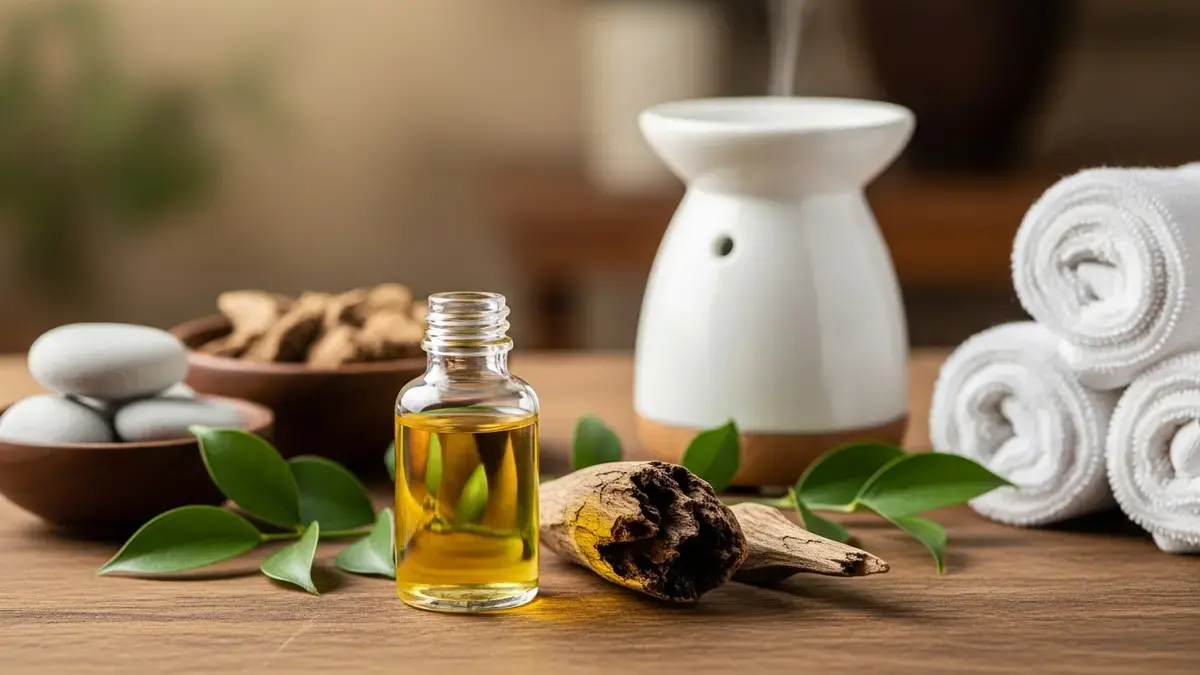
Universally known as one of the most precious and mystical scents, Agarwood essential oil—or Oud oil—holds a place of honor in the history of aromatherapy, perfumery, and religious traditions. Extracted from trees rarely and complexly infected, this oil is not just a fragrance, but a true therapeutic treasure.
In this comprehensive guide, we will deeply explore the unique properties of Agarwood essential oil, its scientifically recognized benefits, and, most importantly, how to use it with maximum safety to enjoy its relaxing and restorative capabilities.
Properties and Composition of Agarwood Essential Oil
Oud oil is extracted from the resinous wood of Aquilaria genus trees, primarily Aquilaria malaccensis or Aquilaria crassna, after they are infected by a specific type of fungus (Phialophora parasitica). The tree reacts to the infection by producing a dark, aromatic resin, which is the source of our precious oil. This rare and natural process is what makes it one of the most expensive essential oils in the world.
The most common and effective extraction method is steam distillation of the resinous wood. The result is a thick, amber-colored liquid with a complex aroma that can range from woody, balsamic, and sweet to smoky, depending on the species and region of origin.
Key Chemical Components
The complexity of its scent and the therapeutic potency of Agarwood essential oil reside in its rich and varied chemical composition, which may include:
- Sesquiterpenes (such as Agarospirol and Jinkoh-Eremolone): Responsible for sedative properties and the woody olfactory profile.
- Chromones (such as 2-(2-phenylethyl) chromone): Associated with calming and mood-modulating effects.
- Carboxylic Acids and Ketones: Contributing to the longevity and depth of the aroma.
Proven Therapeutic Properties
In modern aromatherapy, Agarwood oil is primarily valued for its properties:
- Sedative and Anxiolytic: Promotes deep relaxation and helps reduce anxiety.
- Carminative: Aids digestion and relieves gastrointestinal discomfort.
- Tonic and Restorative: Traditionally used to "warm" the body and restore energy.
Benefits and Applications in Aromatherapy
The benefits of Agarwood essential oil encompass physical well-being and, especially, emotional and spiritual health, making it a powerful aid in meditative practices.
Benefits for Mental and Emotional Health
- Stress and Anxiety Reduction: Its deep aroma acts directly on the limbic system, promoting an immediate sense of peace and grounding.
- Meditation and Focus Aid: Helps calm the mind, facilitating concentration and deepening meditative and introspective states.
- Sleep Quality: Diffusion before bedtime can create a tranquil environment, combating stress-related insomnia.
Benefits for Physical Health
Although best known for emotional use, Agarwood essential oil also offers physical support:
- Pain Relief: Mild anti-inflammatory properties may help soothe muscular and joint aches (diluted topical application).
- Respiratory Support: In inhalations, it can assist in clearing respiratory passages and relieving coughs.
- Circulatory Stimulant: Used in massages, it can promote a warming sensation and improve local circulation.
Ways to Use Agarwood Oil
Due to its high cost and potency, Agarwood essential oil must be used in minimal dosages and with awareness, always respecting safe dilutions.
Recommended Dosages and Methods
- Aromatic Diffusion: Use 1 to 2 drops in an ultrasonic diffuser for a maximum of 30 minutes, in well-ventilated rooms, to scent large areas with its potent aroma.
- Topical Application (Massage): Dilute 0.5% to 1% of the oil in a carrier oil (such as coconut or almond oil). This equates to 1 to 2 drops of Agarwood per 10 ml of carrier oil. Apply to pulse points, the nape of the neck, or the soles of the feet.
- Direct Inhalation: Place 1 drop on a tissue or in a diffusion necklace and inhale gently for short periods, ideal for moments of high anxiety or stress.
Safety Alerts and Essential Precautions
Safety is the top priority in aromatherapy. Due to its complex composition, Agarwood essential oil requires special attention. NEVER replace a medical consultation or professional treatment with the use of essential oils.
⚠️ Medical Disclaimer: The information contained in this post is not a substitute for medical advice, diagnosis, or treatment. Always consult a qualified healthcare professional for any medical concerns.
Specific Precautions for Agarwood Essential Oil
- ❌ Dermal Causticity/Irritation: Although considered gentle on the skin, using undiluted Agarwood essential oil can cause irritation, especially on sensitive skin. Always perform a patch test on the skin before regular use.
- ❌ Ingestion: Agarwood essential oil SHOULD NOT be ingested, except under the strict supervision of a qualified clinical aromatherapist or physician.
- ❌ General Contraindications: Use in pregnant women, breastfeeding mothers, and children under 6 years old should be avoided or done only with professional guidance. Individuals with chronic medical conditions should consult a doctor before use.
⚠️ Risk of Toxicity to Pets
ATTENTION PET OWNERS: The diffusion and, especially, the topical application of essential oils are extremely dangerous for domestic animals, particularly cats. Cats have a liver system that does not adequately metabolize terpenes and other oil components, which can lead to toxin buildup and serious health problems, including acute toxicity and organ failure. Keep oils out of reach of animals and avoid diffusing in areas they frequent.
Combinations and Synergies (Blends)
The rich, woody aroma of Agarwood essential oil harmonizes perfectly with other oils, creating powerful synergies for emotional well-being.
Complementary Essential Oils
- Floral and Sweet: Rose, Jasmine, Ylang Ylang (for calming and seductive blends).
- Citrus: Bergamot, Sweet Orange (to lift the mood and brighten the aroma).
- Resins and Woody: Sandalwood, Frankincense (Olibanum), Cedarwood (to deepen the grounding and meditation effect).
Ideal Carrier Oils
For the topical use of Agarwood essential oil, use high-quality vegetable oils that also offer skin benefits:
- Jojoba Oil: Light and fast-absorbing, excellent for facial skin and perfume blends.
- Fractionated Coconut Oil: Odorless and non-greasy, excellent for body massages.
Final Considerations
Agarwood essential oil (Oud) is more than an aromatic luxury; it is a potent tool for emotional and spiritual balance. Its ability to connect us to a state of deep calm makes it invaluable in modern aromatherapy.
Always remember to prioritize safety and correct dilution. By investing in this precious oil, you are investing in a scent that has been revered for centuries, now available to bring tranquility and focus to your life in a safe and conscious way. Use your Oud oil with respect for its potency and history.