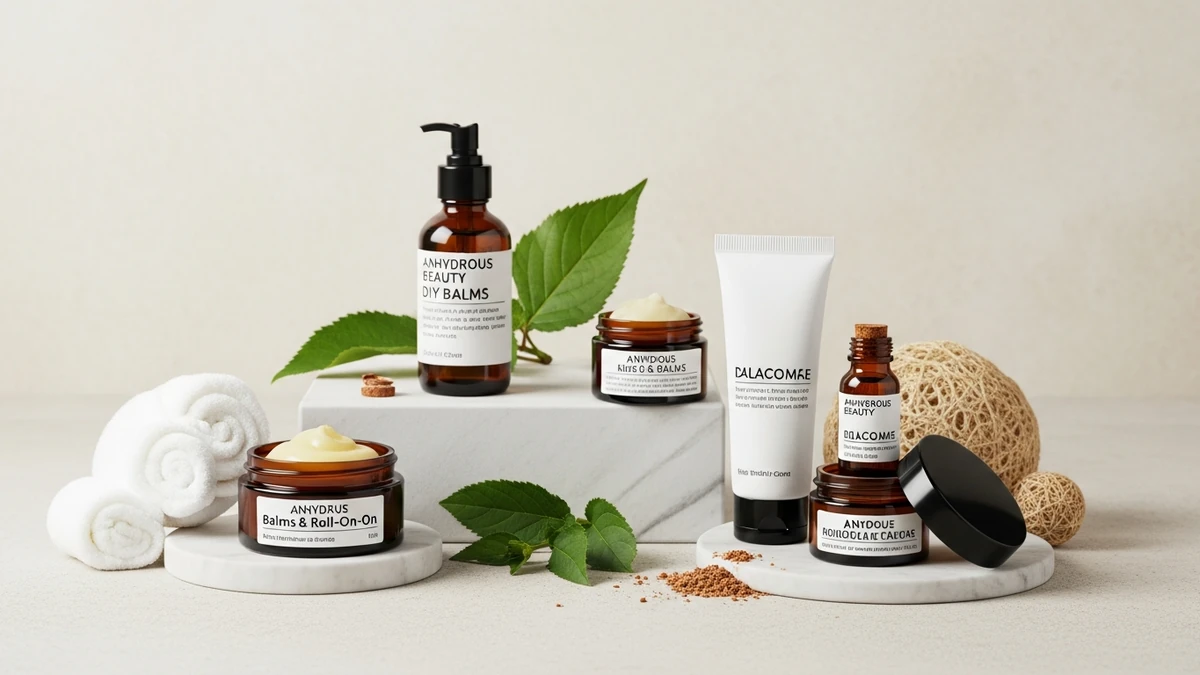
The growing demand for a more natural and conscious self-care routine has fueled interest in anhydrous cosmetics, also known as waterless beauty. These formulations, which exclude water from their composition, offer a rich and concentrated base for incorporating botanical actives and, especially, potent essential oils. Learning how to craft your own balms and roll-ons is not just a step towards autonomy, but an invitation to a profound sensory and therapeutic experience, tailored to your unique needs.Preparing these natural cosmetics at home is a journey of learning and personalization, where ingredient simplicity meets a wealth of benefits. From easing muscle tension to emotional support and deep skin hydration, balms and roll-ons offer practical and effective solutions to integrate aromatherapy and natural care into your daily life, promoting conscious and safe wellness and balance.
Properties and Composition
Anhydrous cosmetics, by virtue of being water-free, concentrate on oil and wax-based ingredients. This naturally extends product shelf-life and maximizes active ingredient potency. The base of these preparations typically consists of a synergistic blend of carrier oils (or vegetable oils), plant butters, and waxes, which provide a rich source of nutrients for the skin and serve as ideal vehicles for essential oils. This structure allows the skin to absorb components more effectively, often eliminating the need for synthetic preservatives commonly found in water-based formulations.
Key Chemical Components
Carrier oils and plant butters are rich sources of essential fatty acids (omega 3, 6, and 9), vitamins (A, E, D, K), and antioxidants. For instance, shea butter is abundant in vitamins A and E, providing emollient and protective properties. Waxes, such as beeswax or candelilla wax, act as thickeners, giving balms their consistency and forming a protective barrier on the skin. Essential oils, on the other hand, are highly concentrated plant extracts, composed of hundreds of organic molecules like terpenes, esters, aldehydes, and ketones. These compounds are responsible for their distinct fragrances and, crucially, for their extensive therapeutic properties.
Proven Therapeutic Properties
The combination of these components results in products with a wide range of therapeutic properties. Carrier oils are emollient, moisturizing, and protective, aiding in restoring the skin barrier. Many also possess anti-inflammatory and antioxidant actions. Essential oils offer an even broader spectrum of benefits: some are recognized for their analgesic and anti-inflammatory effects (e.g., Copaiba, Ginger), others for being calming and sedative (e.g., Lavender, Chamomile), stimulating (e.g., Peppermint, Lemon), or antiseptic and antimicrobial (e.g., Tea Tree). Together, they act synergistically, enhancing desired effects, whether for relaxation, stress reduction, relief of muscular discomforts, or overall skin health.
Benefits and Applications
Anhydrous cosmetic balms and roll-ons are versatile self-care tools, adaptable to various physical and emotional needs. Their concentrated formulations and ease of application make them powerful allies for daily life, enabling a holistic approach to wellness.
Physical Health Benefits
Physically, these preparations excel at deep skin hydration, particularly for dry areas like elbows, knees, and heels. They can be used to protect the skin against environmental aggressors like cold and wind, forming a natural barrier. As balms or roll-ons for massage, they are ideal for soothing muscle tension and joint discomfort, with oils like Copaiba and Marjoram. They can also assist in healing minor cuts and scrapes, or improving the appearance of insect bites, using essential oils with restorative and anti-inflammatory properties, such as Frankincense or Geranium.
Mental and Emotional Health Benefits
Aromatherapy integrated into balms and roll-ons is a powerful tool for mental and emotional balance. Applying these products to pulse points, temples, or the nape of the neck allows for subtle, continuous inhalation of essential oils, promoting effects like relaxation (with Lavender, Bergamot, Sandalwood), stress reduction (with Chamomile, Sweet Orange), mood enhancement (with Lemon, Ylang Ylang), and increased focus and mental clarity (with Peppermint, Rosemary). The act of applying the product itself transforms into a self-care ritual, a moment of pause and connection with oneself.
Ways to Use
The beauty of balms and roll-ons lies in their practicality and the multiple ways they allow you to harness the benefits of essential oils.
Personal Aromatic Diffusion
While traditional aromatic diffusion refers to the use of electric diffusers, balms and roll-ons offer a form of personal and discreet diffusion. When applied to the skin, body heat helps slowly release the aromatic molecules of essential oils, creating a subtle "scent cloud" around the user. This allows for passive and continuous direct inhalation, which can be especially useful in environments where electric diffusers are not appropriate, or for a more intimate and localized self-care ritual, positively impacting mood and well-being throughout the day.
Topical Application (Massage and Post-Bath)
Topical application is the most common and effective way to use balms and roll-ons. For massages, balms with their denser textures are perfect for specific areas needing attention, such as tense muscles, aching joints, or dry skin patches. Roll-ons, conversely, allow for precise, mess-free application to strategic points like wrists, temples, the nape of the neck, chest, or the soles of the feet. For baths, while pure anhydrous cosmetics do not mix directly with water, a balm can be applied to the skin after showering or bathing to seal in hydration and extend the aromatic and therapeutic benefits, complementing your self-care ritual.
Direct Inhalation
Direct inhalation of essential oils from balms and roll-ons is one of the fastest ways to impact the limbic system, which governs emotions. By applying a roll-on to your palms, for example, and deeply inhaling the aroma, or by using a balm on your chest for respiratory support, the aromatic molecules quickly reach the brain and bloodstream. This technique is ideal for moments requiring immediate relaxation, focus, stress relief, or support for respiratory discomfort (with oils like Peppermint or Eucalyptus, always used with caution and appropriate dilution).
Safety Warnings and Precautions
Even natural preparations demand attention to safety. The potency of essential oils requires careful dilution and selection for different demographics and health conditions.
-
Dilution: The golden rule in aromatherapy is to always dilute essential oils in a carrier oil. For balms and roll-ons, the concentration of essential oils should generally be between 1% and 3% for adult use, depending on the application area and skin sensitivity. For larger areas or daily use, aim for around 1%. For targeted discomforts, you might go up to 3-5%, but with moderation. Never apply neat (undiluted) essential oils directly to the skin.
-
Patch Test: Before using any new product, apply a small amount to the inner forearm and observe for 24 hours to check for any allergic reaction or irritation, especially if you have sensitive skin.
-
Photosensitivity: Some essential oils, particularly citrus oils (such as Lemon, cold-pressed Bergamot, Grapefruit), are photosensitive. Avoid sun exposure or UV lamps for at least 12 to 24 hours after applying them to the skin to prevent discoloration or burns.
-
Pregnancy and Lactation: Pregnant or lactating women must exercise extreme caution. Many essential oils are contraindicated. It is crucial to consult a doctor or a qualified aromatherapist. Some oils to avoid include Rosemary, Clary Sage, Cinnamon, Peppermint (in large doses), among others. Opt for very gentle oils like Lavender and Chamomile, in very low dilutions and with professional approval.
-
Children: Children's skin is more sensitive, and their metabolic system differs. Dilution should be even lower (0.25% to 1% for babies and young children), and the choice of essential oils very restricted. Avoid oils like Peppermint, Eucalyptus, and Tea Tree in children under 6 years old. Lavender and Chamomile are generally safer for children at low dilutions.
-
Sensitive Skin and Medical Conditions: Individuals with sensitive skin, allergies, or pre-existing medical conditions (asthma, epilepsy, hypertension, etc.) should consult a healthcare professional before using essential oils. Avoid applying to irritated or broken skin. Some oils may interact with medications.
-
Pets: Keep all essential oil products out of reach of pets, especially cats, who are extremely sensitive to many oil components and can be easily poisoned. Never apply essential oils directly to animals without veterinary guidance.
It is crucial to remember that the information presented here is for educational purposes only and does not substitute medical advice, diagnosis, or treatment. In case of doubts or specific health conditions, always seek a qualified healthcare professional.
Essential Oil Blends and Synergies
The art of aromatherapy lies in creating synergies, where the combination of essential oils and carrier oils enhances individual benefits, yielding a more complete and complex therapeutic effect. The choice of ingredients should consider the final objective and the characteristics of each component.
Complementary Essential Oils
For different objectives, consider these strategic combinations:
-
Relaxation and Sleep: Lavender (calming), Roman Chamomile (sedative), Bergamot (for stress reduction), Sandalwood (grounding), or Cedarwood (earthy, calming).
-
Focus and Energy: Peppermint (invigorating), Lemon (stimulating, mental clarity), Rosemary (concentration), or Eucalyptus (respiratory, revitalizing).
-
Skin Health: Geranium (balancing), Copaiba (anti-inflammatory), Frankincense (rejuvenating), Tea Tree (purifying, healing), or Lavender (regenerative).
-
Muscle and Joint Discomfort: Copaiba (anti-inflammatory, analgesic), Ginger (warming, pain-relieving), Marjoram (muscle relaxant), Peppermint (cooling, analgesic), or Wintergreen (potent analgesic, use with utmost caution and dilution).
The choice should always prioritize safety and olfactory preference, creating a pleasant and therapeutic experience.
Ideal Carrier Oils
The anhydrous base is as crucial as the essential oils in determining product efficacy and texture. Selecting the ideal carrier oil will depend on skin type, the balm/roll-on's purpose, and the desired consistency:
-
Jojoba Oil: Technically a liquid wax, it's excellent for all skin types, including oily, as it closely mimics human sebum. Non-comedogenic and with a long shelf life, it's a superb vehicle for roll-ons.
-
Sweet Almond Oil: A nourishing carrier oil rich in Vitamin E, ideal for dry and sensitive skin. It's light and well-absorbed, perfect for body balms.
-
Fractionated Coconut Oil (MCT): Light, non-greasy, absorbs quickly, and is odorless. It's a popular choice for roll-ons due to its stability and how smoothly it spreads on the skin.
-
Shea Butter: Exceptionally emollient and protective, it's the perfect base for denser balms, offering deep skin hydration and aiding in skin regeneration.
-
Beeswax or Candelilla Wax: Essential for providing solidity to balms. Beeswax is more pliable, while candelilla is a vegan alternative offering greater rigidity.
The combination of these components allows for creating textures ranging from a solid balm to a fluid roll-on, always aiming to optimize the delivery of aromatherapy benefits.
Final Thoughts
Crafting balms, roll-ons, and other anhydrous cosmetic products is a powerful way to personalize your self-care and integrate aromatherapy safely and effectively into your routine. By mastering the art of combining essential oils with carrier oils and plant butters, you not only create products that meet your specific needs but also take control over the quality of ingredients you apply to your skin and inhale.Always remember that safety is paramount. Dedicating time to learn about the properties of each essential oil, its appropriate dilutions, and precautions for different groups (such as pregnancy, children, and pets) ensures that your aromatherapy journey is not only enjoyable but also responsible. Invest in research, use quality ingredients, and savor the profound benefits that nature offers for your physical and emotional well-being through these simple yet transformative preparations.